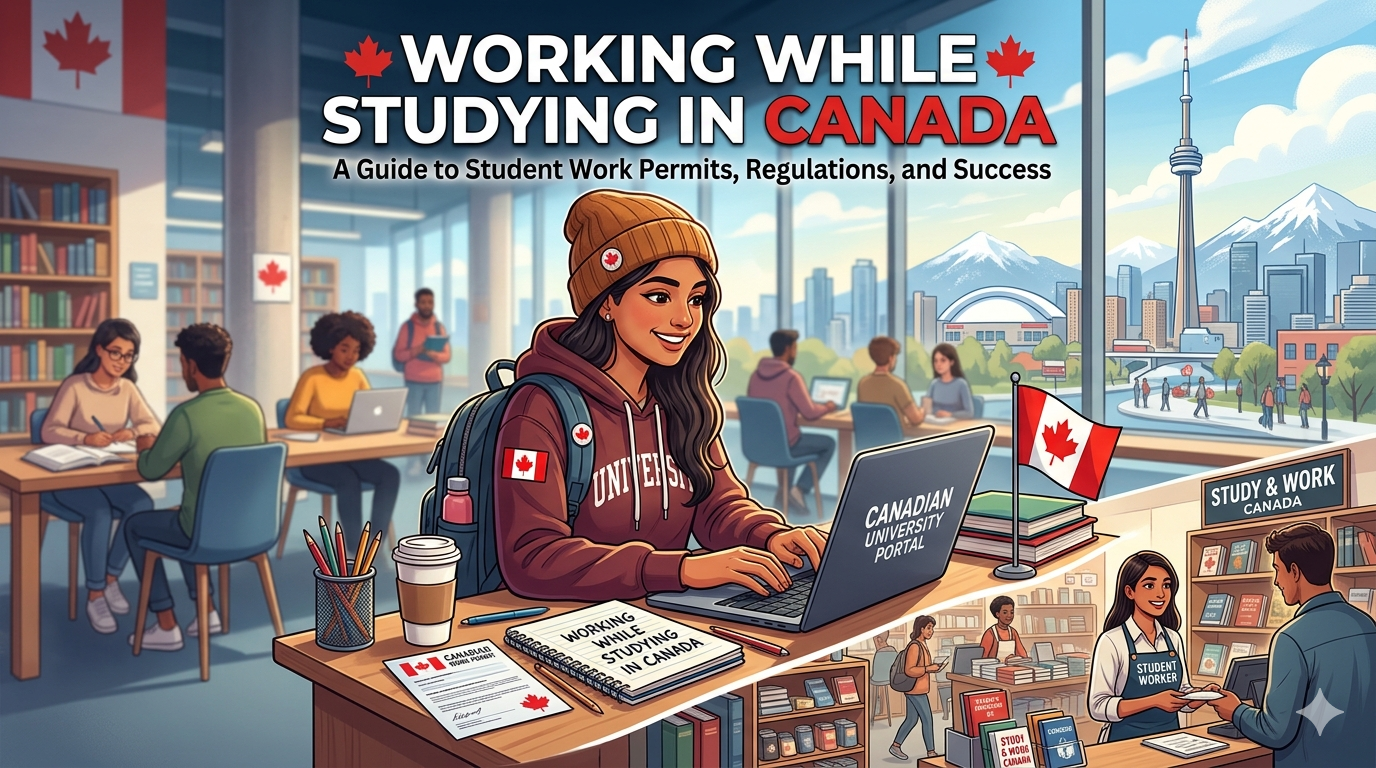
Working While Studying in Canada
Canada continues to be one of the world’s top destinations for international students, offering access to high-quality education, valuable work opportunities, and potential pathways to permanent residency.
If you’re considering studying in Canada while gaining professional experience, this guide outlines the key steps to help you navigate the process successfully.
Why Study and Work in Canada?
Canada is known for its globally recognized educational institutions, welcoming multicultural environment, and strong job market. International students have the opportunity to earn a respected qualification while gaining practical work experience that can strengthen their future career prospects.
Step 1: Secure Your Study Permit
Before beginning your studies, you’ll need a valid study permit, which authorizes you to study at a Designated Learning Institution (DLI) in Canada.
To apply, you typically need:
- An official acceptance letter from a Canadian DLI
- A valid passport or travel document
- Proof of sufficient funds to cover tuition fees, living expenses, and return transportation
Step 2: Understand Your Work Eligibility
One of the major advantages of studying in Canada is the ability to work while completing your education.
Depending on current government regulations, international students may be eligible to:
- Work up to 20 hours per week during academic sessions
- Work full-time during scheduled school breaks
- Benefit from updated policies that may allow increased work hours under specific conditions
Always review the latest government guidelines to ensure compliance with current regulations.
Step 3: Begin Your Job Search
After arriving in Canada, you can start exploring employment opportunities that fit your schedule and career goals.
Popular job-search resources include:
- Online employment websites
- University and college career centers
- Networking events and professional connections
- Community organizations and local businesses
International students can often work both on-campus and off-campus, provided they meet eligibility requirements.
Step 4: Obtain a Social Insurance Number (SIN)
To work legally in Canada, you must have a Social Insurance Number (SIN).
You can apply for your SIN through Service Canada after arriving in the country. Required documents generally include:
- Your valid study permit
- Your passport or another accepted form of identification
Step 5: Maintain a Healthy Balance
Successfully combining work and study requires effective time management.
Consider these tips:
- Create a realistic weekly schedule
- Prioritize academic responsibilities
- Limit work hours when coursework becomes demanding
- Make time for rest and personal well-being
Maintaining strong academic performance should remain your primary focus.
Step 6: Explore Post-Graduation Work Opportunities
After completing an eligible program, you may qualify for a Post-Graduation Work Permit (PGWP).
The PGWP can allow you to:
- Remain in Canada after graduation
- Gain valuable Canadian work experience
- Build professional networks
- Strengthen future immigration applications
This experience can be a significant advantage when pursuing long-term career opportunities.
Step 7: Consider Permanent Residency Pathways
Many international students choose to remain in Canada after graduation through various immigration programs.
Popular options include:
- Canadian Experience Class (CEC) through Express Entry
- Provincial Nominee Programs (PNPs)
- Other federal and provincial skilled-worker pathways
Canadian education and work experience can significantly enhance your eligibility for permanent residency programs.
Final Thoughts
Studying and working in Canada offers much more than an academic qualification. It provides an opportunity to develop professional skills, gain international experience, and potentially build a long-term future in one of the world’s most welcoming countries.
By understanding the requirements, following the proper procedures, and planning strategically, you can make the most of your Canadian education journey and open doors to exciting opportunities ahead.
Good luck as you take the next step toward your future in Canada!