
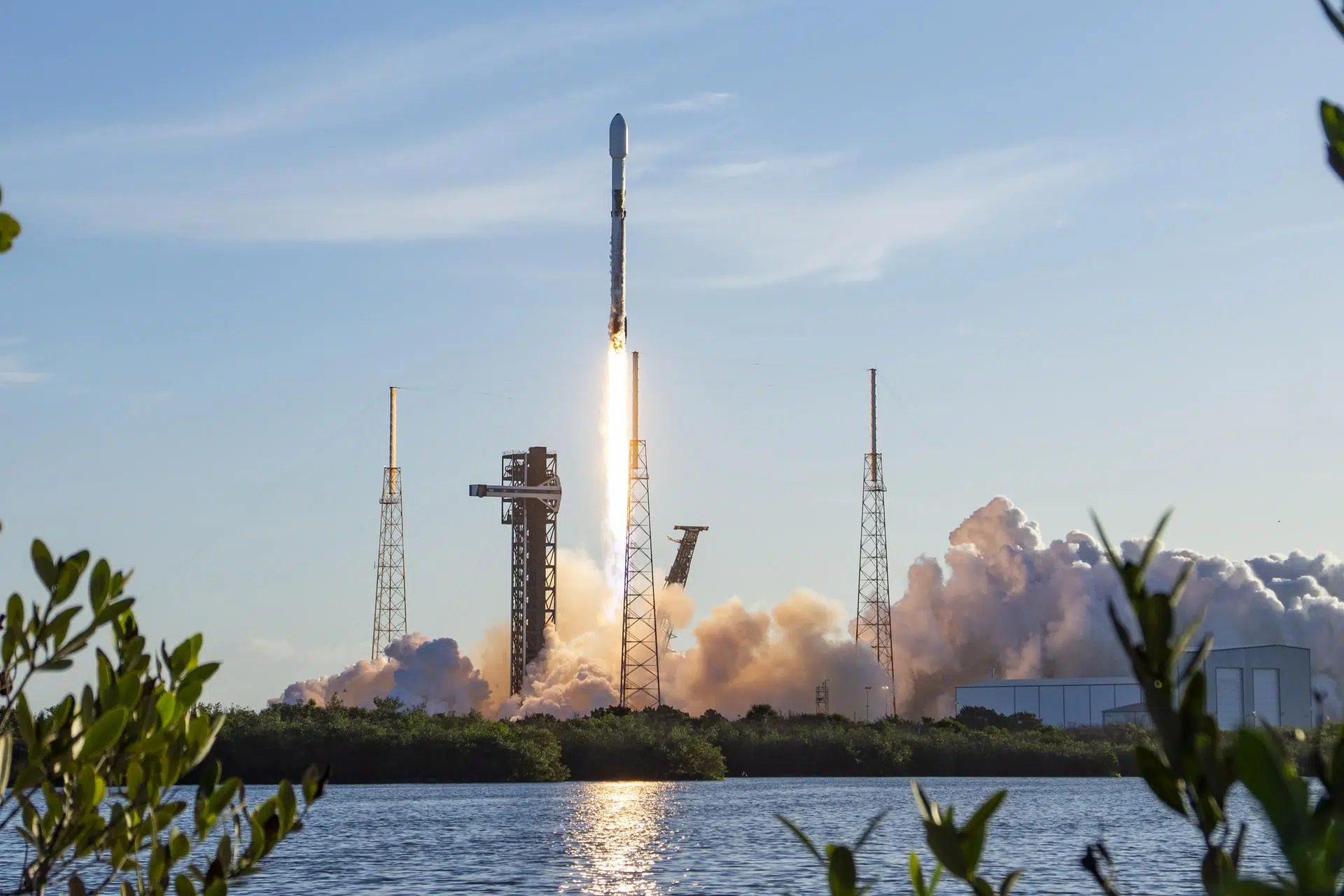
NASA’s latest cubesat missionCANVAS began studying how radio waves generated by lightning and man-made transmitters travel from the Earth’s surface to the vast expanse of space. The mission, which launched on April 7, aims to provide critical insights into the space environment that could change the way both space infrastructure and systems on Earth are protected from the effects of space weather.
A new frontier in space weather research
NASA’s CANVAS (Climatology of Anthropogenic and Natural VLF Wave Activity in Space) mission marks a pivotal moment in space research. The small satellite was launched on a Minotaur IV rocket. U.S. Department of the Army Space Experiment Program. CANVAS aims to unravel the mysterious behavior of very low frequency (VLF) radio waves that penetrate Earth’s magnetosphere and are affected by both natural phenomena such as lightning and human activities.
What makes the CANVAS mission unique is its ability to measure how these VLF waves penetrate Earth’s ionosphere and reach the magnetosphere, a region of space that is directly affected by solar radiation and cosmic particles. By collecting this data, NASA scientists hope to connect terrestrial phenomena such as thunderstorms with the complex interactions that occur in the space environment.
Unraveling the secrets of Earth’s space environment
One of the main goals of the CANVAS mission is to understand how. VLF wave It affects the behavior of high-energy electrons trapped in the Earth’s radiation belts. These electrons are usually held in place by the Earth’s magnetic field, but in some cases they can escape into the atmosphere. This phenomenon is critical to understanding the risks posed to satellites, communications systems, and even power grids on Earth, as it is directly affected by lightning and anthropogenic radio emissions.
CANVAS will study the paths of these waves and measure how their energy affects the behavior of charged particles in Earth’s radiation belts. By providing accurate real-time data on the frequency and strength of VLF waves, this mission will provide new insights that could help improve space weather models and better predict the potential for harmful events such as magnetic storms.
CANVAS equipment and methodology
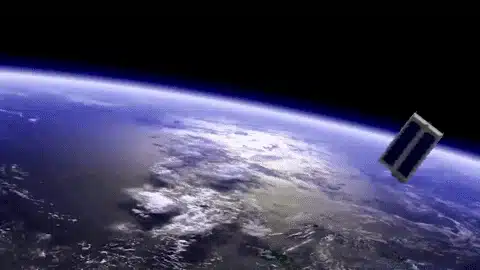
To achieve its ambitious goals, CANVAS is equipped with two capabilities. cutting edge equipment: 3-axis search coil magnetometer and 2-axis AC electric field sensor. These instruments measure the power and direction of VLF waves, allowing scientists to track the energy produced when lightning strikes and ground-based transmitters interact with the Earth’s ionosphere.
Onboard processors analyze this data and provide the team with detailed measurements of how these waves travel through space. CANVAS will also contribute to a broader scientific understanding of lightning space weather by comparing the timing and location of lightning events to the global World Wide Lightning Network.
Role of the CubeSat Launch Initiative
The CANVAS mission is NASA’s CubeSat Launch Initiative (CSLI)a program designed to provide a low-cost route for scientific exploration through small satellite technology. This initiative not only benefits NASA’s space weather research, but also fosters educational opportunities for students, teachers, and researchers. The design, development, and testing of this mission will provide valuable practical experience for the next generation of space scientists and engineers.
NASA’s CubeSat launch initiative plays a key role in making space exploration more accessible, allowing universities and research institutions to send missions into orbit at a fraction of the cost and complexity of traditional spacecraft.
#NASAs #CubeSat #begins #groundbreaking #research #radio #waves #Earths #space #environment