
IIn his home on a steep hillside in Medellin’s Golondrinas neighborhood, Robinson Velázquez Cartagena stands proudly next to two large water tanks, a rainwater harvesting system he designed and built to reduce the risk of flooding and landslides.
This is one of the nature-based solutions that Velázquez and others in the community have proposed as part of a disaster risk and climate crisis adaptation plan for Comuna 8, a growing informal settlement of 150,000 people in Colombia’s second largest city.
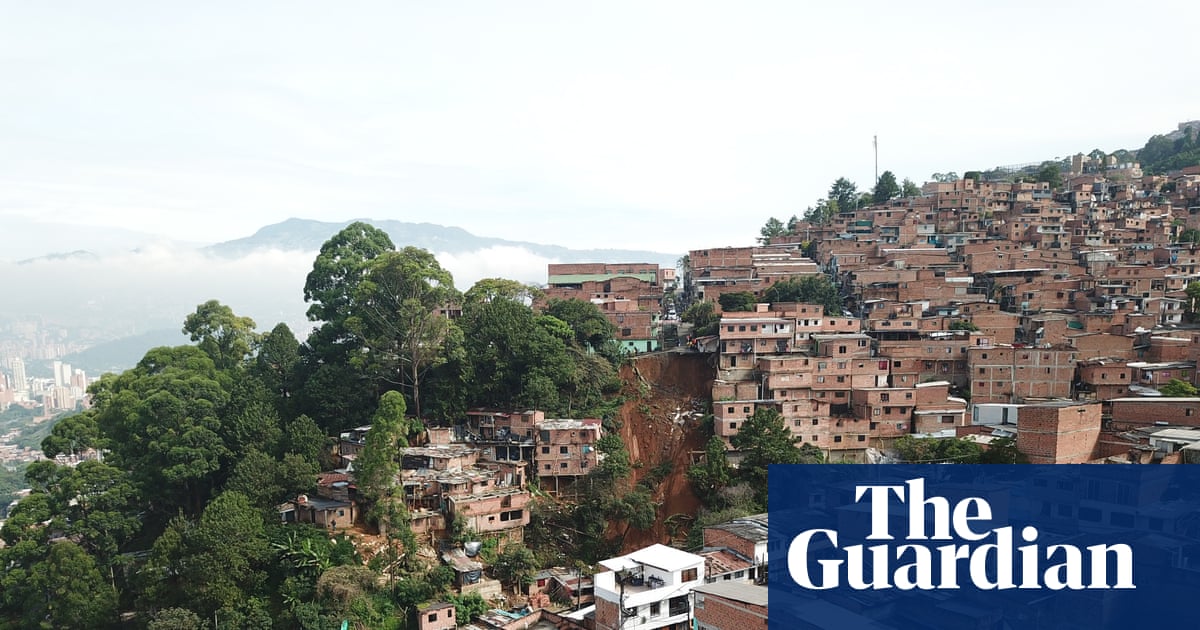
As a result of improper engineering, these areas, where brick houses with corrugated metal roofs are clustered together on unstable ground, are at risk of landslides and flooding. In 1987, a devastating landslide killed 500 people in the area.
Organizations and residents like Velázquez Cartagena came together in 2020 to begin developing a comprehensive regional climate agreement in line with the Medellín City Council. Climate action plan.
After three years of discussions and groundwork, the plan was officially launched in August 2023 by several organizations, including Medellín’s Agency for Disaster Risk Management (DAGRD), Comuna 8’s Housing and Habitat Committee, and Heriot-Watt University in the United Kingdom.
The plan, which is now a model for Medellín’s 4 million residents, consists of eight measures to address climate risks, including managing stormwater, planting trees to reduce erosion and sedimentation on hillsides and valleys, and establishing eco-gardens and agroforestry systems.
The city aims to implement similar plans in all 21 cities; communechallenges remain in securing government support and funding for grassroots efforts.
“I started the rainwater harvesting system because I wanted to prove that we can reduce the risk of disasters by reducing the amount of water that flows onto roads that can flood when it rains,” says Velazquez Cartagena, a community leader who is studying a master’s degree in environmental engineering at the University of Antioquia.
His system collects water from rooftop drainage and stores it in containers. The water is then used for washing machines and toilets.
Originally a disaster management plan, the plan was expanded by the community to include climate adaptation. In addition to eight community measures, it outlines climate risks and vulnerabilities, heat maps, historical floods and landslides, responsible stakeholders and points for action.
“The plan includes solutions based on nature, some of which are not very expensive or difficult to make,” says Velazquez-Cartagena. “We need such solutions because the level of risk is so high.”
In the El Pacifico neighborhood, Nancy Elena Quiroz Correa oversees a small 30-foot-by-10-foot plot that was established last year as a community nursery.
“The nursery prevents stones from falling, absorbs water when it rains, and increases biodiversity,” she says.
Quiros Correa knows firsthand the effects of weather-related disasters. “Around 2011, a rock hit this wall.” [which was originally made of wood] “The climate in Medellin is changing. It used to be cooler, but it has collapsed twice,” he says, pointing to the yellow painted wall in front of his house. The temperature is high now, but the rain is also increasing. ”
She recalls the devastating floods that occurred nearby in 2020. “Many buildings and homes were damaged,” she says. “We want to create a nursery in the mountains so that something like this never happens again.”
Other projects include a rainwater harvesting system and ecological restoration garden installed at a local community center last year.
“Gardens restore nature and stabilize the land,” says Harry Smith, professor of global urban studies at Heriot-Watt University, who has worked with Comuna 8 on environmental projects for the past decade. “But it also stops one of the problems they have: land invasions, where people keep building new homes on land that has been illegally sold by armed groups.”
While waiting for plans to be approved, the community “really started to take off,” Smith said. “They wanted to do some pilot projects to show that they don’t have to wait for municipalities to work together and get things done.”
Velázquez-Cartagena is working with community leaders to create user-friendly planning guides with attractive graphics that can be printed or shared on social media.
With strong community support, work in Comuna 8 led to disaster risk and climate adaptation plans for all 21 communities. commune In Medellin.
Juan David Moreno, head of DAGRD’s technical team, said: “The work on Comuna 8 was a pilot, and we developed it for other communities.”
Still, each one is different. “Different communities have different needs,” Moreno said. “We evaluated the terrain, community needs and various hazards.”
He says important lessons were learned along the way. “The main lesson from Comuna 8 was that we need to work closely with people because they live in the area and know the local dangers.”
He says more challenges still lie ahead. “The proposals need to be implemented by all stakeholders, including not only local communities but all departments of local government. This is the biggest challenge.”
Despite the efforts made so far, Quiroz Correa still has concerns about what the plan will accomplish. “I now have a more realistic view of local government actions. Everything we’ve achieved here has to do with fighting and negotiating with local governments.”
Velázquez-Cartagena said he hopes the plan will be promoted across the country and across Latin America as a powerful example of communities and organizations working together to create effective climate adaptation.
“This plan reflects community input and organizational recommendations that we have made over many years,” he says. “We want local governments to recognize it financially. We hope that local governments will make the effort to implement it because these small actions make a big difference.”
#Rainwater #Harvesting #EcoGardens #District #Colombia #Contributed #Citywide #Climate #Change #Planning