
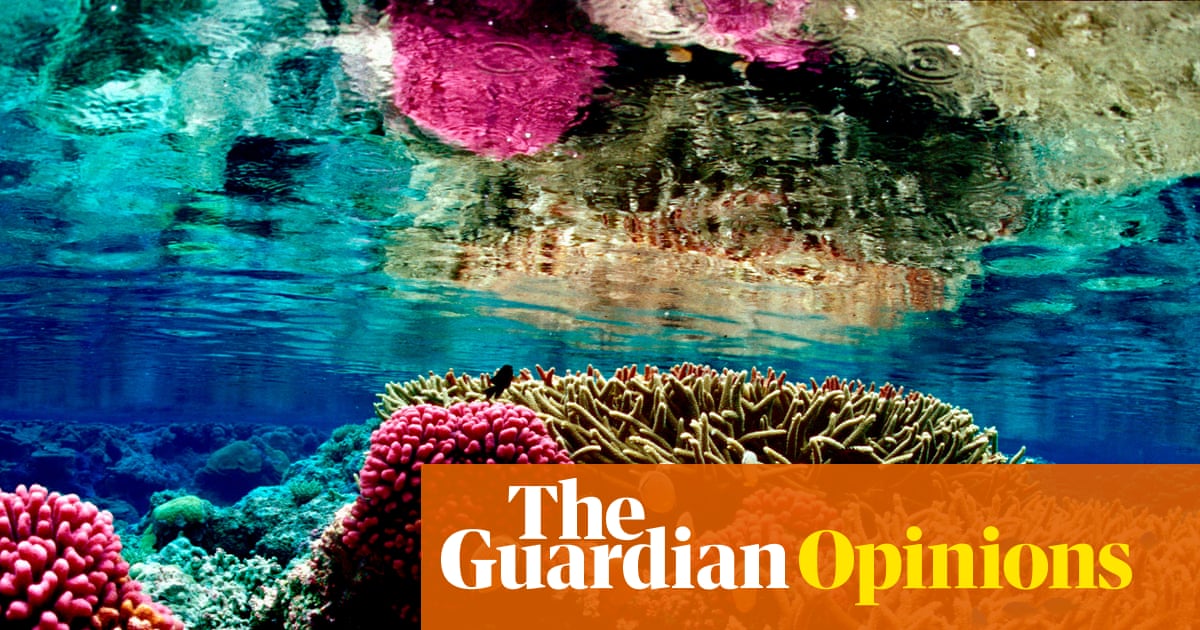
WI’m from Hawaii. Coral reefs aren’t just for viewing. it’s part of us. It feeds our families, protects our coasts, and lives at the heart of our culture. In our story, corals are one of our earliest ancestors. It reminds us that everything in the ocean and all of us are connected.
Now, that essential link is under threat.
Our coral reefs are under severe stress. Earth’s most widespread coral bleaching event ever recorded lasted 33 months until 2025. Scientists have warned that up to 90% of coral reefs could be lost if global warming increases by 1.5 degrees Celsius. It’s 90%. And 1.5 degrees Celsius is not something that remains far away, but something very close.
Even if the world somehow achieves climate goals, coral reefs will still be battered by plastic pollution, coastal development, agricultural runoff, and overfishing. It’s very fragile. And when coral reefs weaken, coastlines are hit even harder by storms and rising sea levels. Both your home and work will be exposed. Cultures and sacred sites are at risk. And the incredible diversity of underwater life found only on coral reefs – once it’s gone, it’s gone forever.
But I have no intention of making coral reefs a lost cause.
This is what we say in Hawaii person in charge – Responsibilities passed down through generations. Although different languages have different terms for it, this sense of duty and consideration is not a new concept. It has played a central role for centuries, especially for island nations and coastal societies.
Now, this responsibility for our environment, especially coral reefs, extends to all people on earth. We must all remember that we are part of nature and that caring for nature means caring for ourselves.
What does this mean in practice? I’ve seen some examples that have stuck with me. I worked with communities in French Polynesia that are deeply connected to coral reefs. And we saw firsthand how easily they can engage and help restore coral reefs when given the tools and support to do so.
Through my work at the United Nations Environment Program and the World Coral Reef Fund, I have seen how smart investments can lead to big changes. Even a small amount of funding can go a long way toward helping people find new ways to make a living without destroying nature, promoting the protection of marine ecosystems, and helping communities rebuild sustainably after extreme weather events.
These give me hope. But the hard truth is that we cannot yet afford to sit back and trust what is already happening. Climate change and unsustainable development are accelerating rapidly, which means we need to act faster.
That’s why next year is so important.
The coming months could be a defining moment for coral reefs. New science and a number of major global gatherings, from Kenya and New Zealand to the World Coral Reef Summit, will help give coral reefs the attention they deserve.
The rest is up to all of us. do Something with that attention. There is no time for blaming or pointing fingers. From countries to communities, businesses to individuals, it is the responsibility of all of us to support the survival of these ecosystems.
We know what works overall. Reduce your impact on the climate. Reduce plastic pollution. Protecting species important to coral reefs. Be careful when in the water. Buy from reef-positive companies. Support coastal communities. invest. Legislate. talk. Activities.
Moments like this year can be turning points, not because of what we say, promise, or promise, but because of how we change. Coral reefs don’t have time for us to create a perfect plan to save them. They need us to show up now – to live the spirit of responsibility, Be responsible and treat them as we would treat ourselves or our children. Because they are part of us and we want them to remain so.
-
Jason Momoa is an actor, filmmaker, and UNEP underwater life advocate dedicated to protecting the oceans and raising global awareness about coral reef conservation.
#Coral #reefs #nearing #extinction #turning #point #Jason #Momoa