
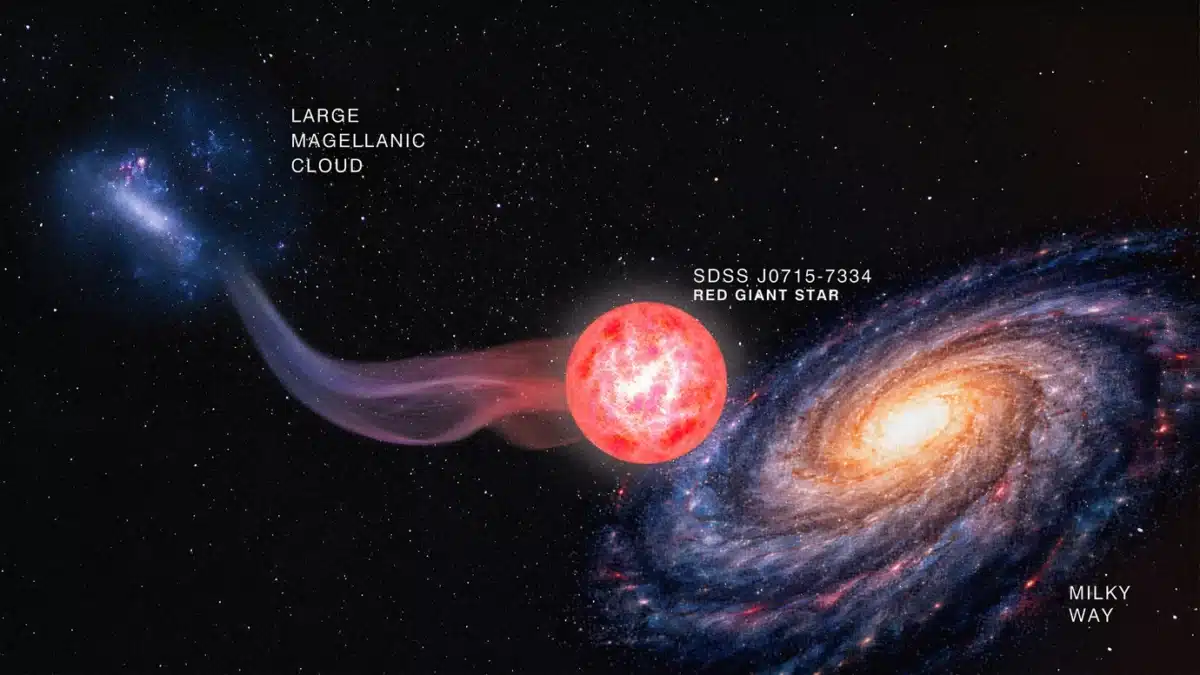
A group of students from the University of Chicago discovered an extremely ancient star, SDSS J0715-7334it can’t be in the Milky Way. This galaxy contains almost no heavy elements and formed in another galaxy before drifting ashore into our galaxy.
This discovery was made by a team of students under their guidance. Professor Alex GeeUsing the data of Sloan Digital Sky Survey (SDSS). This international collaboration will collect astronomical data that will help scientists study the evolution of stars, black holes, and galaxies.
they discovered fossil stars in space
It all started in an astronomy class at the University of Chicago. As reported, Professor Alex Geestudents were given the task of examining thousands of stars using . SDSS data. On my first night’s observations, one of the objects immediately caught my eye.
“I found that out on the first night and it completely changed my plans for the course.” Ji Said.
The finding in question, SDSS J0715-7334, has unique characteristics. It is composed primarily of hydrogen and helium, with very few metals, making it one of the oldest and oldest discoveries. Most “primitive” stars observed so far. Due to the lack of heavy elements such as carbon or oxygen This shows that this star formed long before most supernovae responsible for producing heavier elements.
“All the heavy elements in the universe, which astronomers call metals, were created by stellar processes, from nuclear fusion reactions inside stars to supernovae and collisions between very dense stars,” he added. Ji In a statement released by Carnegie Institute for Science. “So finding a star with very little metal content told this group of students that they were encountering something very special.”
An “immigrant” star from another galaxy
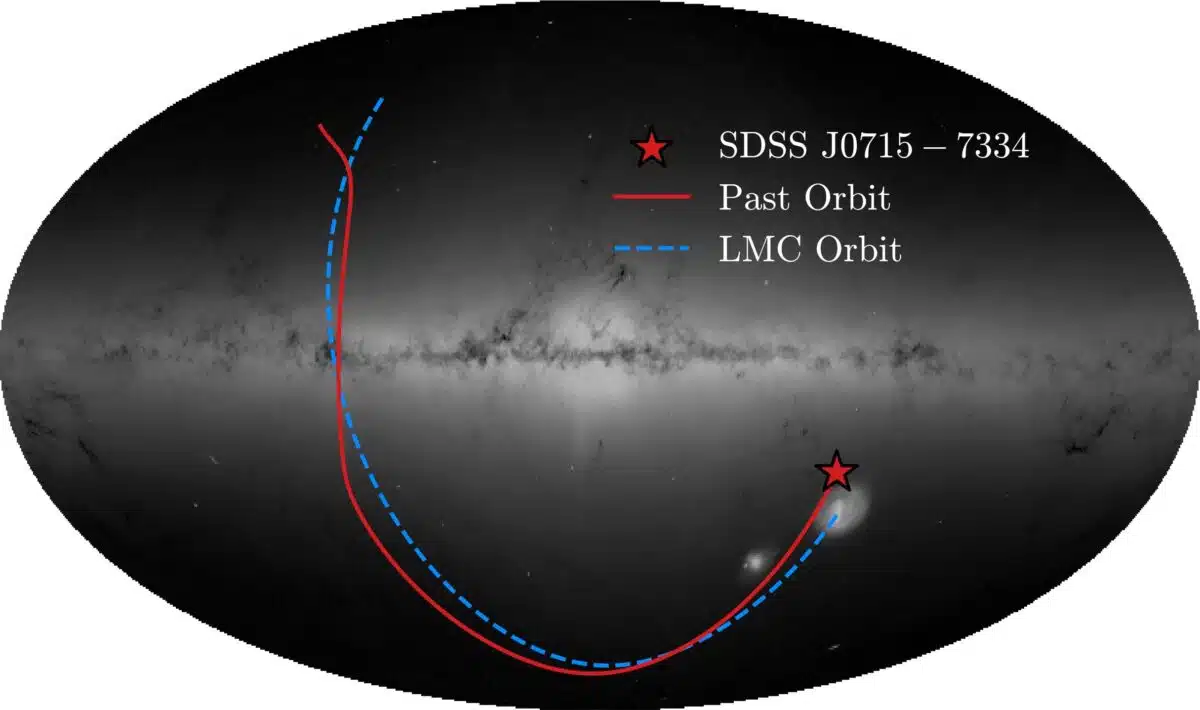
SDSS J0715-7334 does not come from the Milky Way. Instead, it is large magellanic cloudthe neighboring galaxy. By tracking its movement through space, researchers discovered that it left its galaxy of origin and eventually landed in the Milky Way billions of years ago.
This intergalactic journey has given this object the following title: “Ancient Immigrants” According to Professor Ji.
“This ancient immigrant gives us unprecedented observations about the conditions of the early universe,” he said. “Big data projects like SDSS allow students to be directly involved in these important discoveries.”
Students at the forefront of discovery
The most notable aspects of this finding are detailed in the following articles: natural astronomythat it was driven by a student. Ha-doOne student who participated in the project expressed his excitement:
“It’s really exciting to be able to actually contribute to something like this.” Student participation in this research highlights how collaborative projects like SDSS can provide young researchers with access to advanced astronomical data.
Natalie OrrantiaAnother member of the team plans to pursue graduate studies because of this experience. as Juna KollmeyerSDSS-V Director said:
“As an undergrad, I much preferred doing research to taking classes. I’m glad that Alex’s course has turned into a discovery curriculum, and I want to see that surveys like SDSS-V and Gaia have the power to make it the norm rather than the exception,” she said. “These students didn’t just discover the most primitive star; they discovered an inalienable right to physics.”
#group #students #discovers #small #star #metal #Milky