
hubble tensionA stubborn contradiction between two methods of measuring the rate of expansion of the universe has long plagued modern physics. Some scientists had hoped that it would eventually resolve itself to measurement error. New findings suggest otherwise.
To understand what’s at stake, we need to step back a little. In the 1920s, astronomer Edwin Hubble discovered that the universe was expanding, a conclusion drawn from studying the redshifts of distant galaxies. Then, in the late 1990s, observations of type Ia supernovae, an astronomical event whose consistent peak luminosity is reliable, began to occur.standard candle”, revealed something even more surprising: the universe wasn’t just expanding, it was accelerating. The question is: exactly how fast will it reach the next frontier?
Measurements that emphasize not only accuracy but also redundancy
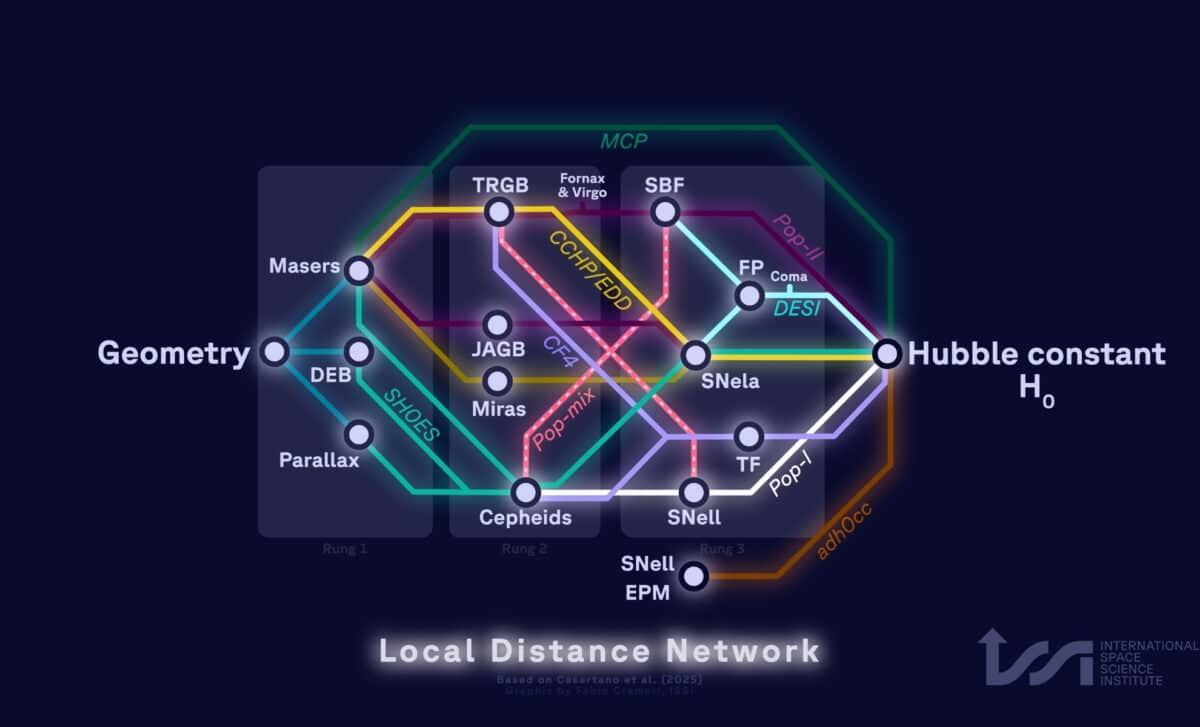
The new research H0 Distance Network (H0DN) Published in a magazine as a collaboration astronomy and astrophysicsthe Hubble constant reaches 73.50 ± 0.81 km/s/Mpc, with an error of less than 1%. This result differs from previous results not only in its accuracy but also in its architecture.
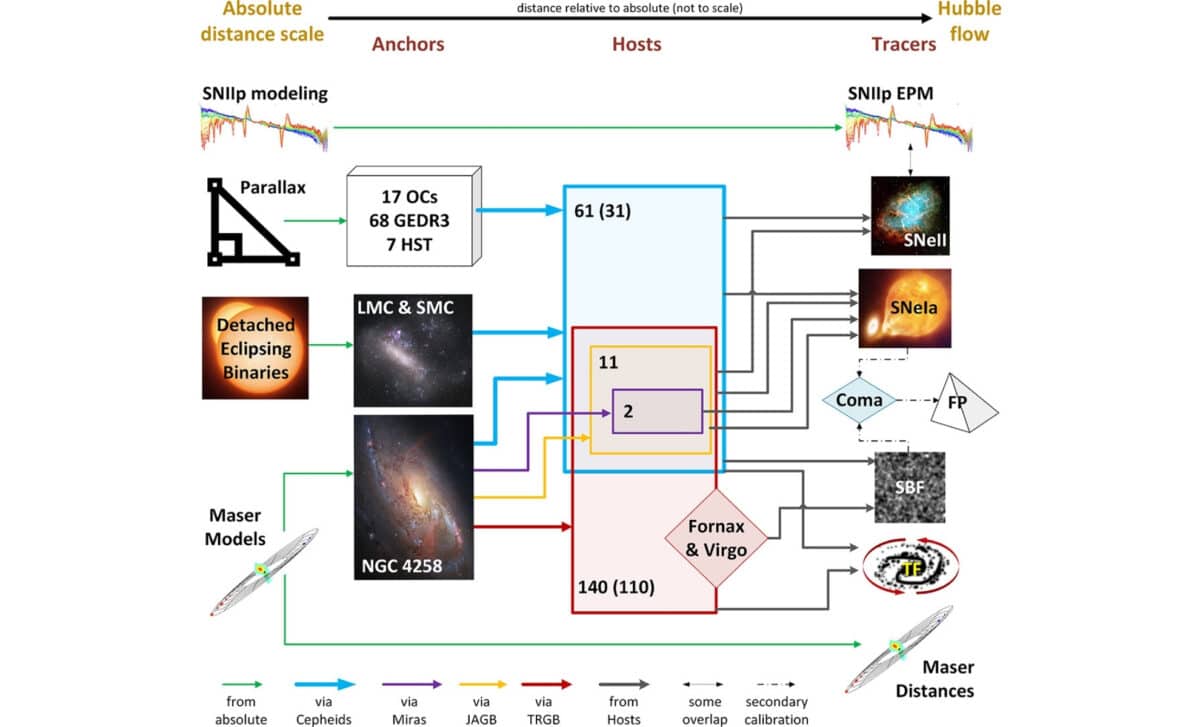
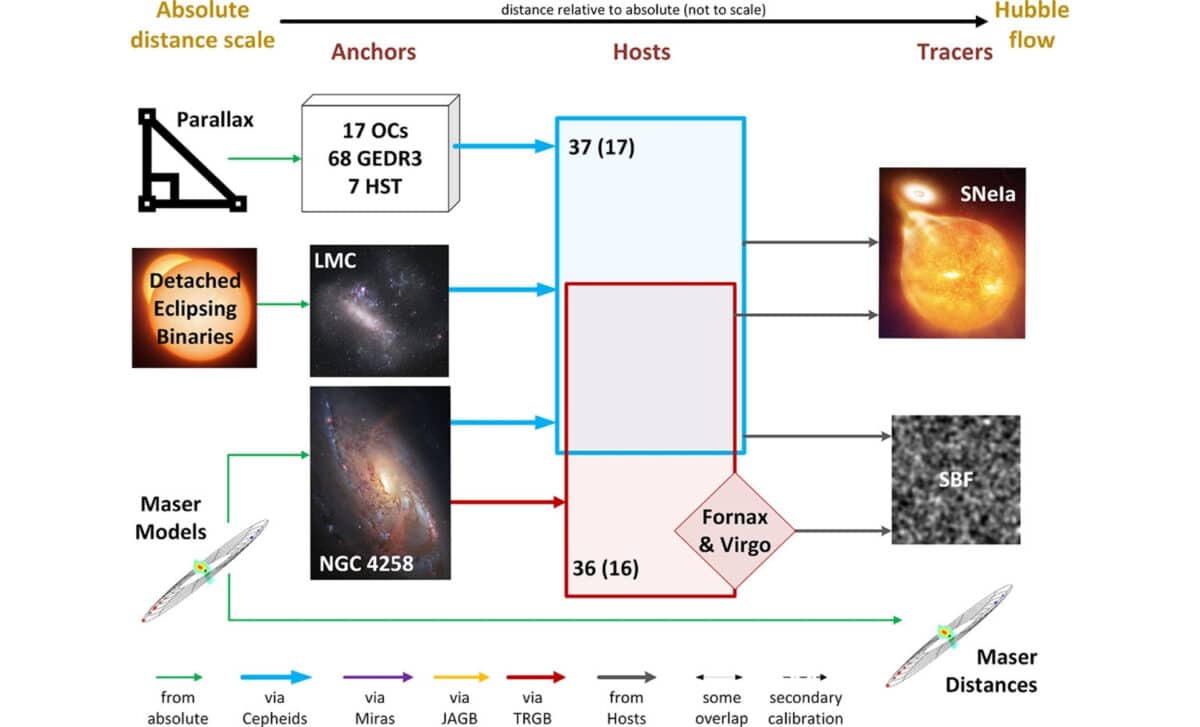
Rather than locking measurements into a single technique, the teamdistance network“This is a web of overlapping and independent methods that check and verify each other. These included Cepheid variable stars, the same type that Hubble himself used a century ago, along with red giant stars and certain bright galaxies. The data came from a worldwide network of observatories, including the National Science Foundation’s Cerro Tololo Inter-American Observatory in Chile and the NSF Kitt Peak National Observatory in Arizona.”
The redundancy was intentional and obvious. When the researchers removed one technique from the analysis, the results changed little. Co-author Adam Reese of Johns Hopkins University told NASA:The strength of this work is that it does not rely on a single method. If multiple independent measurements all point to the same answer, that strengthens the argument that what we’re seeing is a real feature of the universe, rather than a flaw in one technology.”
What the standard model doesn’t take into account
The authors of this study state that tension:It may indicate new physics beyond standard cosmological models.“This is an important statement. Even if all its predictions are successful, the Standard Model does not fully account for dark energy, new particles, or potential changes in gravity. According to NSF’s NOIRLab, a member of the H0DN collaboration, these omissions are significant. When scientists extrapolate the Universe as it exists today from the Cosmic Microwave Background, unknown factors that were present during the evolution of the Universe will distort that extrapolation.”
Specifically, the universe we observe appears to be expanding faster than the universe we calculate from its earliest moments. The authors clearly state the implications. “This study effectively rules out explanations for the Hubble tension that rely on a single overlooked error in local distance measurements. If the tension is real, as growing evidence suggests, it could indicate new physics beyond standard cosmological models.”“
Open data and the way forward
One notable feature of the H0DN study is that the collaboration made the complete dataset publicly available. The aim is to enable future researchers to refine, challenge and build on discoveries, a gesture towards collective scientific progress rather than closed outcomes.
In the future, you will have powerful new tools at your disposal. The Nancy Grace Roman Space Telescope, currently scheduled for launch in 2027, is an infrared observatory designed to probe not only the distances of the universe, but also dark energy, dark matter, and exoplanets. That data stream is expected to bring a new level of resolution to the very questions this study clarified.
According to popular mechanismsthe new results do not resolve the Hubble tension. What this does is removes a comfortable escape route, i.e. the possibility that the discrepancy is just a measurement artifact. A sense of tension remains. It seems that the universe is leaving us with something.
#universe #expanding #faster #expected #scientists #proven #wrong