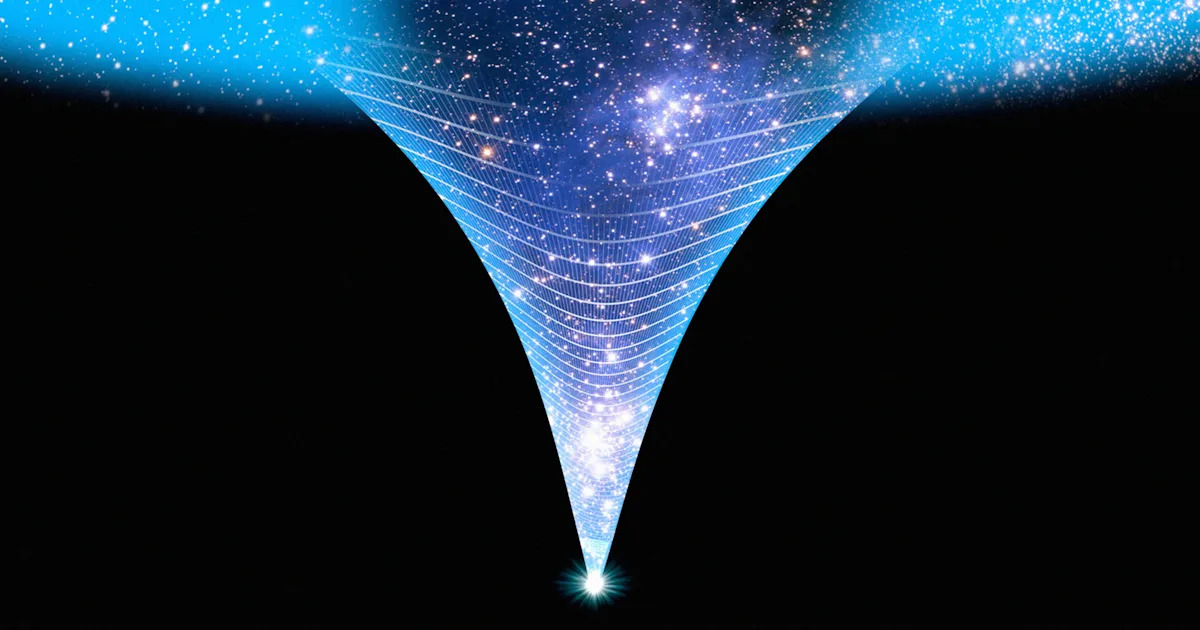
Largest 3D map of the universe spanning over 47 million galaxies could rewrite physics forever
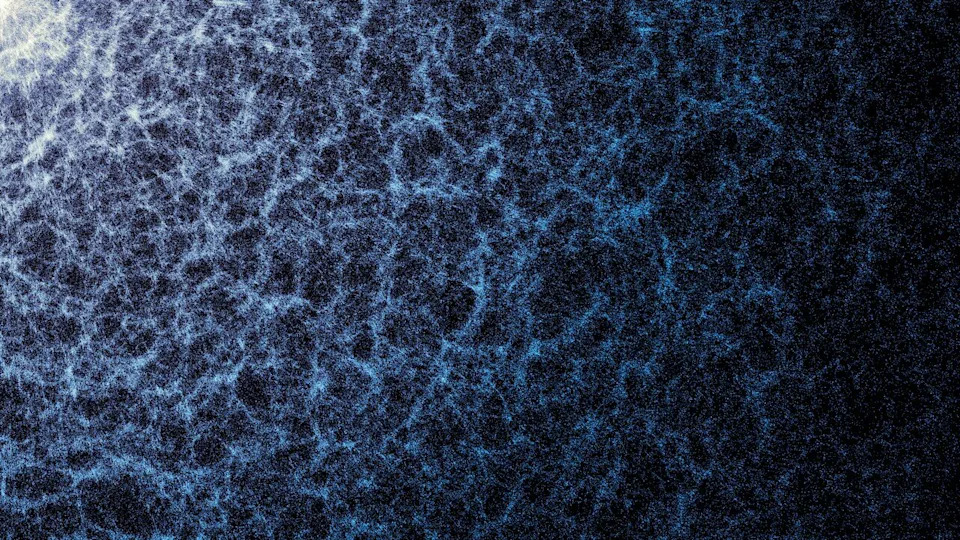
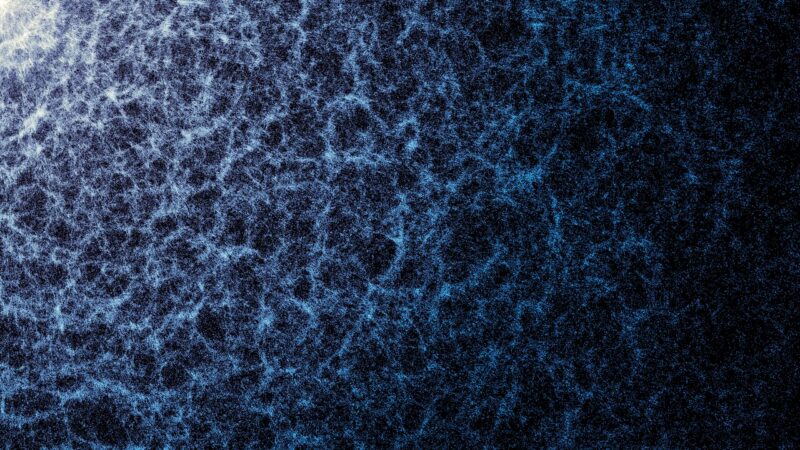
A small portion of the DESI map reveals the large-scale structure of the universe. Arrangement of bluish-white vector-like dots on a dark background.

This is just a small portion of the DESI map, which reveals the large-scale structure of the universe. Each dot represents a galaxy. Credit: DESI Collaboration and DESI Member Institutions/DOE/KPNO/NOIRLab/NSF/AURA/R. Proctor (image); M. Zamani/NSF NOIRLab (image processing) From a mountaintop in Arizona, an army of robotic eyes has been peering into the deep past of … Read more
One of the largest stars in the universe just changed color and astronomers think it’s about to explode

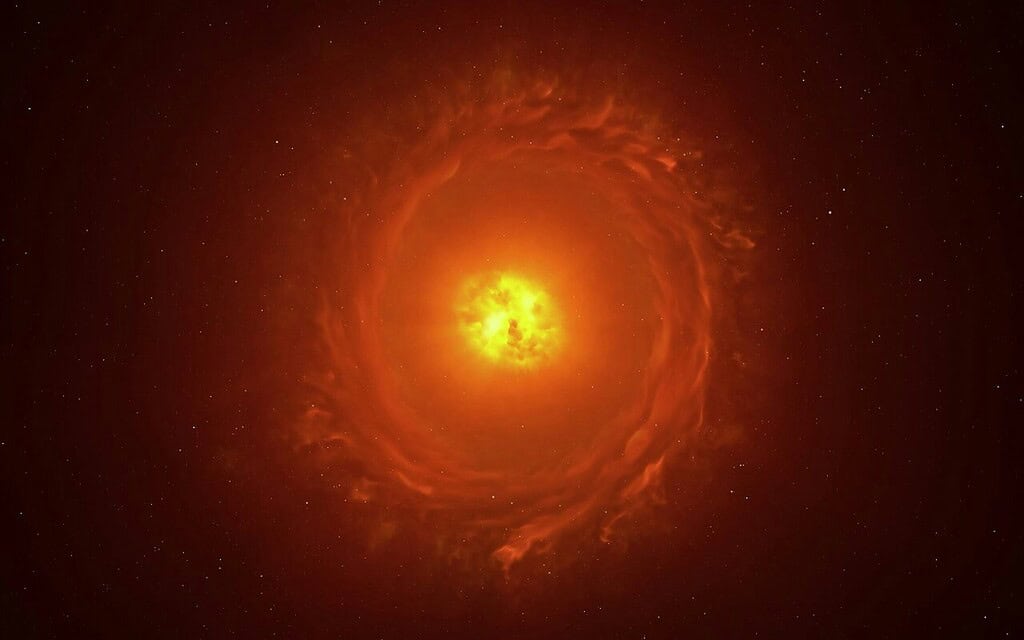
Bright solar nucleus with fiery plasma and solar flares in space.

Credit: ESO/L. Calçada, CC BY One of the largest known stars in the universe underwent a dramatic change in 2014 and may be preparing to explode, a new study has revealed. A study published today in Nature Astronomy and led by Gonzalo Muñoz Sánchez of the National Observatory of Athens claims that the giant star … Read more

Black holes from before the Big Bang may still exist today as “cosmic fossils” | Science News

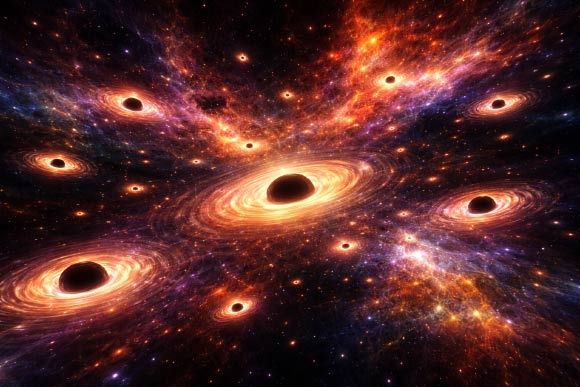
Gaztanaga proposes a new dark matter mechanism in which relic black holes arise from a pre-big-bounce collapse stage.

New research by Professor Enrique Gaztanaga of the University of Portsmouth and the Institute of Space Sciences in Barcelona suggests that some black holes formed before the Big Bang and survived the cosmic ‘bounce’, potentially explaining dark matter, the gravitational wave background, and the early growth of supermassive black holes and galaxies. Gaztanaga proposes a … Read more

NASA’s Hubble shines on young stars in the Trifid Nebula – NASA Science

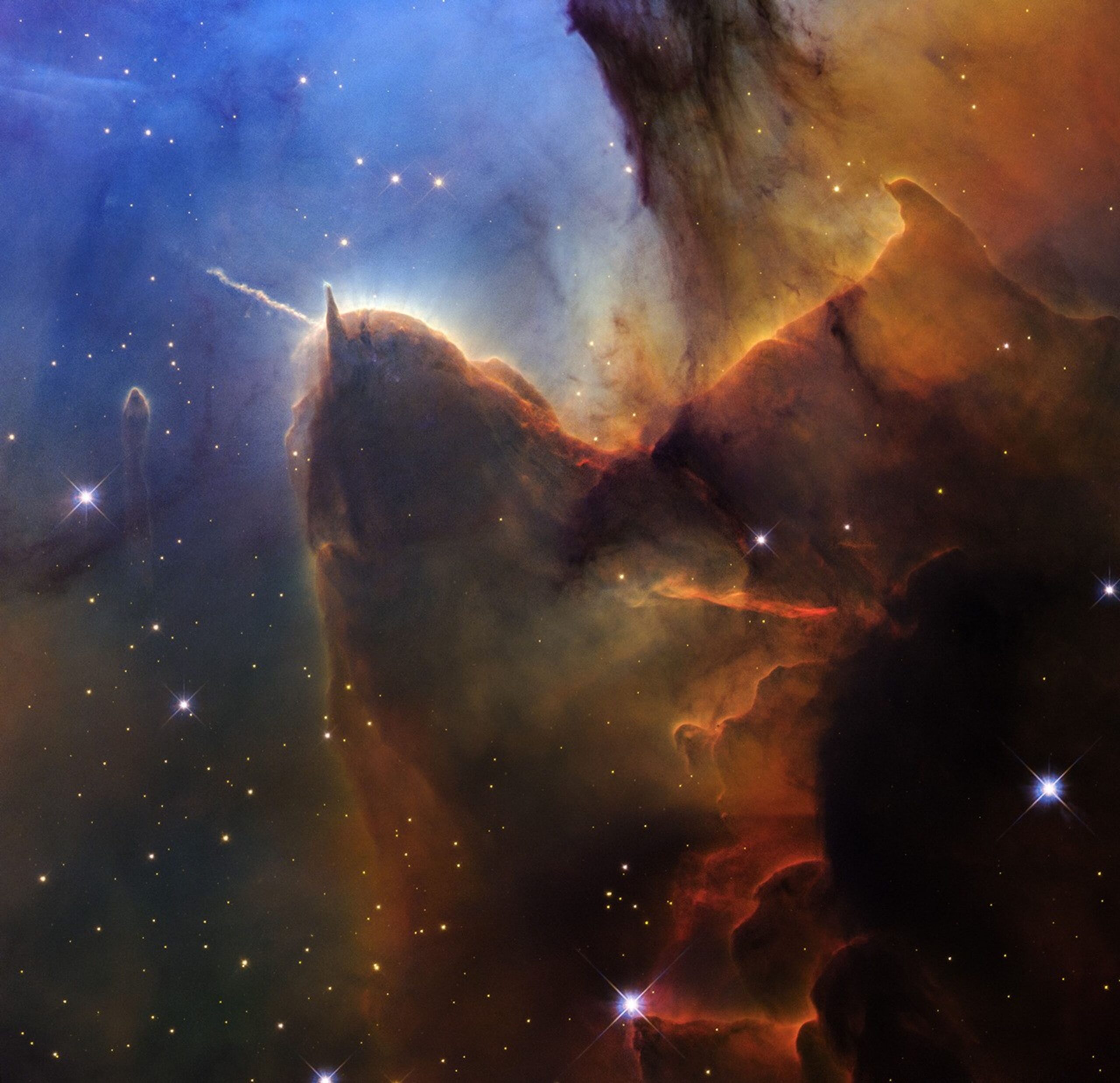
Hubble's view of the vast star-forming region known as the Trifid Nebula. The upper left is bright blue. Brown and amber draw irregularly overlapping lines from the top right through the center and flow down to the bottom center. The bottom right corner is almost completely dark. Small amber stars appear throughout the scene. On the left side, a brown shape stands out that looks like a head with two horns. The left corner points to the left and is wavy. The right corner is triangular and points upwards. The brown dust flows down the back and continues toward the upper right. A pronounced line appears below the center of the body, approximately the same length as the left horn, changing from orange to red. On the left side of the head there is a separate small translucent column. You can see some slightly larger blue foreground stars with four diffraction spikes.

This shimmering region of star formation is a close-up of the Trifid Nebula, about 5,000 light-years from Earth, captured in intricate detail by NASA’s Hubble Space Telescope. The colors in Hubble’s visible-light image, which marks the 36th anniversary of the mission’s launch on April 24, are reminiscent of an underwater scene filled with fine-grained sediment … Read more

Synthetic Universe allows us to ‘see and hear’ galaxies evolving from time immemorial (video)

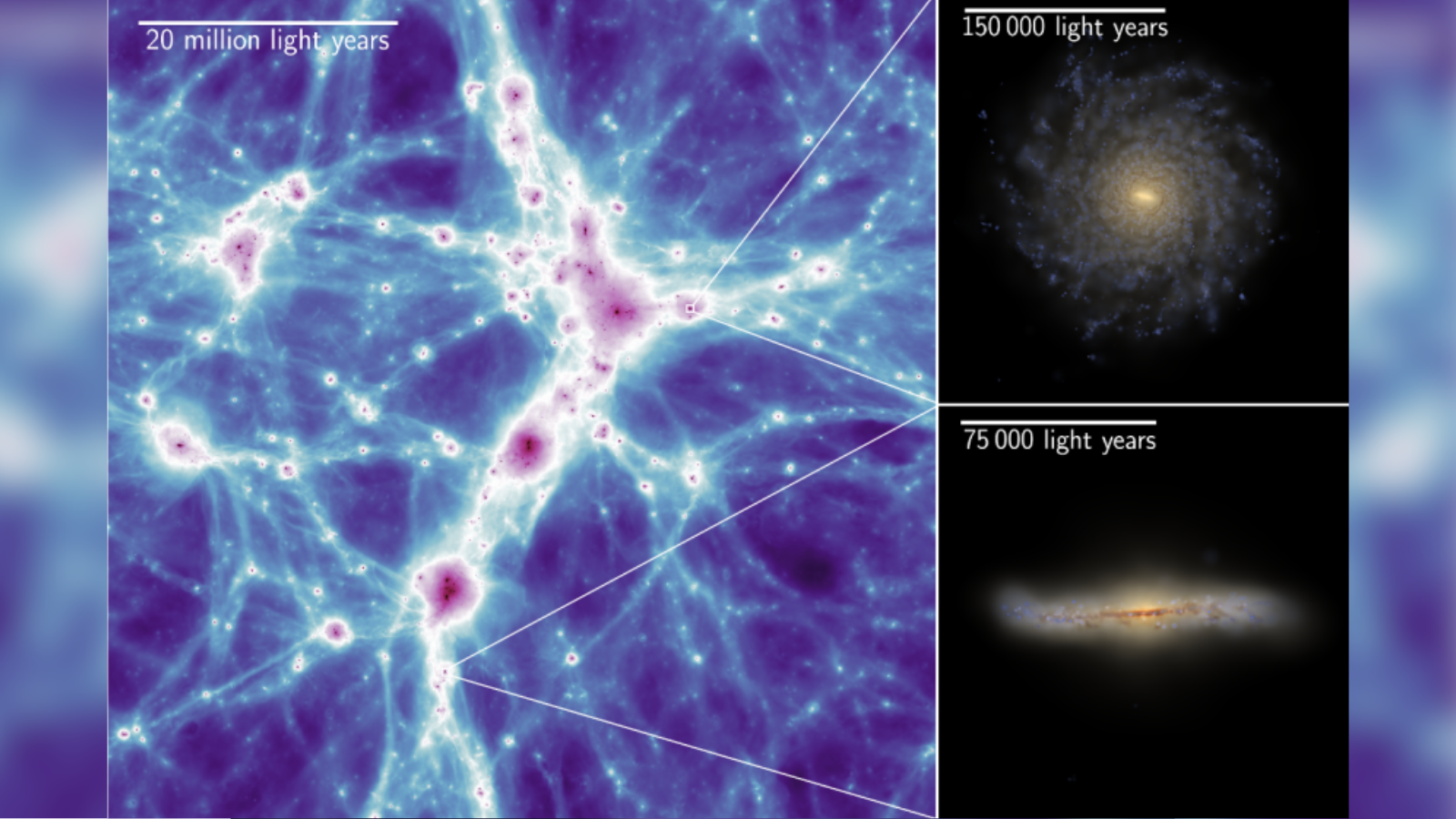
Blue and purple web on background. The two insets show galaxies. The first image shows the spiral viewed from above, and the other shows the galaxy edge-on. The latter looks more like a line.

Have you ever dreamed of witnessing the birth of the first galaxies? Perhaps you could fast-forward through billions of years of the evolution of the universe and watch those galaxies grow and form the universe we know today? Of course, unfortunately that’s not possible. But thanks to an innovative new and unique audio-visual simulation of … Read more

Largest 3D map of the universe ever shows 47 million galaxies from the Milky Way to ‘cosmic noon’

Blue and white map on a dark background. Dense regions indicate areas where galaxies and galaxy clusters are clumping together to form threads of the cosmic web. .

Future and its syndication partners may earn a commission when you buy through links in our articles. Part of DESI’s 5th year large-scale structure map of the universe. |Credit: DESI Collaboration and DESI Member Institutions/DOE/KPNO/NOIRLab/NSF/AURA/R. ProctorImage Processing: M. Zamani (NSF NOIRLab) simple facts What is it: Largest 3D map of the universe ever created Where … Read more

The universe is expanding faster than expected, and scientists have proven them wrong

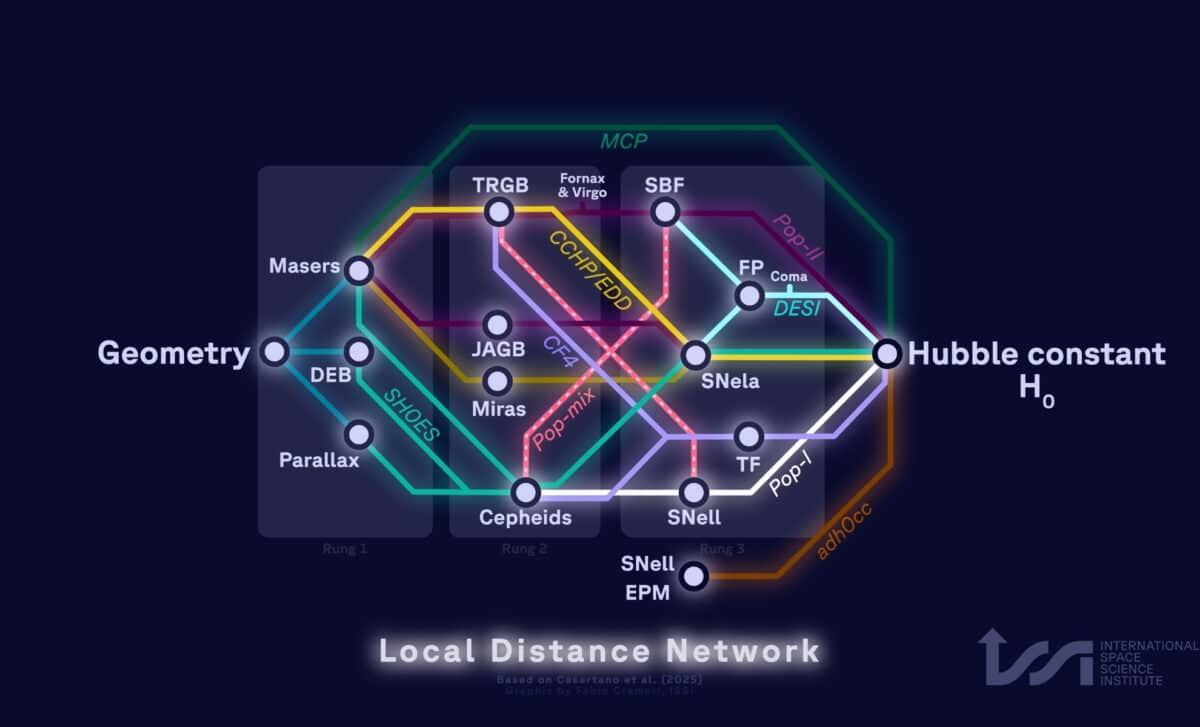
This diagram provides an overview of local distance networks. The local distance network is the research team's new tool for integrating diverse measurements of the Hubble constant into a consistent and rigorous framework.

hubble tensionA stubborn contradiction between two methods of measuring the rate of expansion of the universe has long plagued modern physics. Some scientists had hoped that it would eventually resolve itself to measurement error. New findings suggest otherwise. To understand what’s at stake, we need to step back a little. In the 1920s, astronomer Edwin … Read more

Physicists have big problems about the universe

Yahoo news home

Almost a century ago, famous astronomer Edwin Hubble determined that the universe was expanding at an accelerating rate. He discovered that the farther a galaxy is from Earth, the faster it appears to be moving away from us. It was an elegant observation that underpins much of today’s cosmology. But determining the exact relationship between … Read more