Exploding stars, black holes, and forbidden crevices
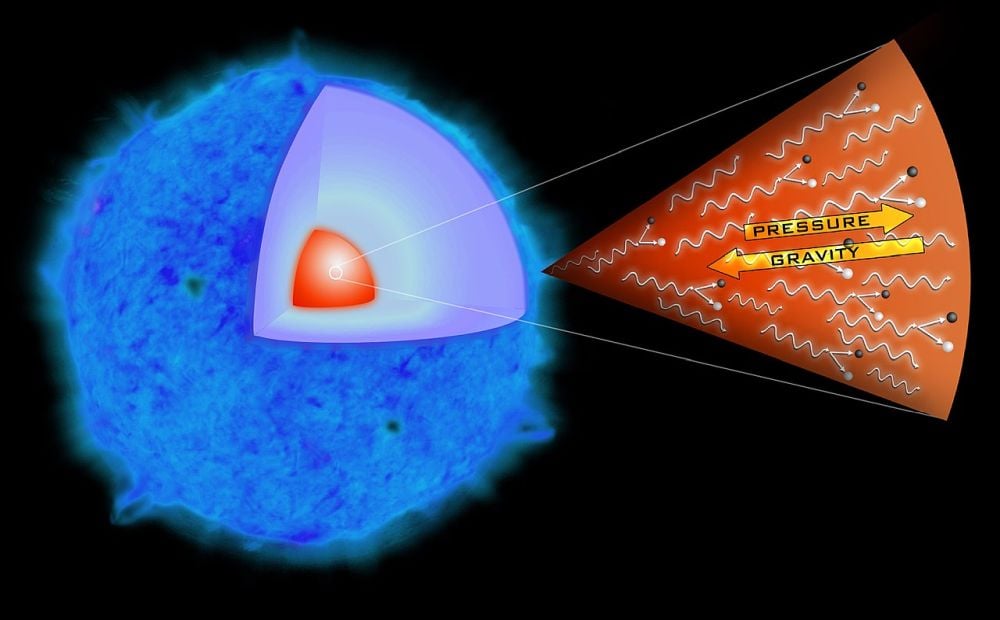
This image shows what's happening inside an unstable supernova. In very massive stars, the gamma rays produced at their centers can be so energetic that some of that energy escapes, producing electron-positron pairs. This reduces the star's radiation pressure, causing it to partially collapse under its own powerful gravity. After collapse, a runaway thermonuclear reaction (not shown here) occurs and the star explodes. Nothing is left behind, not even a black hole. Image credit: From NASA/CXC/M. Weiss - http://chandra.harvard.edu/photo/2007/sn2006gy/more.html, especially http://chandra.harvard.edu/photo/2007/sn2006gy/sn2006gy_ill.tif, public domain, https://commons.wikimedia.org/w/index.php?curid=2082949

When the first gravitational waves (GW) were detected in 2015, scientists said they had opened a new window into the universe. Most of astronomy is based on detecting electromagnetic energy, but GW is different. They are ripples in spacetime predicted by Einstein. Using GW detectors, it is now possible to detect mergers between black holes … Read more
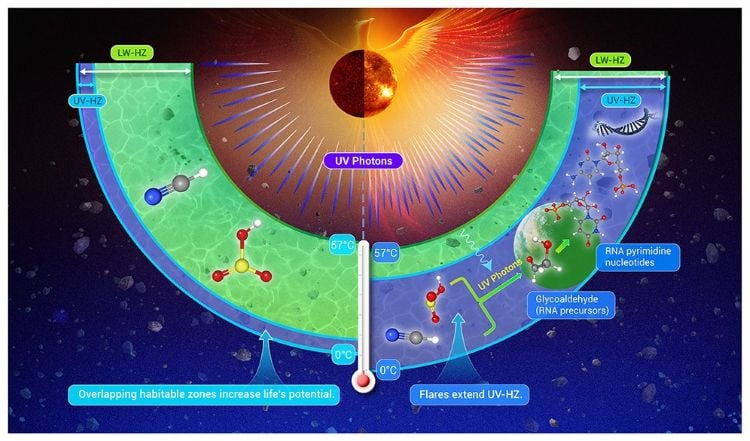
Stellar flares may expand habitable regions around small stars

Graphical illustration depicting the  liquid water habitable zone (LW-HZ) and the ultraviolet habitable zone (UV-HZ) exmained in this study. (Credit: Gao et al. (2026))

The search for extraterrestrial life has traditionally focused on exoplanets orbiting Sun-like stars, which are G-type stars. But lower-mass stars, called K-type and M-type stars, are rapidly becoming objects of astrobiology, primarily because they have much longer lifetimes. This also means that the habitable zone (HZ), the distance from the star where liquid water can … Read more

One of the largest stars in the universe just changed color and astronomers think it’s about to explode

Bright solar nucleus with fiery plasma and solar flares in space.

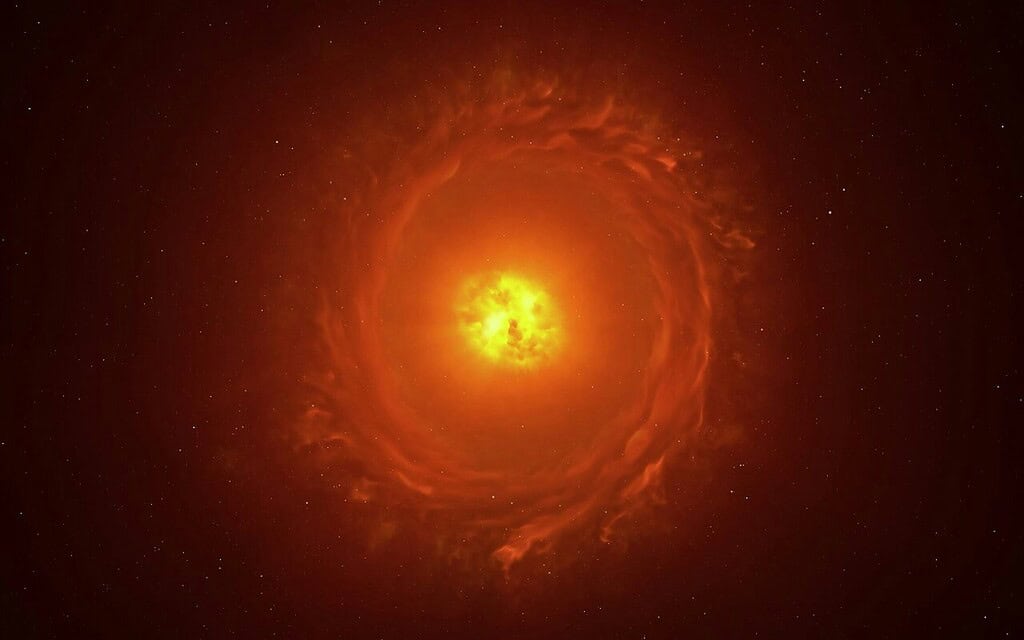
Credit: ESO/L. Calçada, CC BY One of the largest known stars in the universe underwent a dramatic change in 2014 and may be preparing to explode, a new study has revealed. A study published today in Nature Astronomy and led by Gonzalo Muñoz Sánchez of the National Observatory of Athens claims that the giant star … Read more

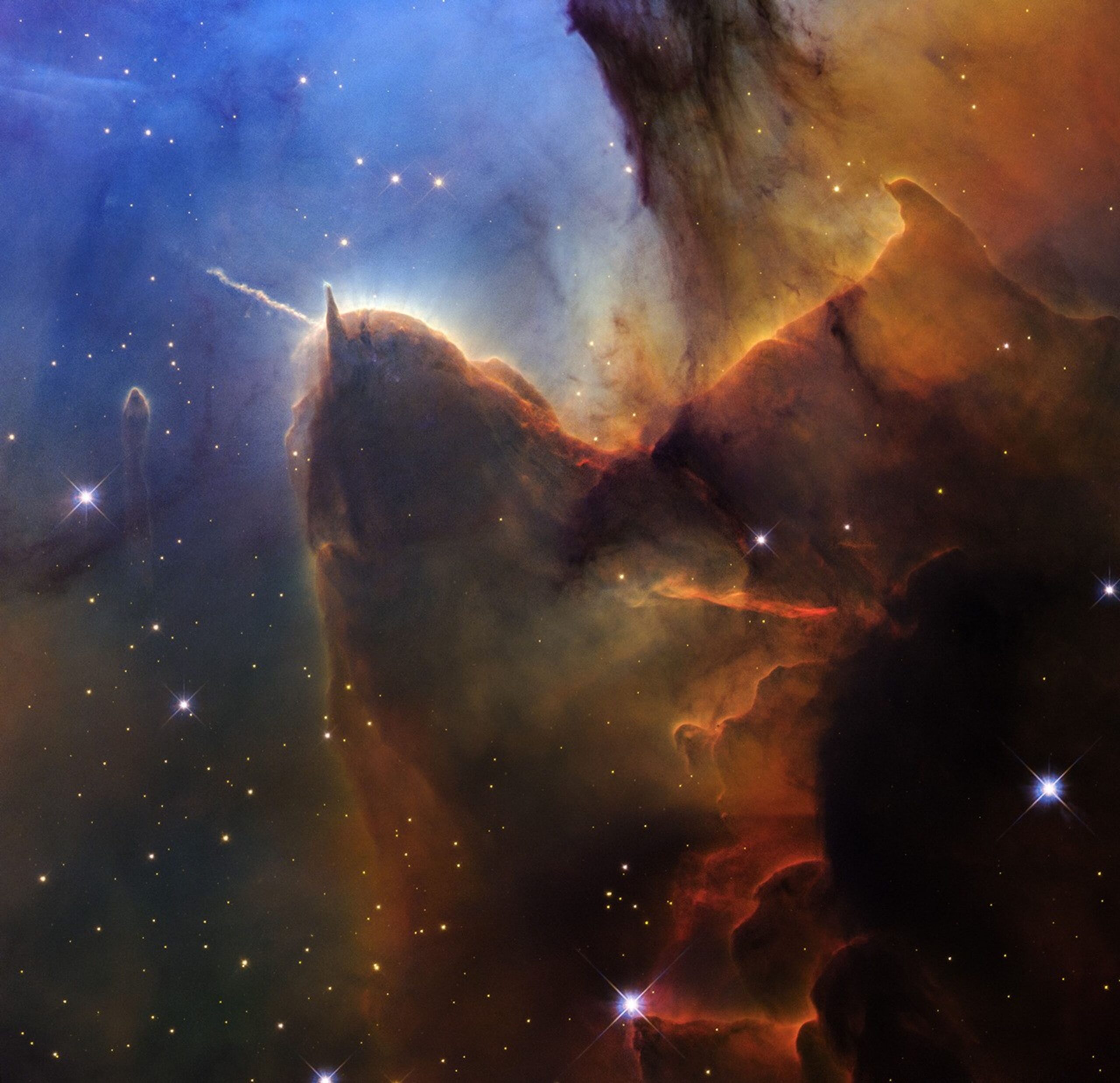
NASA’s Hubble shines on young stars in the Trifid Nebula – NASA Science

Hubble's view of the vast star-forming region known as the Trifid Nebula. The upper left is bright blue. Brown and amber draw irregularly overlapping lines from the top right through the center and flow down to the bottom center. The bottom right corner is almost completely dark. Small amber stars appear throughout the scene. On the left side, a brown shape stands out that looks like a head with two horns. The left corner points to the left and is wavy. The right corner is triangular and points upwards. The brown dust flows down the back and continues toward the upper right. A pronounced line appears below the center of the body, approximately the same length as the left horn, changing from orange to red. On the left side of the head there is a separate small translucent column. You can see some slightly larger blue foreground stars with four diffraction spikes.

This shimmering region of star formation is a close-up of the Trifid Nebula, about 5,000 light-years from Earth, captured in intricate detail by NASA’s Hubble Space Telescope. The colors in Hubble’s visible-light image, which marks the 36th anniversary of the mission’s launch on April 24, are reminiscent of an underwater scene filled with fine-grained sediment … Read more

Why don’t we see stars in photos of space? NASA’s explanation is simpler than you think, and the photos from Artemis II prove it.

awkward, acting, very intelligent, minded

What traits have you classified as “undesirable habits”? They may actually be hidden, subtle strengths. Please think and pause before responding. We want to understand the “why” before we say “yes.” The room begins to spin as you replay the conversation over and over in your head. In a culture that values ​​instantaneous reactions, being … Read more

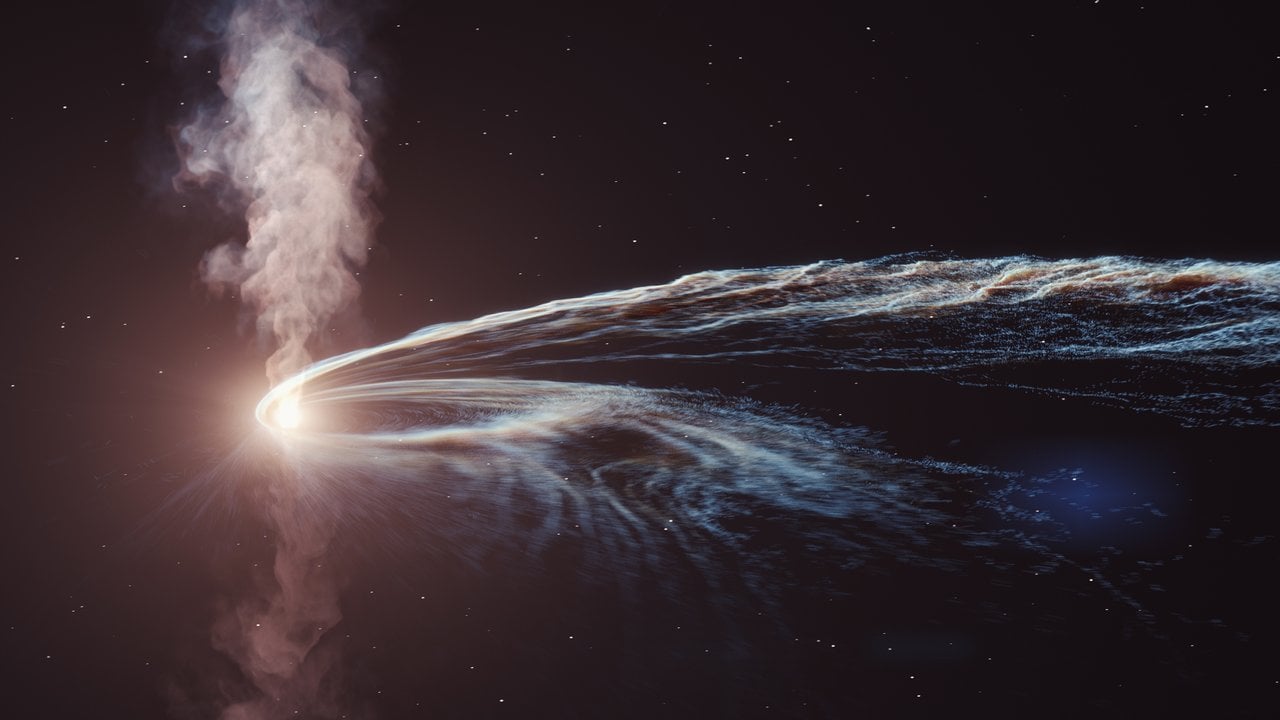
How black holes and shredded stars can illuminate galaxies

An artist's depiction of a supermassive black hole tearing apart a star, sending roughly half of the star's fragments into space, with the remainder forming a glowing accretion disk around the black hole. (Credit: DESY, Science Communication Lab)

In 2014, a strange cloudy object called G2 approached Sagittarius A*, the supermassive black hole at the center of the Milky Way. Astronomers were pretty excited, in part because they thought Sag A*’s intense gravity might tear it apart. That didn’t happen, and the event became a cosmic uproar. G2 survived the flyby by skipping … Read more

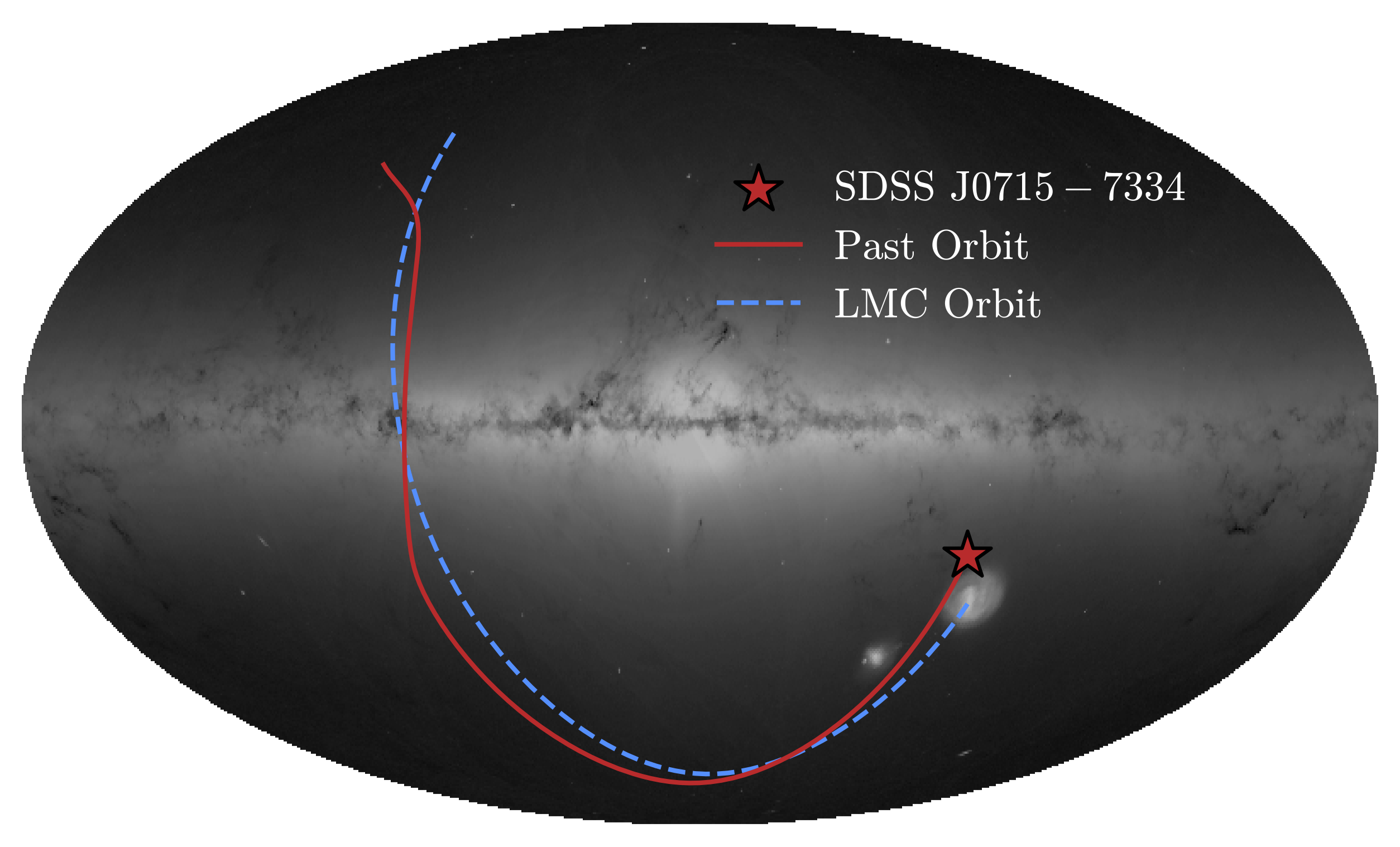
This may be a daughter of one of the first stars in our universe. Scientists call this “ancient migration”

A diagram showing the orbit of a star over time.

Primordial stars found to contain few elements heavier than hydrogen or helium could be direct descendants of one of the first stars in the universe. if star If they were like myths, the first generation of stars that existed in the universe would be like the gods of ancient Greece. It was huge and mysterious, … Read more