
Stellar flares may expand habitable regions around small stars
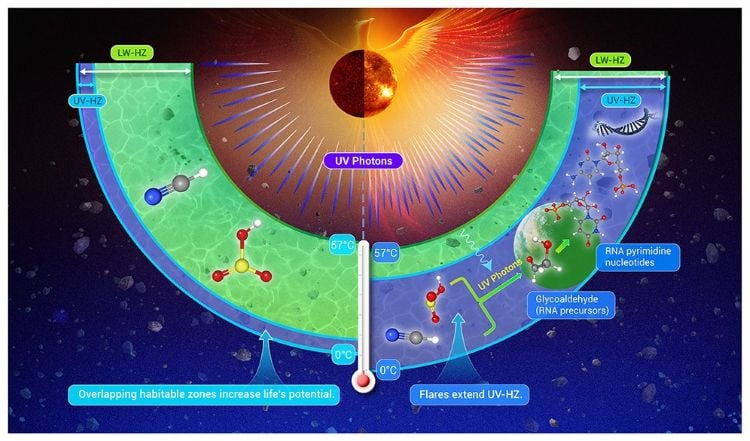
Graphical illustration depicting the  liquid water habitable zone (LW-HZ) and the ultraviolet habitable zone (UV-HZ) exmained in this study. (Credit: Gao et al. (2026))

The search for extraterrestrial life has traditionally focused on exoplanets orbiting Sun-like stars, which are G-type stars. But lower-mass stars, called K-type and M-type stars, are rapidly becoming objects of astrobiology, primarily because they have much longer lifetimes. This also means that the habitable zone (HZ), the distance from the star where liquid water can … Read more

If funded, this giant telescope could discover habitable exoplanets and the secrets of the universe.

A rendering of a structure atop a beautiful brown mountain range.

The Giant Magellan Telescope project has been in the works for a critical 12-24 months, with final design stages underway as the team behind the project seeks further funding to make their dream of a 25.4-meter (83-foot) multi-mirror telescope a reality. of giant magellan telescope (GMT) A consortium of 16 universities and research institutes held … Read more