Largest 3D map of the universe spanning over 47 million galaxies could rewrite physics forever
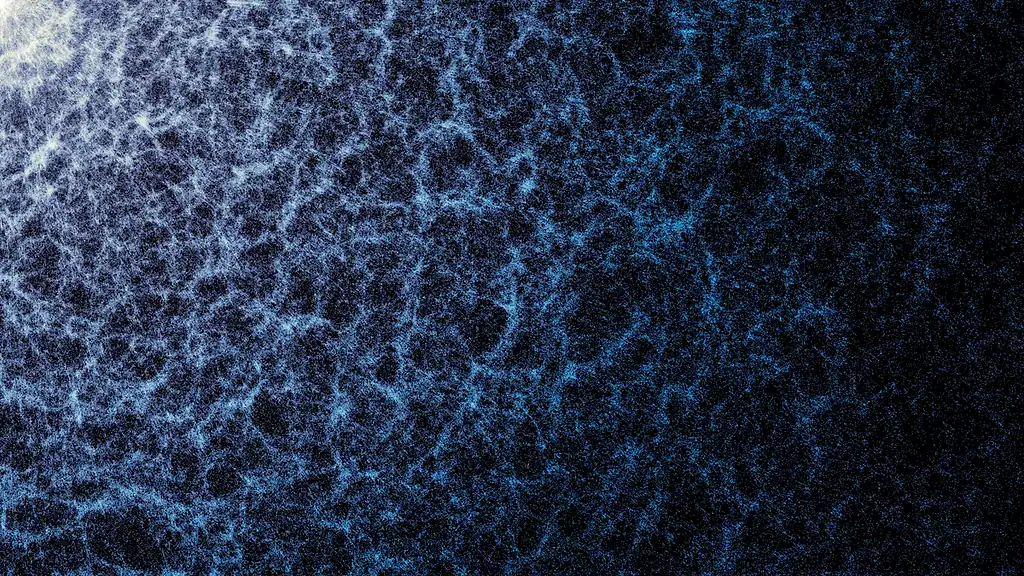
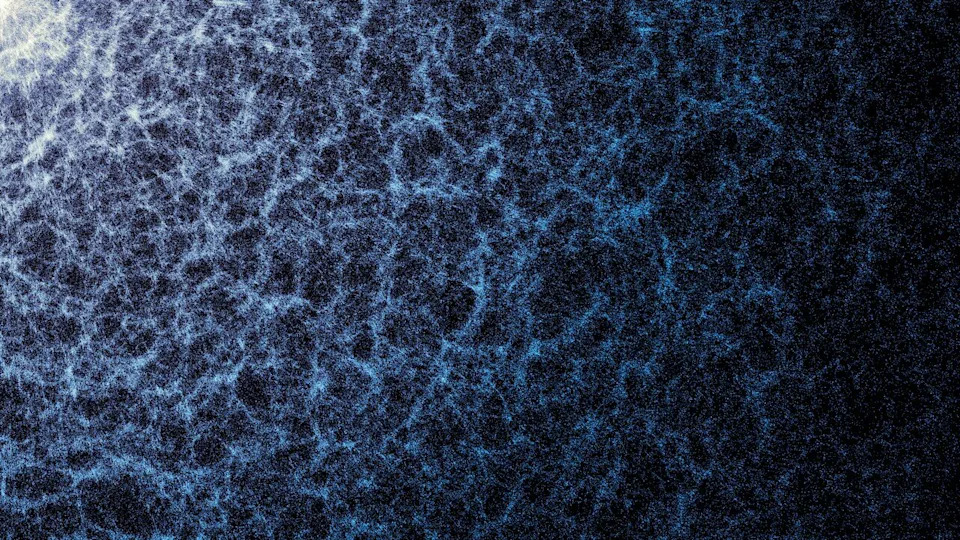
A small portion of the DESI map reveals the large-scale structure of the universe. Arrangement of bluish-white vector-like dots on a dark background.

This is just a small portion of the DESI map, which reveals the large-scale structure of the universe. Each dot represents a galaxy. Credit: DESI Collaboration and DESI Member Institutions/DOE/KPNO/NOIRLab/NSF/AURA/R. Proctor (image); M. Zamani/NSF NOIRLab (image processing) From a mountaintop in Arizona, an army of robotic eyes has been peering into the deep past of … Read more

Euclidean Space Warp: Helps discover galaxies that bend space and time

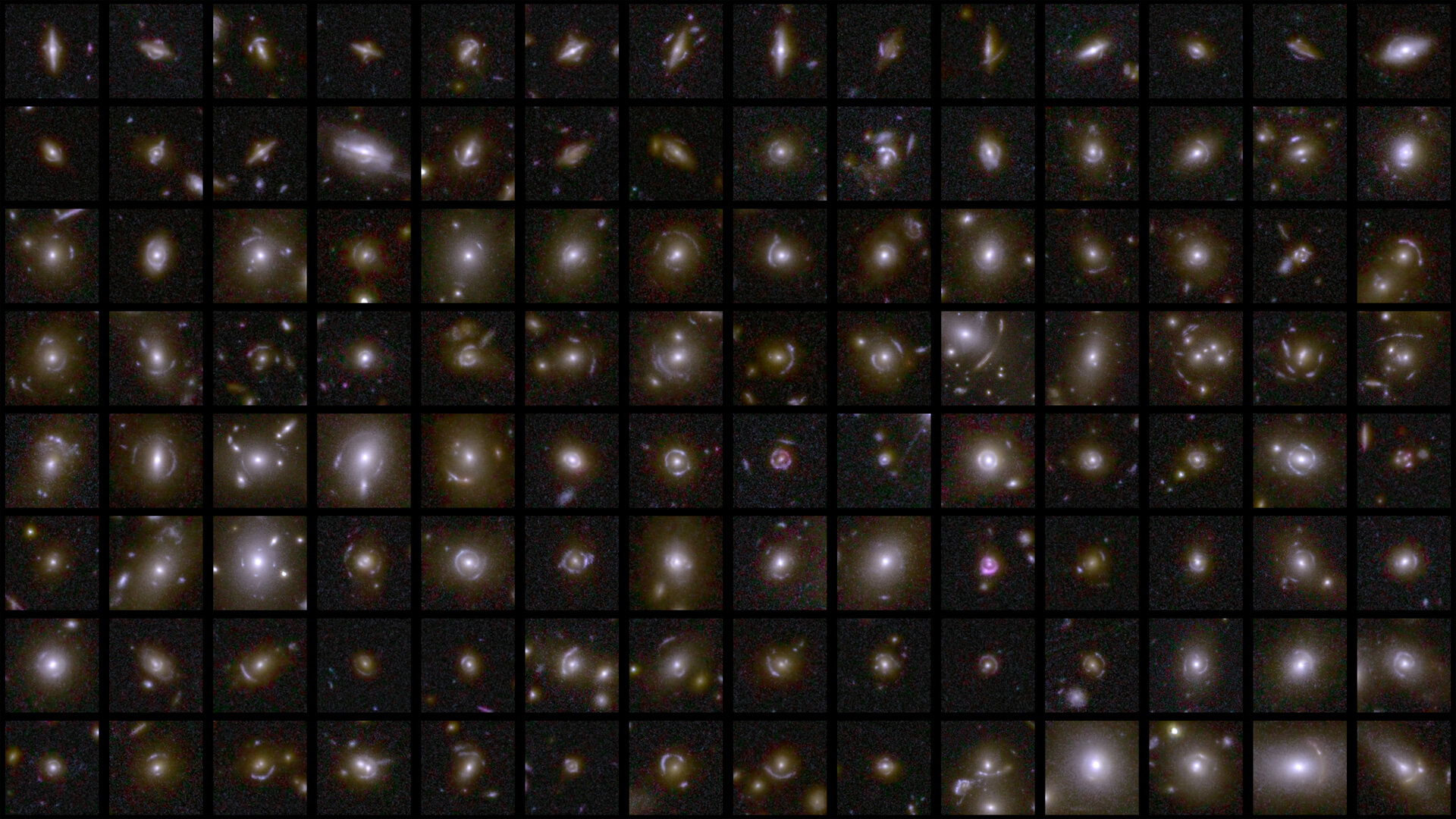
Strong gravitational lenses captured by Euclid

science and exploration 2026/04/21 2706 view 34 like Simply put With the launch of Space Warps, a new citizen science project on the Zooniverse platform, you can now join the quest to find rare, elusive, and powerful gravitational lenses in never-before-seen images captured by the European Space Agency’s Euclid Space Telescope. The project aims to … Read more

Black holes that formed before the Big Bang may still exist and continue to shape galaxies to this day.

earth snap

Researchers have discovered that black holes that formed before the Big Bang may still exist today as surviving relics. These ancient objects carry mass and structure from early cosmic stages and will provide new ways to explain how galaxies formed and why invisible matter dominates them. Within this framework, relic black holes do … Read more

Gravity measured in 300,000 galaxies matches Newton’s predictions

earth snap

A new analysis finds that gravity obeys Newton’s inverse square law over hundreds of millions of light years, even when tested using 300,000 galaxies. This result leaves little room for alternatives that weaken gravity over long distances. It also sharpens the case for invisible masses that shape the motion of the universe. beyond the distance … Read more

Synthetic Universe allows us to ‘see and hear’ galaxies evolving from time immemorial (video)

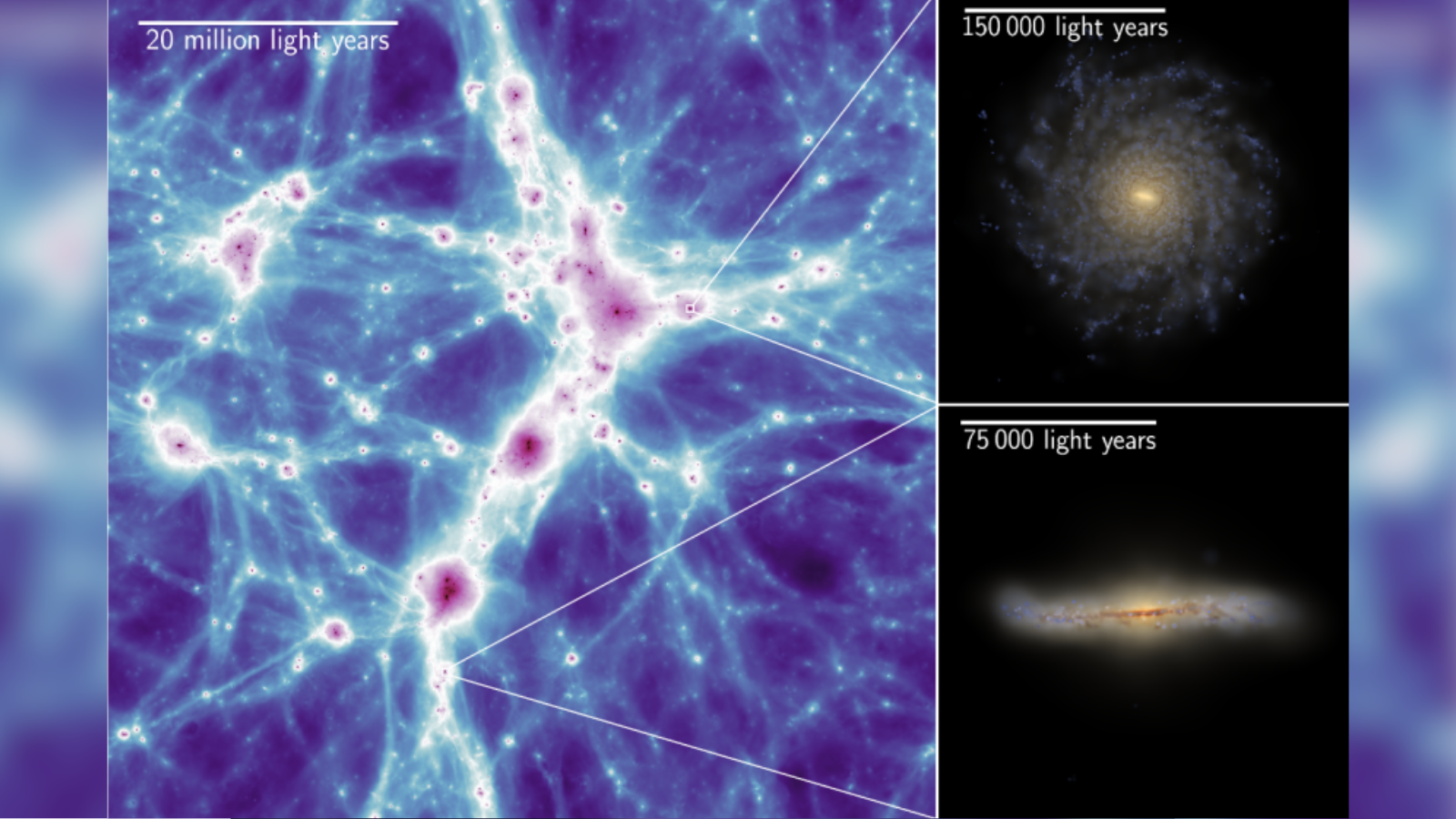
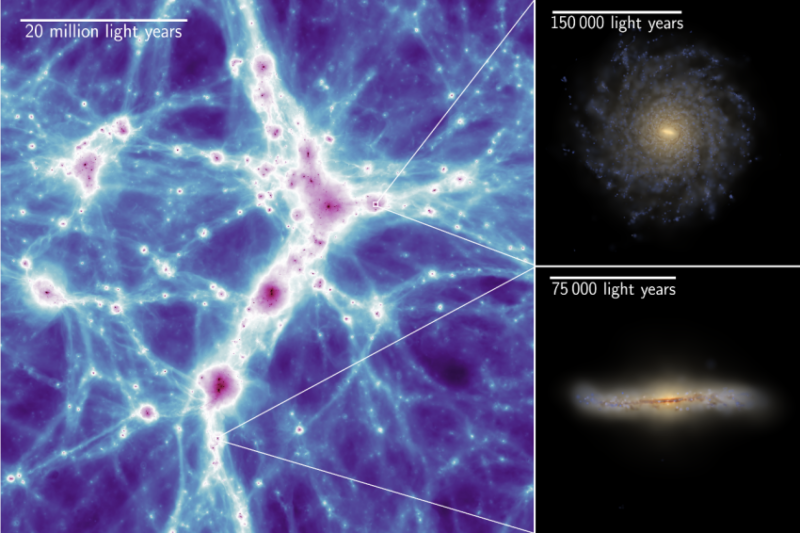
Blue and purple web on background. The two insets show galaxies. The first image shows the spiral viewed from above, and the other shows the galaxy edge-on. The latter looks more like a line.

Have you ever dreamed of witnessing the birth of the first galaxies? Perhaps you could fast-forward through billions of years of the evolution of the universe and watch those galaxies grow and form the universe we know today? Of course, unfortunately that’s not possible. But thanks to an innovative new and unique audio-visual simulation of … Read more

Largest 3D map of the universe ever shows 47 million galaxies from the Milky Way to ‘cosmic noon’

Blue and white map on a dark background. Dense regions indicate areas where galaxies and galaxy clusters are clumping together to form threads of the cosmic web. .

Future and its syndication partners may earn a commission when you buy through links in our articles. Part of DESI’s 5th year large-scale structure map of the universe. |Credit: DESI Collaboration and DESI Member Institutions/DOE/KPNO/NOIRLab/NSF/AURA/R. ProctorImage Processing: M. Zamani (NSF NOIRLab) simple facts What is it: Largest 3D map of the universe ever created Where … Read more

How black holes and shredded stars can illuminate galaxies

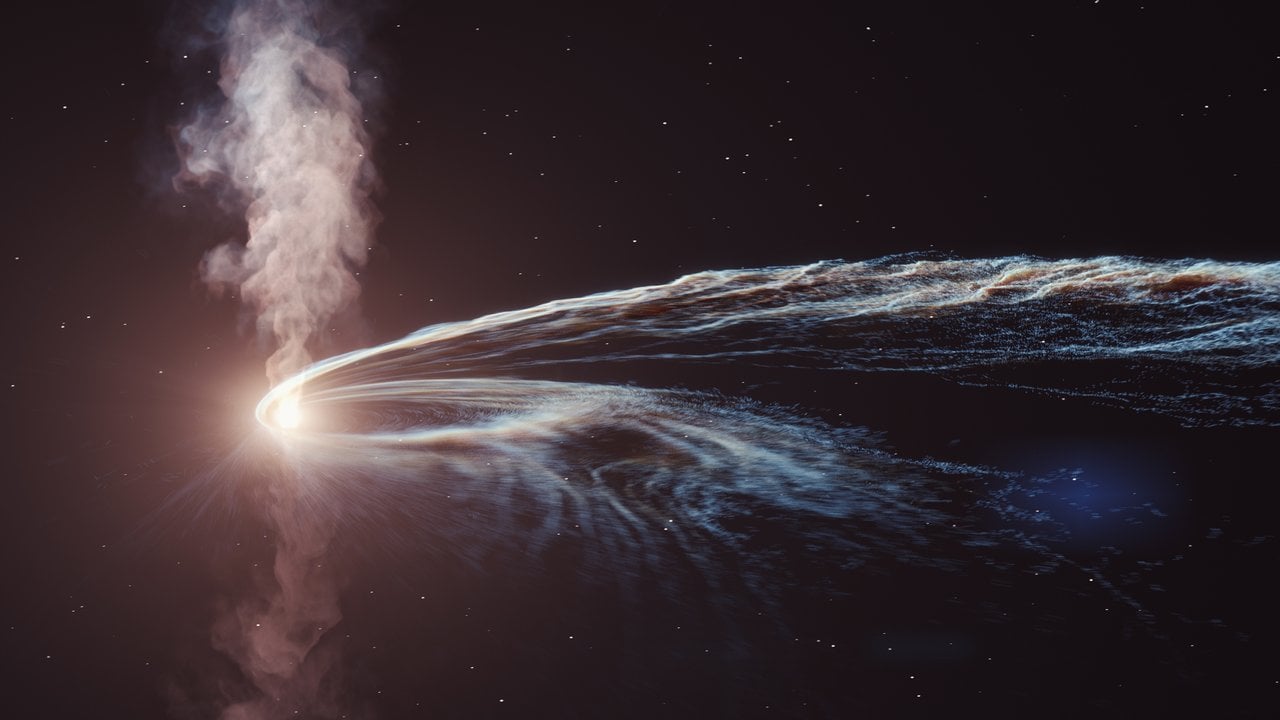
An artist's depiction of a supermassive black hole tearing apart a star, sending roughly half of the star's fragments into space, with the remainder forming a glowing accretion disk around the black hole. (Credit: DESY, Science Communication Lab)

In 2014, a strange cloudy object called G2 approached Sagittarius A*, the supermassive black hole at the center of the Milky Way. Astronomers were pretty excited, in part because they thought Sag A*’s intense gravity might tear it apart. That didn’t happen, and the event became a cosmic uproar. G2 survived the flyby by skipping … Read more

Early galaxies were surrounded by giant clouds of hydrogen, and astronomers have discovered massive clouds of hydrogen.

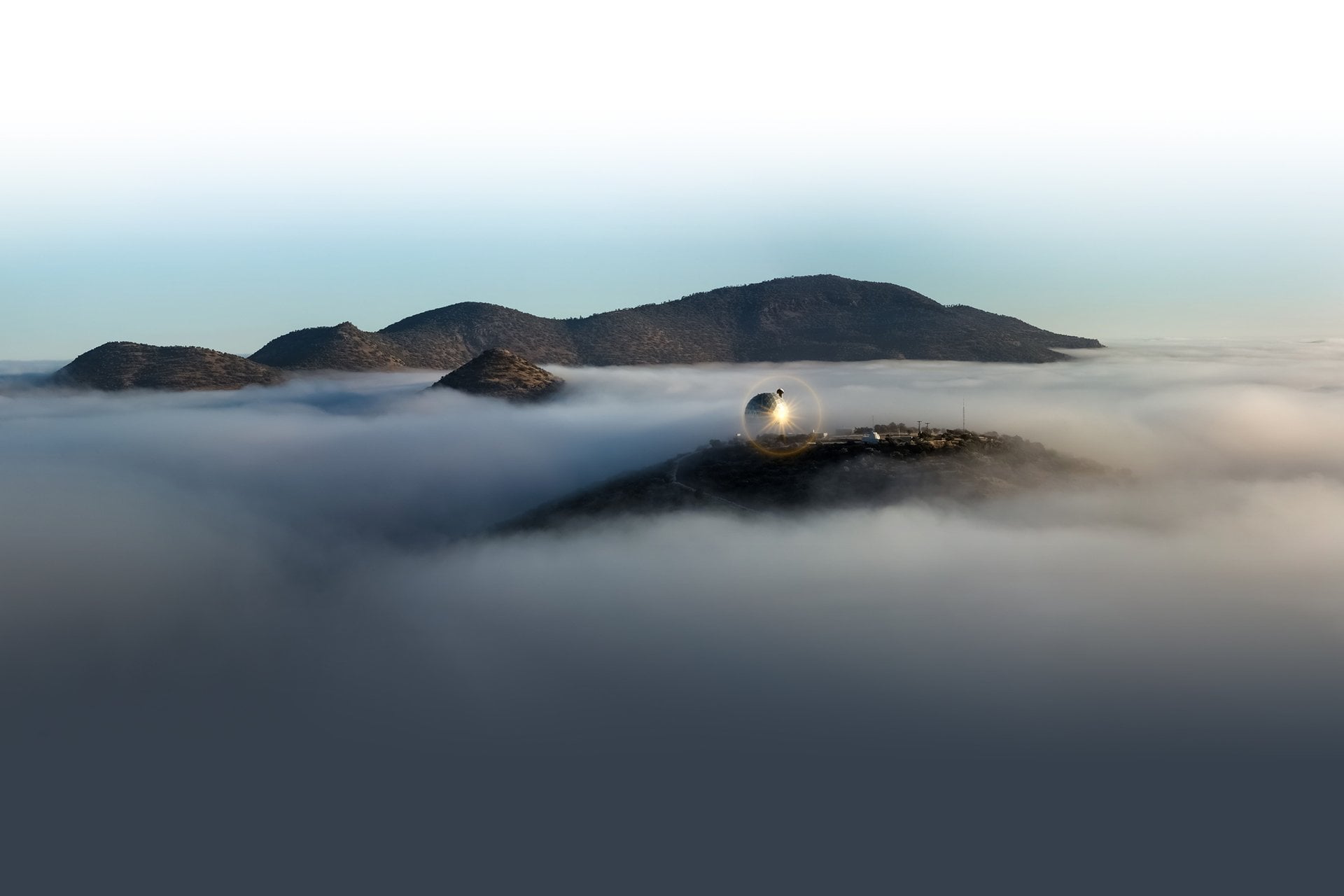
The Hobby-Eberly Telescope Dark Energy Experiment (HETDEX) is located outside of Austin, Texas. Credit: HETDEX/UT Austin

Based on the Big Bang cosmology and the LCDM model, the most widely accepted models for the beginning of the universe, scientists theorize that a huge cloud of neutral hydrogen permeated the universe. From this material, the first stars and galaxies rapidly formed over the next several hundred eons, an event that astronomers and cosmologists … Read more

See and hear evolving galaxies in a new simulation

See and hear galaxies: The image on the left is a white 3D web with a concentration of purple. On the right are two galaxies.

Watch and hear how galaxies evolve in these new simulations. Video via Royal Astronomical Society. A new simulation allows scientists to see and hear the evolution of galaxies. COLIBRE simulations track the growth of the universe from its earliest days to today in unprecedented detail. By including cold gas and cosmic dust – Star raw … Read more