Exploding stars, black holes, and forbidden crevices
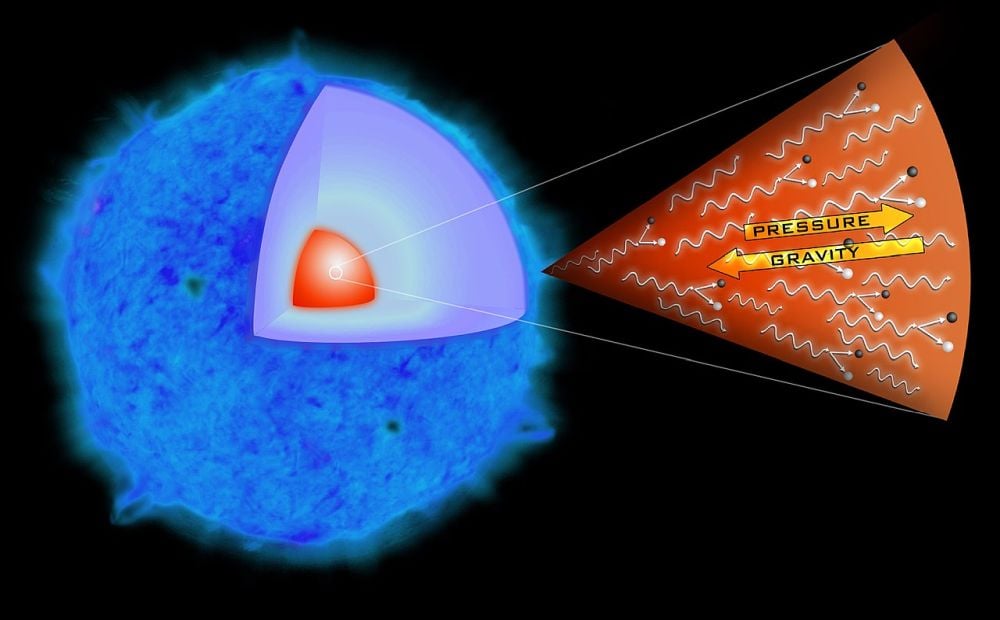
This image shows what's happening inside an unstable supernova. In very massive stars, the gamma rays produced at their centers can be so energetic that some of that energy escapes, producing electron-positron pairs. This reduces the star's radiation pressure, causing it to partially collapse under its own powerful gravity. After collapse, a runaway thermonuclear reaction (not shown here) occurs and the star explodes. Nothing is left behind, not even a black hole. Image credit: From NASA/CXC/M. Weiss - http://chandra.harvard.edu/photo/2007/sn2006gy/more.html, especially http://chandra.harvard.edu/photo/2007/sn2006gy/sn2006gy_ill.tif, public domain, https://commons.wikimedia.org/w/index.php?curid=2082949

When the first gravitational waves (GW) were detected in 2015, scientists said they had opened a new window into the universe. Most of astronomy is based on detecting electromagnetic energy, but GW is different. They are ripples in spacetime predicted by Einstein. Using GW detectors, it is now possible to detect mergers between black holes … Read more

Black holes that formed before the Big Bang may still exist and continue to shape galaxies to this day.

earth snap

Researchers have discovered that black holes that formed before the Big Bang may still exist today as surviving relics. These ancient objects carry mass and structure from early cosmic stages and will provide new ways to explain how galaxies formed and why invisible matter dominates them. Within this framework, relic black holes do … Read more

Black holes from before the Big Bang may still exist today as “cosmic fossils” | Science News

Gaztanaga proposes a new dark matter mechanism in which relic black holes arise from a pre-big-bounce collapse stage.

New research by Professor Enrique Gaztanaga of the University of Portsmouth and the Institute of Space Sciences in Barcelona suggests that some black holes formed before the Big Bang and survived the cosmic ‘bounce’, potentially explaining dark matter, the gravitational wave background, and the early growth of supermassive black holes and galaxies. Gaztanaga proposes a … Read more

Physicists say black holes break one of physics’ most basic rules

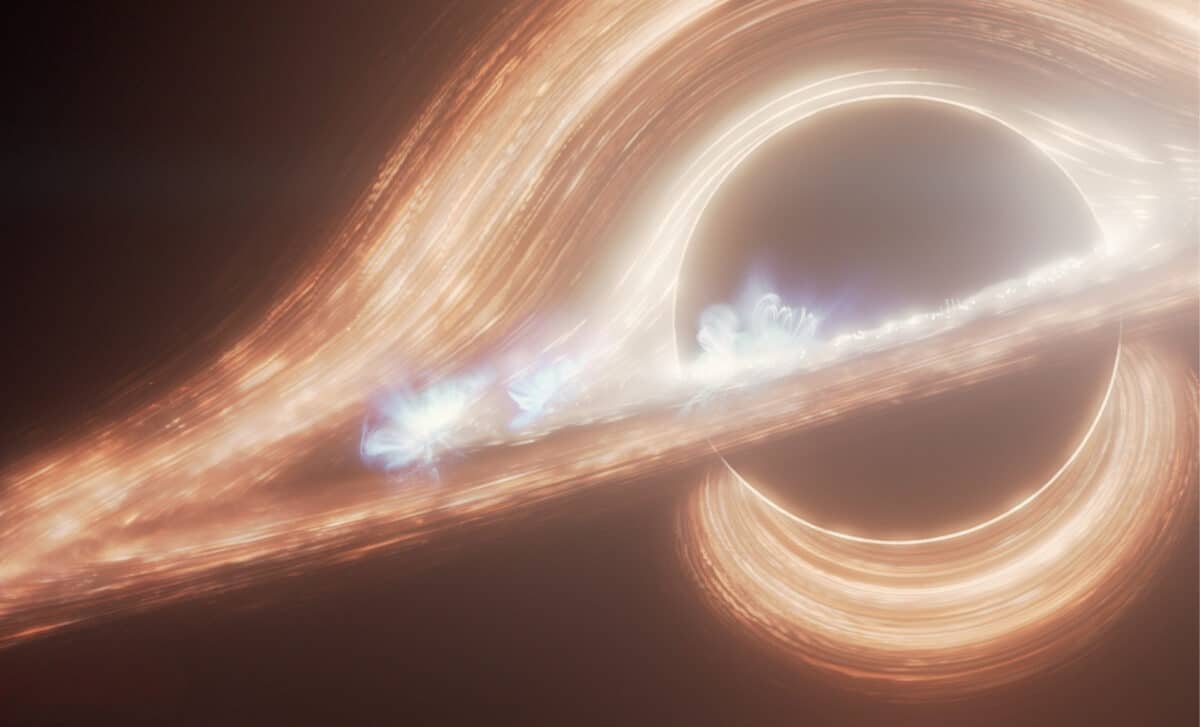
This artist's concept depicts a supermassive black hole at the center of the Milky Way galaxy, known as Sagittarius A. Surrounded by a swirling accretion disk of hot gas

Black holes have long been associated with inconsistencies and limitations in known physics, particularly regarding how black holes interact with their environment. One such interaction involves tidal forces, the gravitational effects exerted by nearby objects, and is commonly used to investigate the internal structure of celestial bodies. For decades, scientists have relied on a quantity … Read more

How black holes and shredded stars can illuminate galaxies

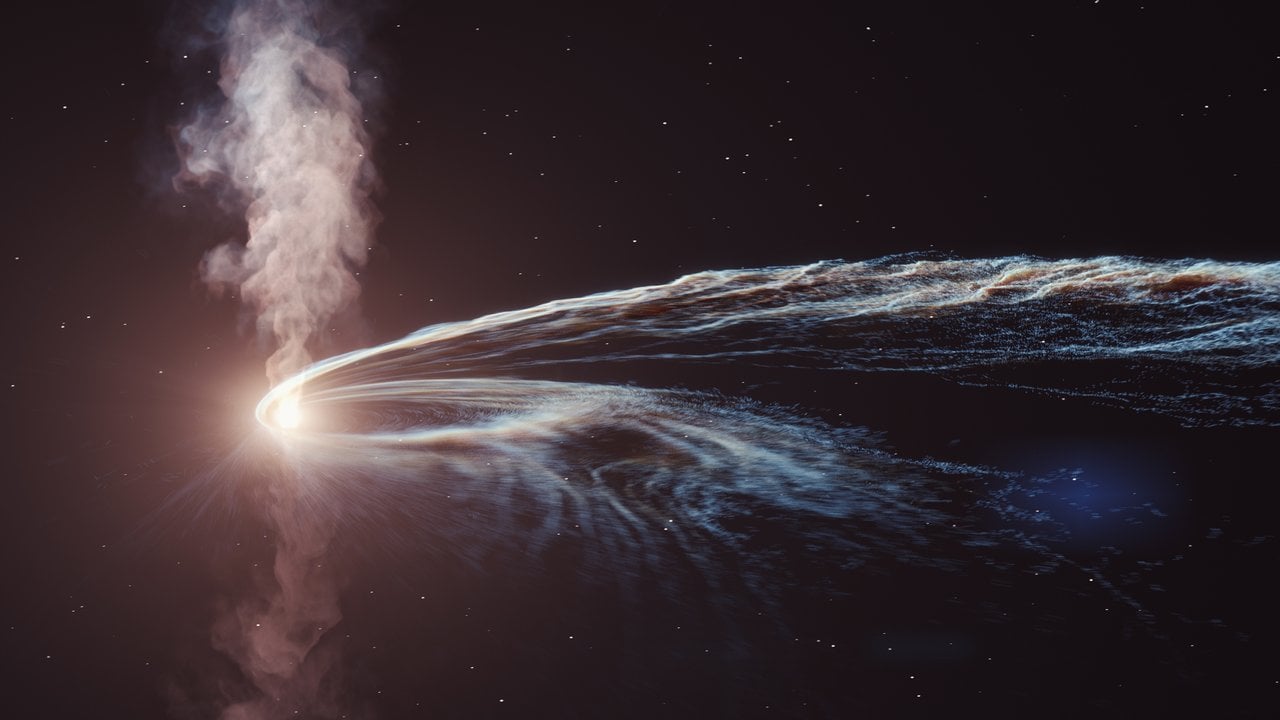
An artist's depiction of a supermassive black hole tearing apart a star, sending roughly half of the star's fragments into space, with the remainder forming a glowing accretion disk around the black hole. (Credit: DESY, Science Communication Lab)

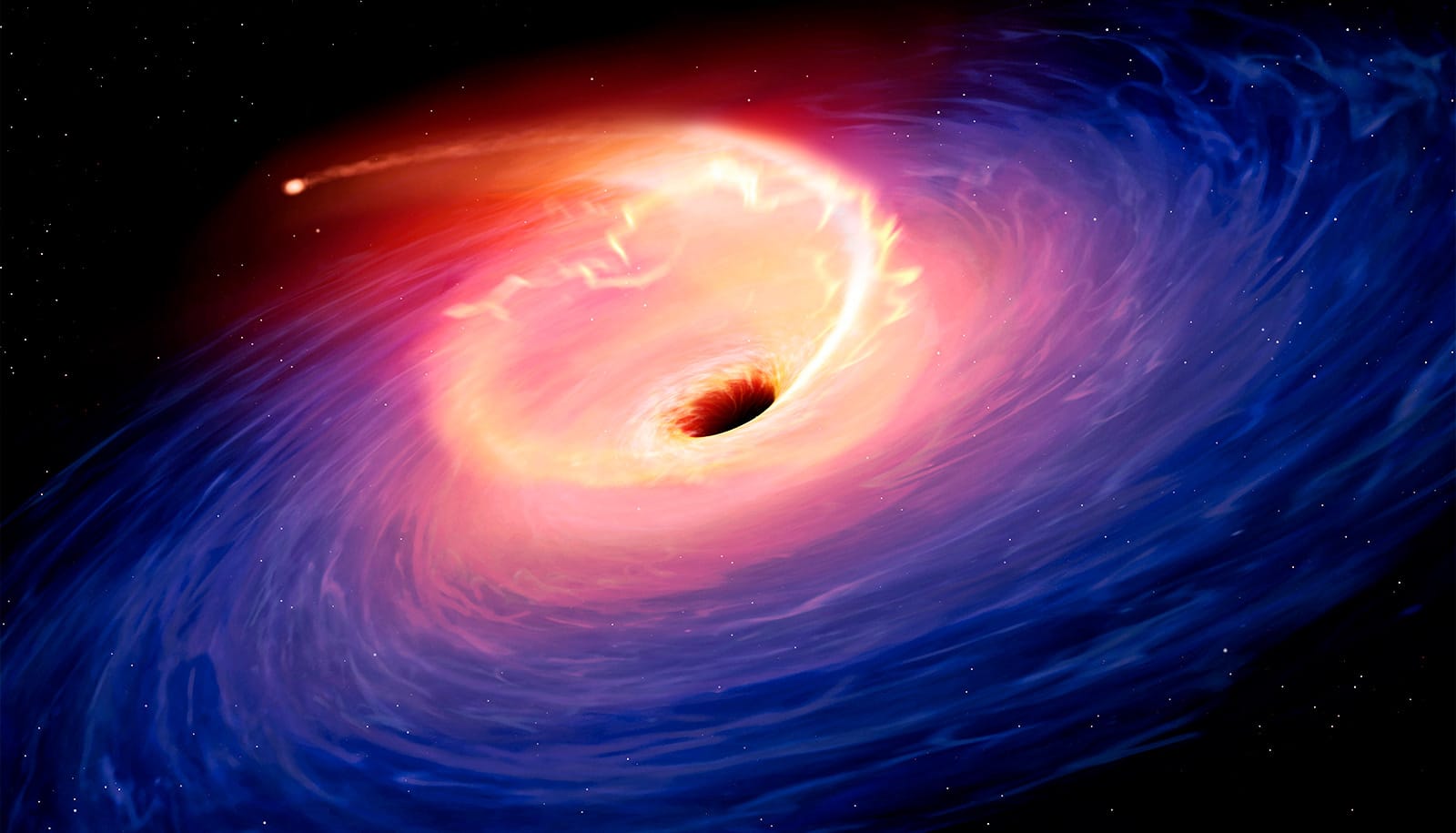
In 2014, a strange cloudy object called G2 approached Sagittarius A*, the supermassive black hole at the center of the Milky Way. Astronomers were pretty excited, in part because they thought Sag A*’s intense gravity might tear it apart. That didn’t happen, and the event became a cosmic uproar. G2 survived the flyby by skipping … Read more

Dark matter could be the key to the mystery of supermassive black holes

Dark matter could be the key to the mystery of supermassive black holes

share this article This article is free to share under the Attribution 4.0 International License. Collapse of dark matter may be the missing ingredient in explaining how supermassive black holes formed before the first stars. A growing mystery in astronomy is the existence of massive black holes (some as heavy as a billion suns) that … Read more

Scientists have finally measured the amazing power of a black hole’s jet

Subscribe to ScienceAlert's free, fact-checked newsletter

Black holes are one of the most extreme objects in the universe. It can propel matter outward at near-light speeds in powerful plasma beams known as jets. These jets are thought to be one of the most energetic phenomena in the universe. Our new work was published today natural astronomychallenges this intuition. It turns out … Read more

Two supermassive black holes could collide 100 years from now – and Earth will feel it

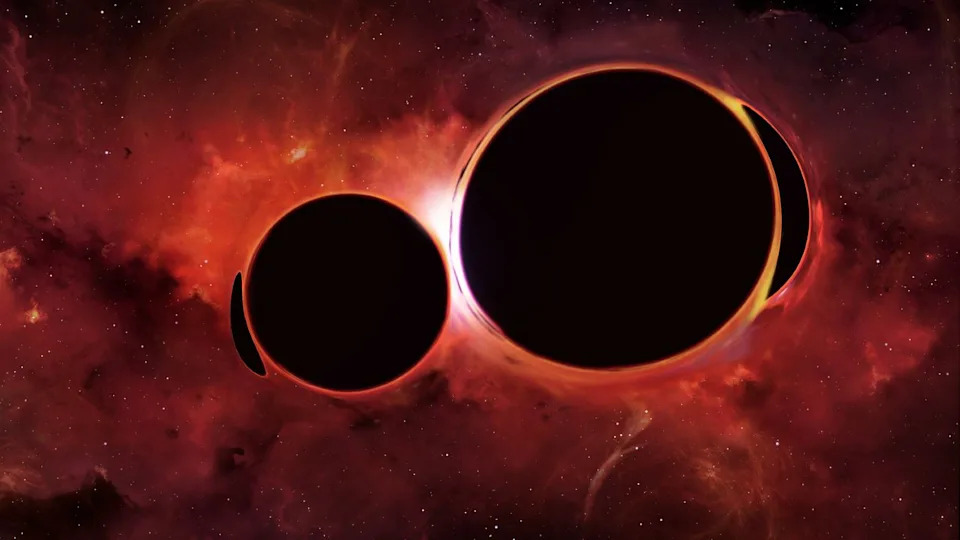
Two large dark holes appear close together against a glowing red cosmic background.

Future and its syndication partners may earn a commission when you buy through links in our articles. A diagram showing two black holes starting to collide. |Credit: MARK GARLICK/SCIENCE PHOTO LIBRARY, Getty Images Astronomers may have discovered a pair of extreme light-spewing black holes spiraling toward a giant collision. Its effects may be felt in … Read more