
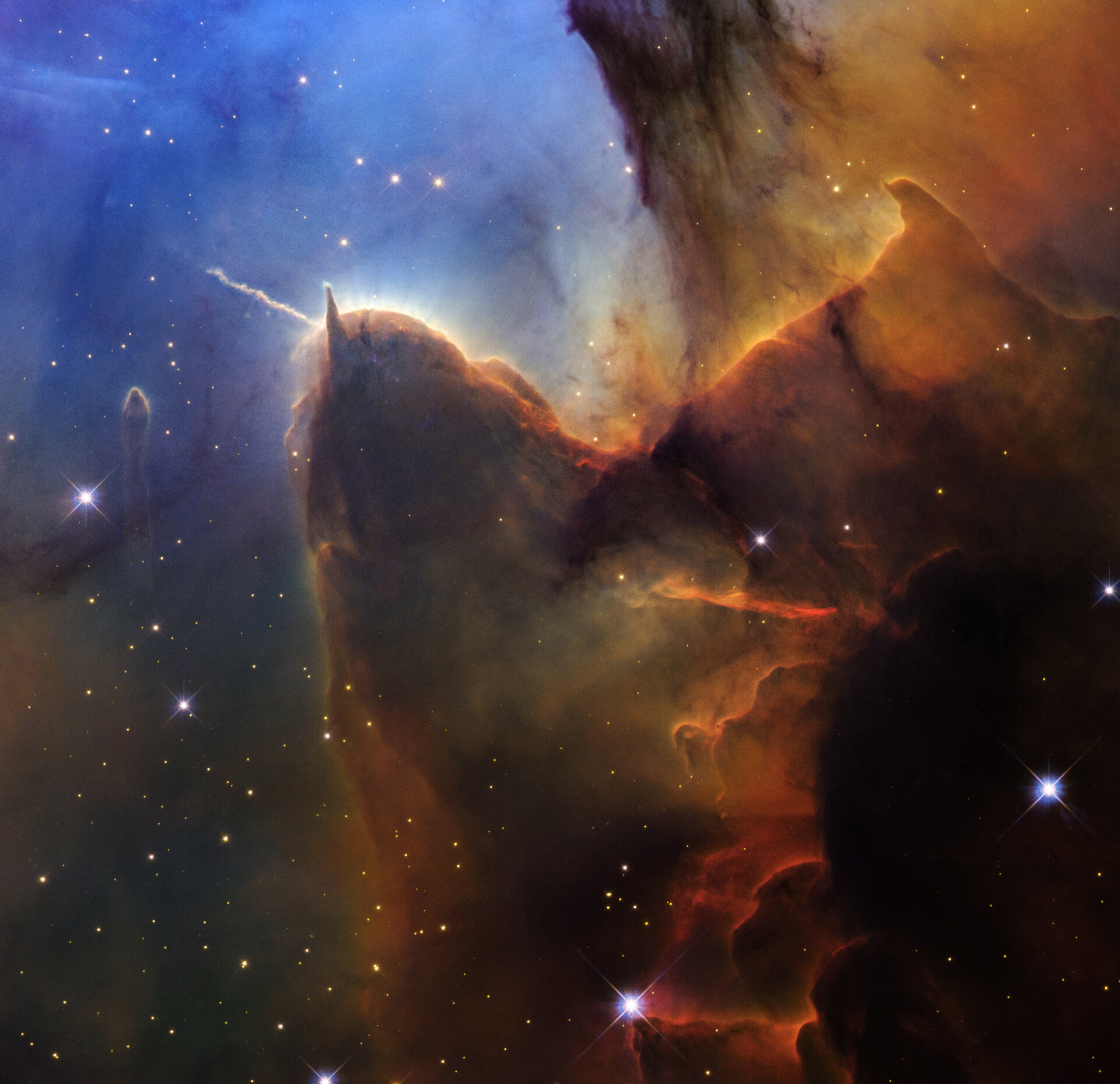
Hubble turns 36 and captures a dazzling portrait of the Trifid Nebula
Trifid Nebula (Wide Field Camera 3 Image)

science and exploration 2026/04/20 89 view 0 like The NASA/ESA Hubble Space Telescope observed its first photographic scene in 1997 to commemorate its 36th anniversary. It is a small part of a star-forming region about 5,000 light-years away in the constellation Sagittarius known as the Trifid Nebula. This image shows change over an incredibly short … Read more
NASA’s Hubble shines on young stars in the Trifid Nebula – NASA Science

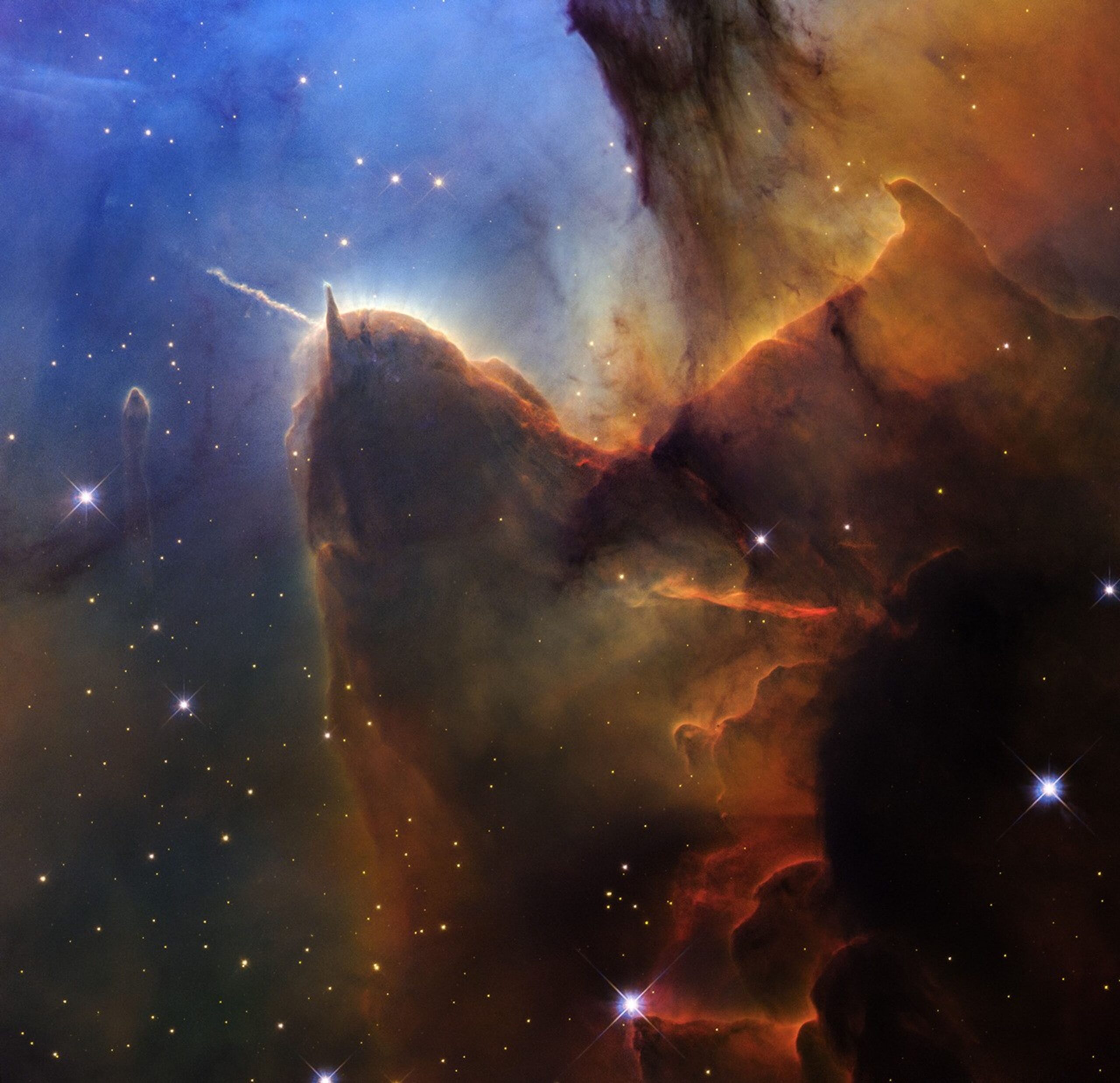
Hubble's view of the vast star-forming region known as the Trifid Nebula. The upper left is bright blue. Brown and amber draw irregularly overlapping lines from the top right through the center and flow down to the bottom center. The bottom right corner is almost completely dark. Small amber stars appear throughout the scene. On the left side, a brown shape stands out that looks like a head with two horns. The left corner points to the left and is wavy. The right corner is triangular and points upwards. The brown dust flows down the back and continues toward the upper right. A pronounced line appears below the center of the body, approximately the same length as the left horn, changing from orange to red. On the left side of the head there is a separate small translucent column. You can see some slightly larger blue foreground stars with four diffraction spikes.

This shimmering region of star formation is a close-up of the Trifid Nebula, about 5,000 light-years from Earth, captured in intricate detail by NASA’s Hubble Space Telescope. The colors in Hubble’s visible-light image, which marks the 36th anniversary of the mission’s launch on April 24, are reminiscent of an underwater scene filled with fine-grained sediment … Read more