

As the Middle East crisis continues, much of the public’s attention has focused on fuel prices and the cost of living. But there is another oil-related product that is often overlooked. It’s plastic.
Most of the plastics used on a daily basis are made from “petrochemicals” obtained from oil and gas. This means that when energy markets fluctuate, companies that use plastics as raw materials are also affected.
Rising oil prices make producing ‘virgin’ plastics more expensive, but often with delays, as the cost of raw materials and transportation through the supply chain increases.
But what about plastic recycling? For years, this has been primarily seen as an environmental issue, and it still is. But that’s not all anymore.
In a world increasingly shaped by volatile energy markets, geopolitical tensions and supply chain shocks, recycled plastics offer something else: resilience.
From crude oil to coffee lids
Plastic is not a niche material. It is part of the hidden infrastructure of modern life. Australians use around 4 million tonnes of plastic every year.
Consider construction. Plastics are used in pipes, insulation, flooring, sealants, protective films, and more. As prices rise, construction costs may also rise. Or agriculture, which uses plastics for irrigation lines, crop covers, and chemical containers.
The packaging is even more obvious. Plastics help transport and protect food, drinks and consumer goods across the country.
Ron Luck/Pexels
pay more for plastic
It’s easy to see a sudden increase in the price of fuel at a gas station. But rising plastic prices could also impact food packaging, building materials, agricultural supplies, medical products, and household goods.
Recent global supply chain disruptions have highlighted how fragile this system is. Many companies have learned the hard way that when disruption occurs, a “just-in-time” global supply chain can easily turn into a “too-slow” supply chain. Therefore, even the threat of disruption can cause prices to rise if traders anticipate a shortage.
Australia is not immune. Many local manufacturers rely on imported raw material plastics, which are priced globally. When international prices rise, Australian businesses typically end up paying more. These cost increases can have ripple effects throughout the economy.
This is where recycled plastic comes in handy. This comes from used items that are collected, sorted, cleaned and processed into new materials. Because we use local waste, we are not dependent on imported fossil fuel-based raw materials.
However, less than 10% of Australia’s plastic use is recycled into local supply, manufacturing and consumption chains. Most of the rest ends up in landfills.
money in the trash
Just because it’s made from waste doesn’t mean recycled plastic is automatically cheaper. In fact, it is often on average 10% to 50% more expensive than raw virgin plastic, depending on the type of plastic and quality requirements.
why? Collection systems cost money. Separating mixed waste is technically difficult. Contamination reduces quality. Reprocessing plants require investment, energy, and skilled labor.
But price is only part of the story. Stability is also important. Manufacturers may prefer slightly more expensive recycled materials if it provides a more reliable local supply and reduces exposure to sudden global disruptions.
This is especially important for companies that plan production months in advance. Reliable supply is just as valuable as low price.
We are already seeing some movement in this direction, but it is too slow given the scale of the challenge. Despite years of discussion about circular economy goals, many Australian manufacturers still view recycled plastics as a niche sustainability option rather than a primary raw material.
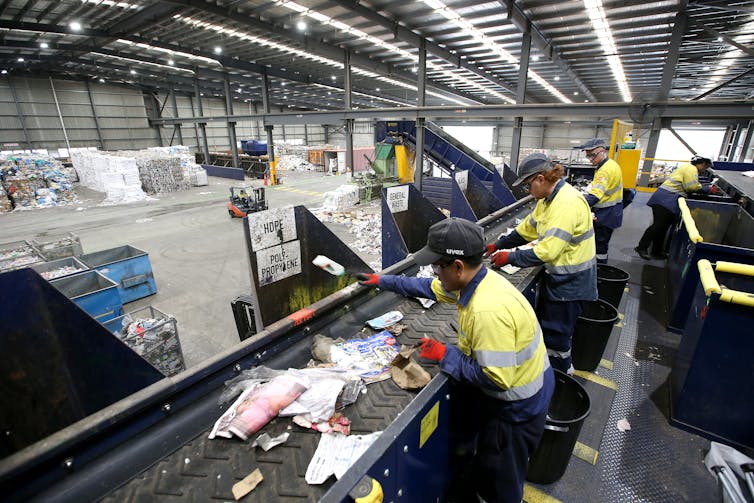
Jono Searle/AAP
where are you stuck?
Companies that use plastics as raw materials very often make purchasing decisions based on the short-term lowest price, even if this increases their exposure to future shocks and supply risks. As the current crisis shows, that can be costly.
Delays in strengthening recycling systems will mean greater reliance on imported fossil-based plastics, more local waste going to landfill or export, and lost opportunities to create jobs in collection, sorting, reprocessing and advanced manufacturing.
The obvious solution is to close the cost gap. There are various ways to move in this direction, including:
- Improvement of collection system
- Designing packaging for easy recycling
- Reduce pollution in household trash cans
- Invest in the latest sorting technology and expansion of reprocessing capacity.
While individuals cannot single-handedly fix global supply chains, they can shape the quality of materials that enter recycling systems. By purchasing products made with recycled content, you can create demand for local recycled plastics.
Correctly separating household waste and keeping recyclables clean can also reduce pollution and make plastic disposal easier and cheaper. It’s also important to reuse items as much as possible.
A circular economy is not built only in factories and policy bureaus. It starts right in our homes.
#Heres #reduce #pain #oil #shock #increasing #recycled #plastics