
Reduced food leads to stress, increased predation, decreased survival, and increased human-animal interactions
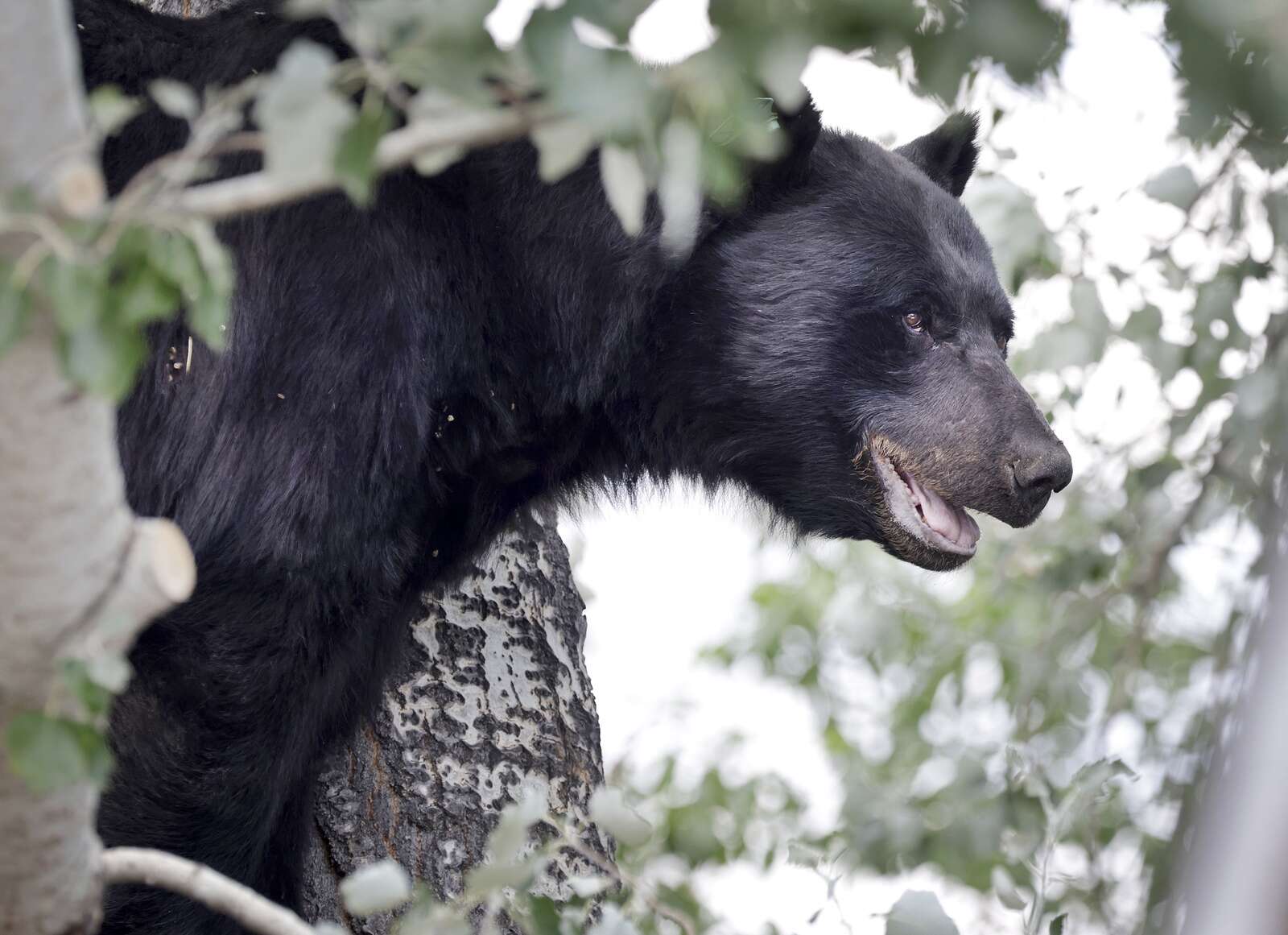
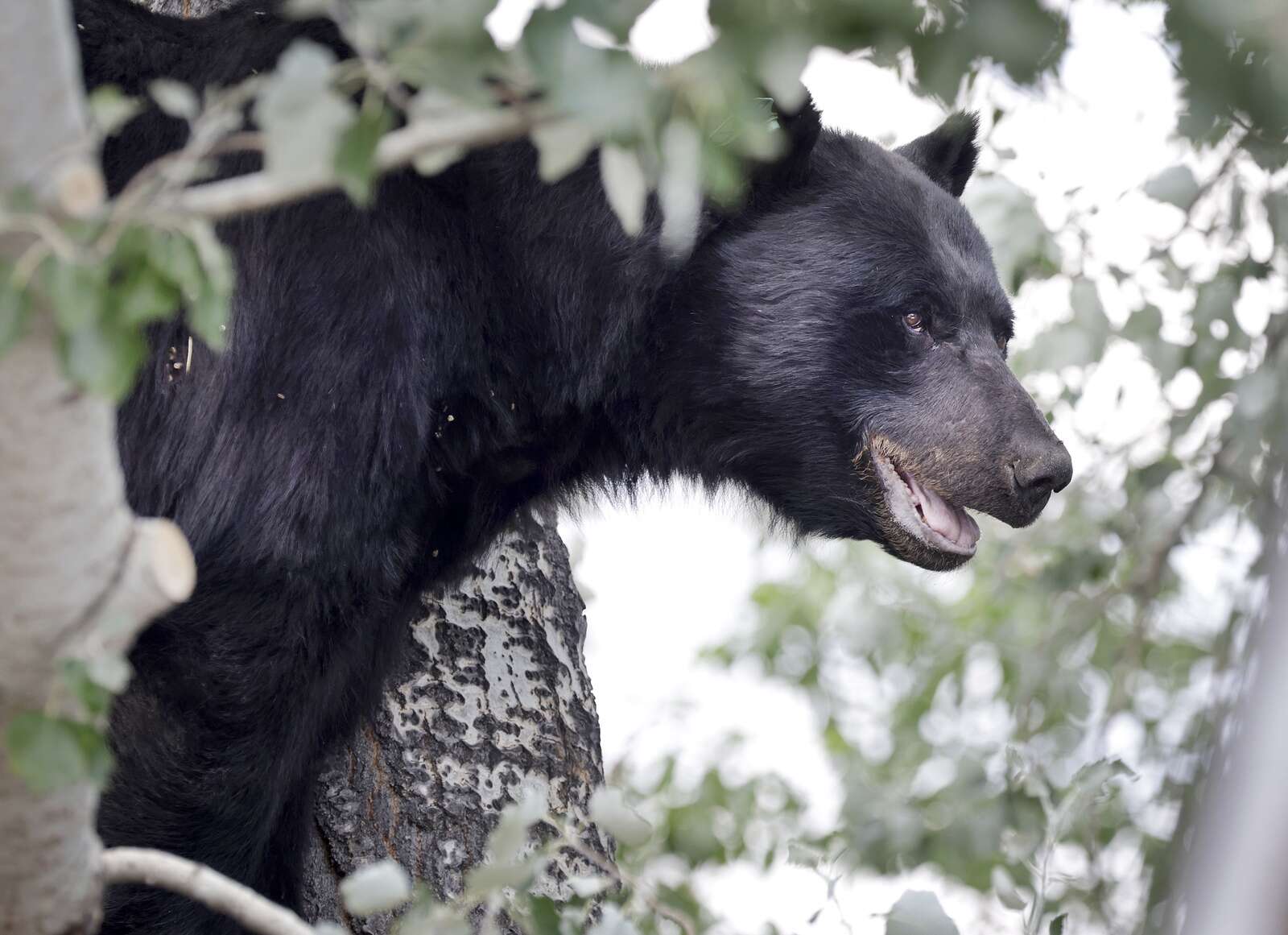
Last summer, a bear in a tree panted in the hot afternoon sun as it searched for a little more shade in the backyard of a Durango home. (Jerry McBride/Durango Herald)
Durango has experienced above-average temperatures this winter, with record high temperatures in December and February and temperatures in the upper 40s to low 50s for much of January, according to National Weather Service data.
An unusually warm and dry season can have far-reaching implications for wildlife.
Jamin Grigg, senior wildlife biologist for the Colorado Parks and Wildlife Department’s Southwest Region, said this season ranks as the worst winter conditions in his more than 20-year career.
“Weather-wise, I would say this is the most severe non-winter, a complete non-winter, that I’ve ever observed, both in terms of higher temperatures and less snow,” he says.
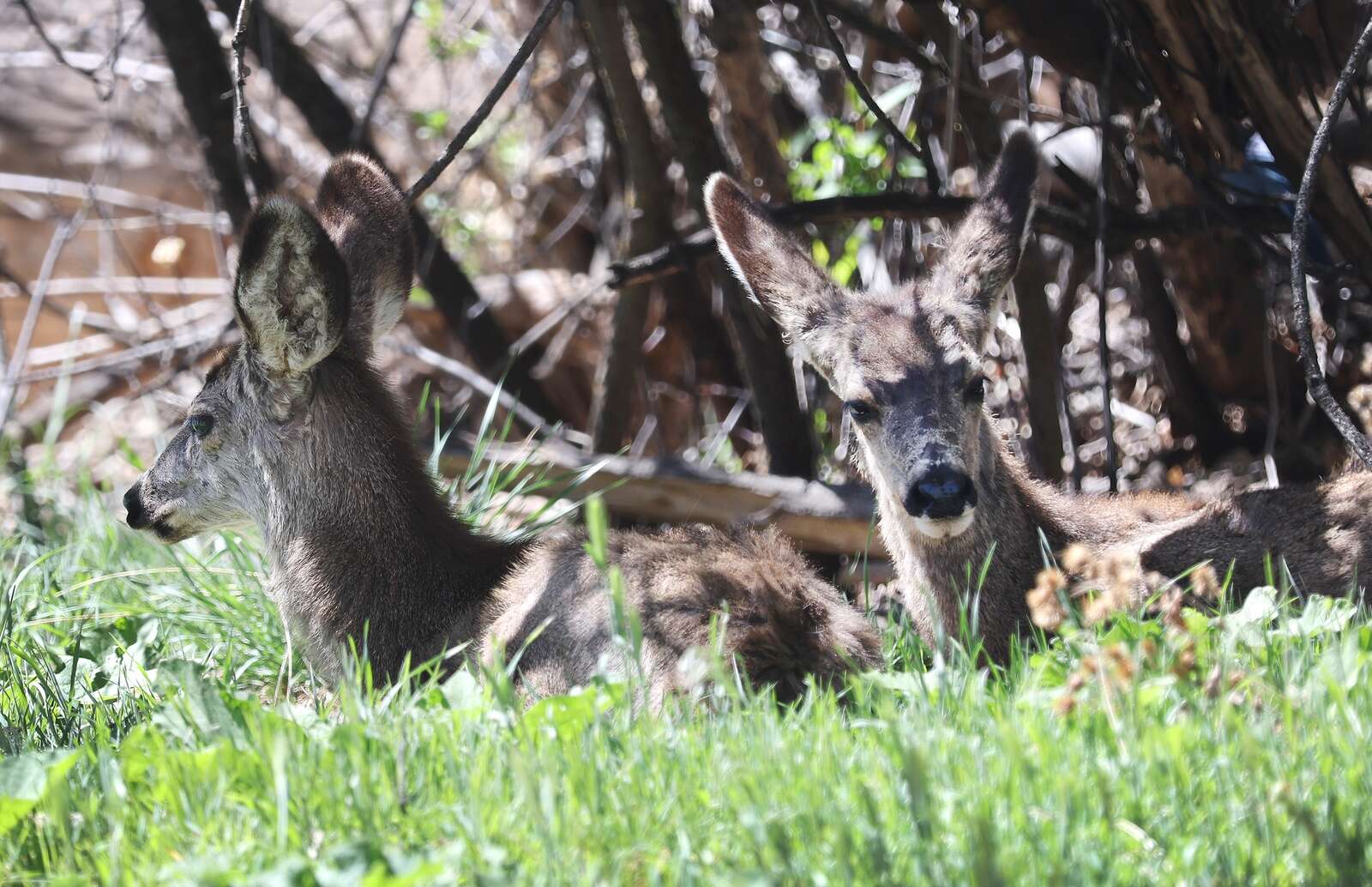
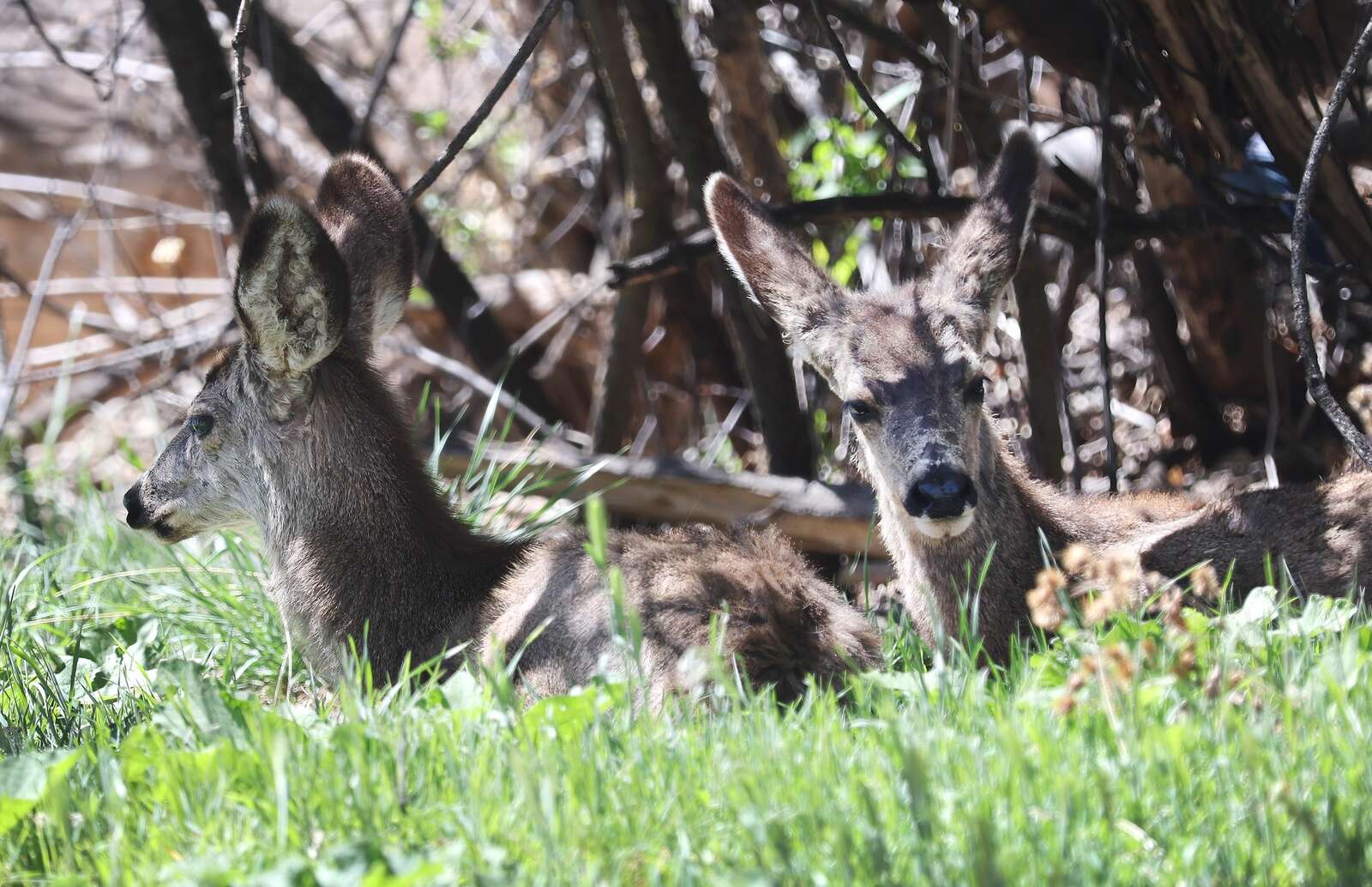
A deer is resting in the shade on a sunny day in Durango. This winter’s low humidity and high average temperatures can lead to changes in spring runoff, reservoir levels, and habitat quality, impacting wildlife behavior and overall health. (Jerry McBride/Durango Herald)
Unusually warm and dry conditions stimulate early wildlife activity
Grigg said CPW is already seeing some impacts.
Bears are emerging from hibernation earlier, deer and elk are on the move earlier, and shrubs and trees are budding earlier, increasing the risk that late freezes will damage plant growth.
He said low snowfall and drought have reduced forage conditions across the region.
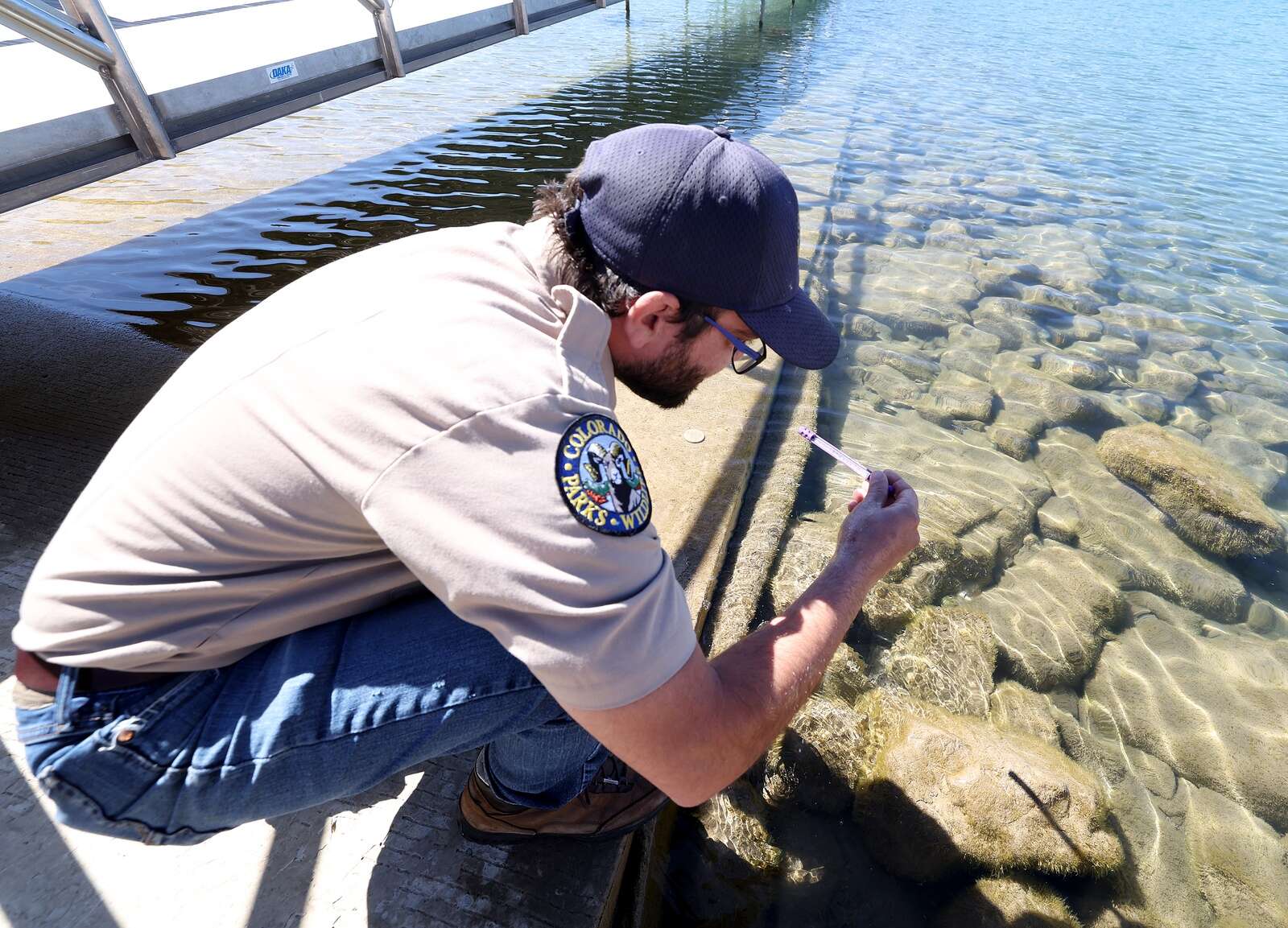
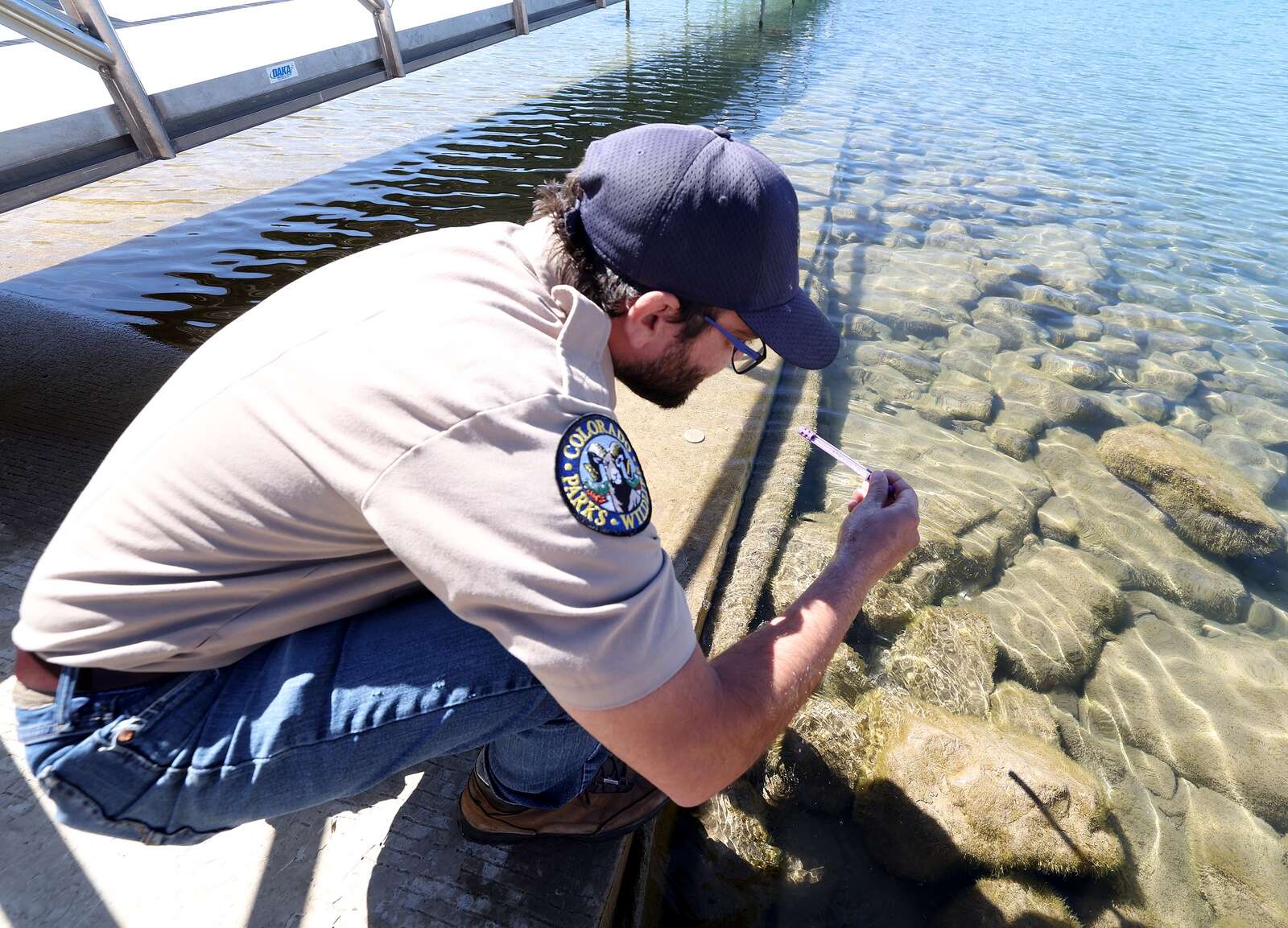
Patrick Healy, a fish farmer with the Colorado Parks and Wildlife Department, is checking water temperatures and conditions in Nighthorse Lake before stocking 168,000 red trout on March 25th. (Jerry McBride/Durango Herald)
Jillian Felton, a meteorologist with the National Weather Service, said Durango has experienced several dry spells since December. Herald.
These dry periods include 22 days from December 4 to 25, 13 days from January 10 to 22, 19 days from January 24 to February 19, and another period from February 21 to April 1.
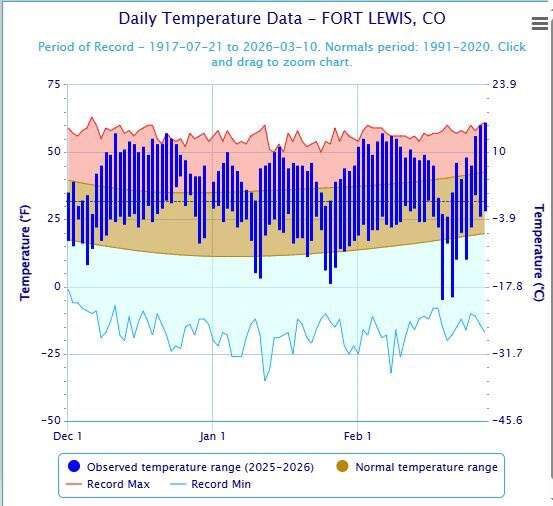
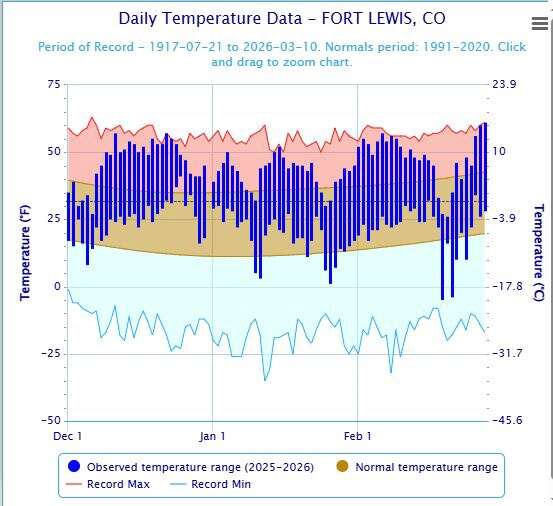
Durango experienced record high temperatures in both December and February this winter, with temperatures in the upper 40s to low 50s for much of January, according to National Weather Service data. This dataset was obtained from meters located on the campus of Fort Lewis College. (Screenshot from National Weather Service)
Grigg said low rainfall and prolonged droughts can reduce the carrying capacity (the number of animals an area can support) for species such as deer, bears and elk. Lack of water can make wild animals, especially young ones, sicker and more vulnerable, reducing their chances of survival, he said.
Prolonged droughts deplete soil moisture and forage, which can have multi-year effects on animal condition, habitat quality, and population health.
Reduced plant longevity reduces food for bears and other animals, forcing them to move into smaller areas with better soil moisture and vegetation. That, in turn, increases the risk of competition and predation, Grigg said.
Conflicts between humans and wildlife could also increase as drought conditions continue, he said. As Durango moves into spring and summer, residents need to be prepared.
“If we stay in this warm system for the summer, a lot of wildlife will be stressed to get natural food,” he says. “So I want residents to expect that… there may be a higher than average number of stressed bears searching for human food sources in and around their towns and residential areas.”
Deer and elk are also more likely to congregate on private land and pastures if wild food remains scarce during the summer, he said.
Grigg said there is a high density of mountain lions in Durango and the surrounding area, and deer are their main food source, so if a deer approaches town, there’s a good chance a mountain lion will chase them.
CPW has not yet seen an increase in predation on pets or livestock, but officials are monitoring the situation, he said.
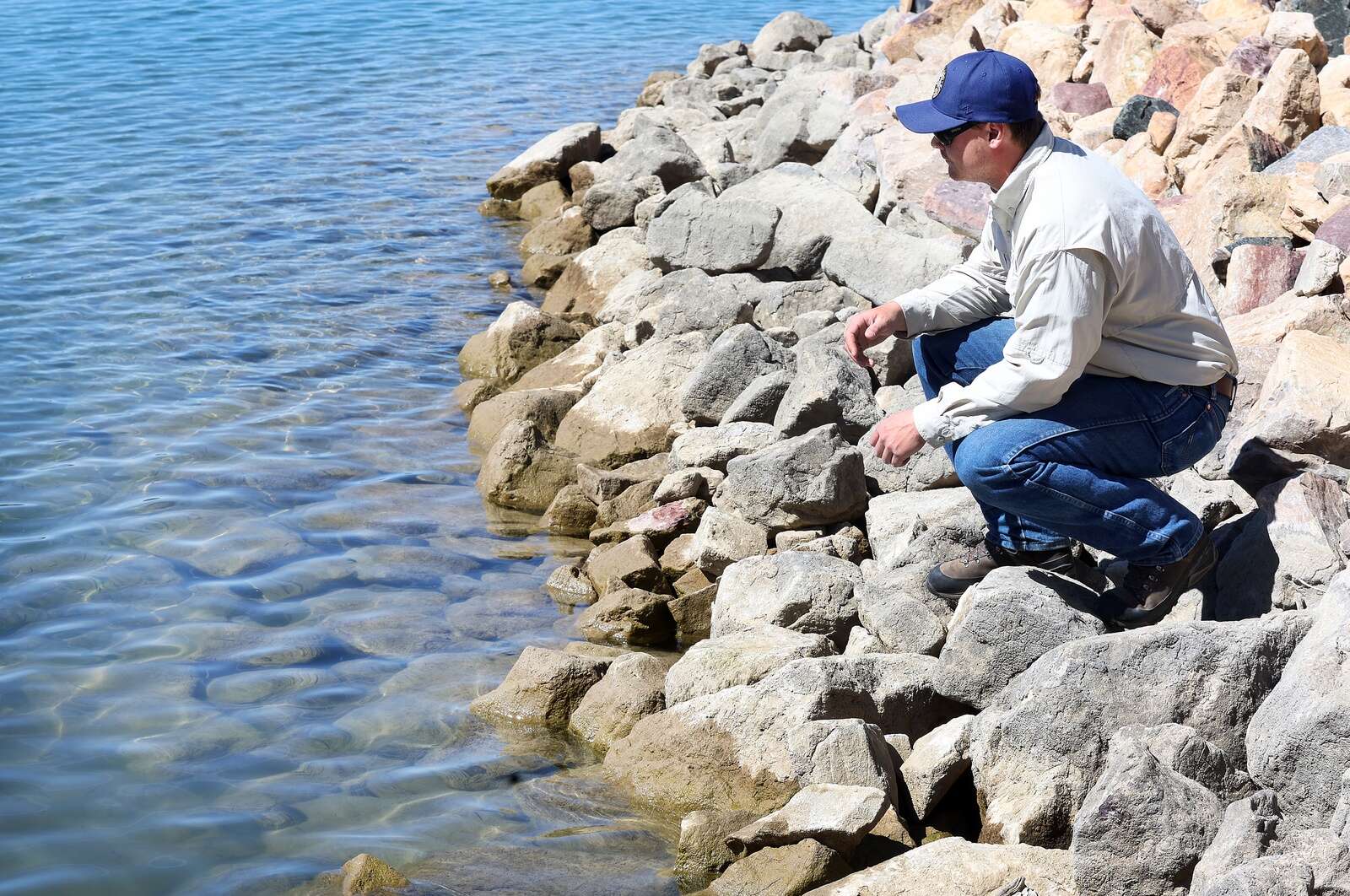
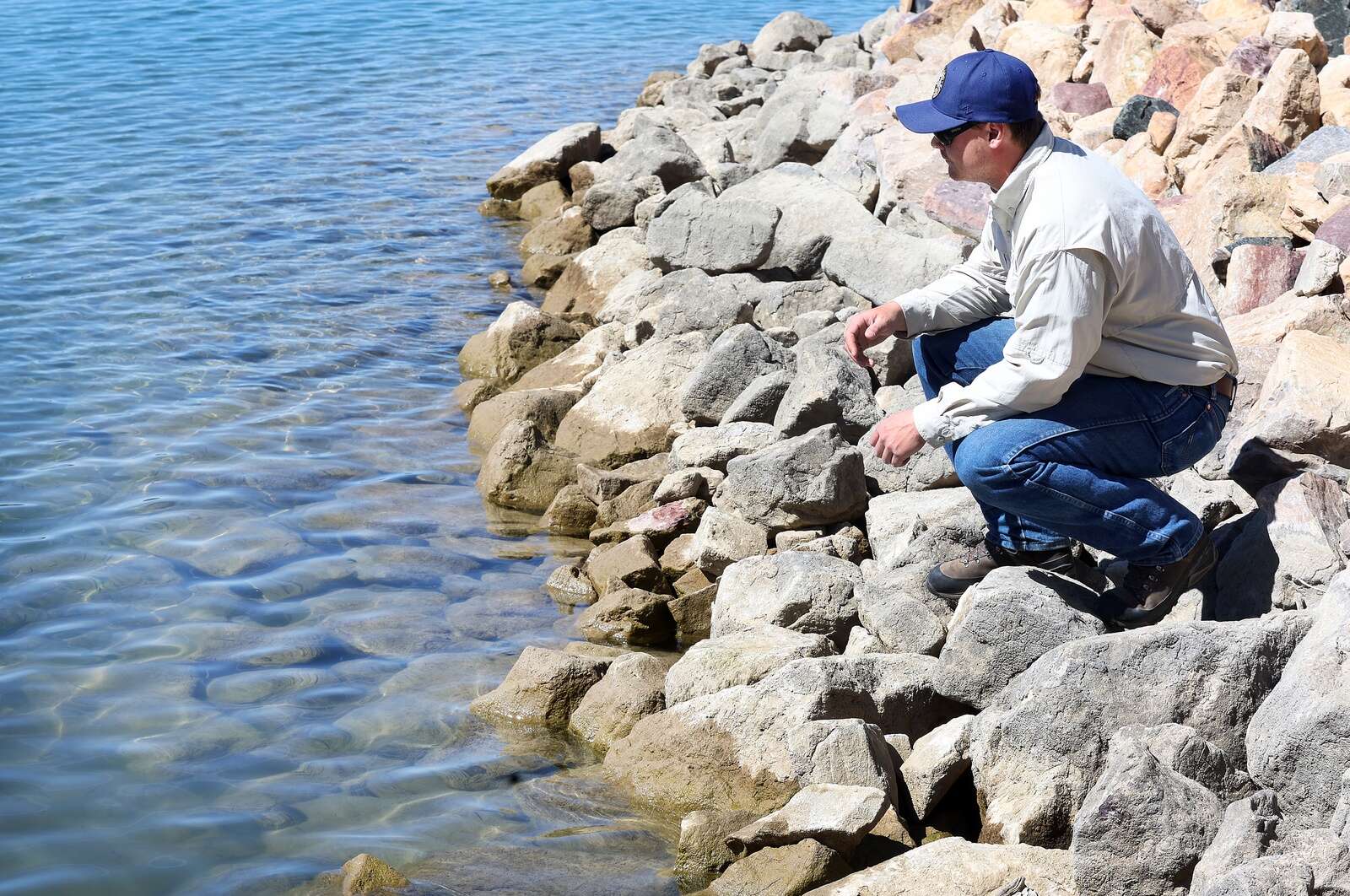
Cade Jackson, an aquatic biologist with Colorado Parks and Wildlife, observes a newly stocked brown trout at Nighthorse Lake on March 25th. (Jerry McBride/Durango Herald)
Impact on aquatic wildlife
CPW aquatic biologist Cade Jackson said no major impacts to aquatic wildlife in the Animas River have been observed as of March, but flows and water temperatures are monitored daily.
“What we still anticipate is that the spring runoff will not be as large,” he said.
Jackson said reduced spring runoff could leave river gravel unpurified, which could compromise spawning habitat for trout and other native fish and reduce egg survival in the gravel.
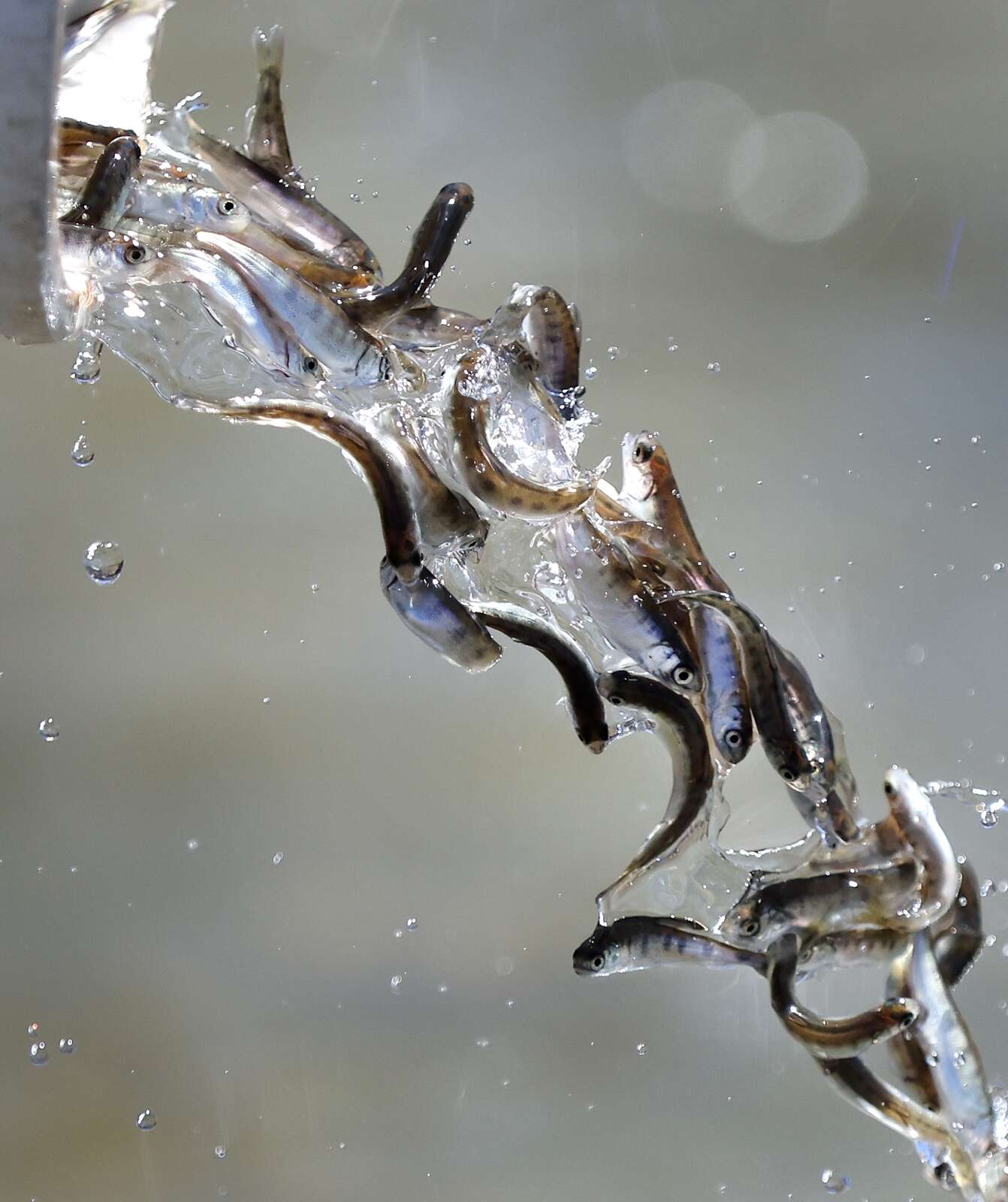
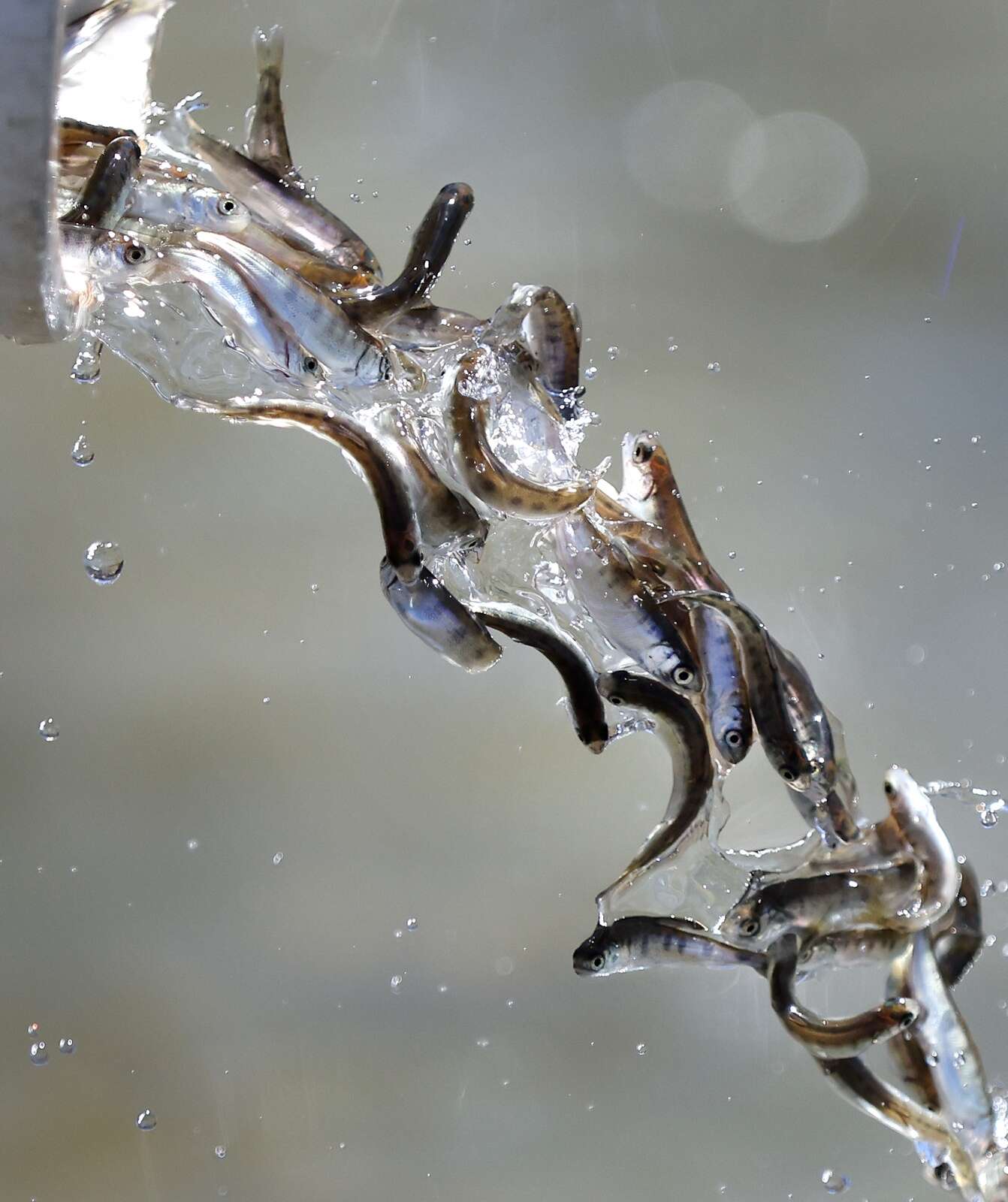
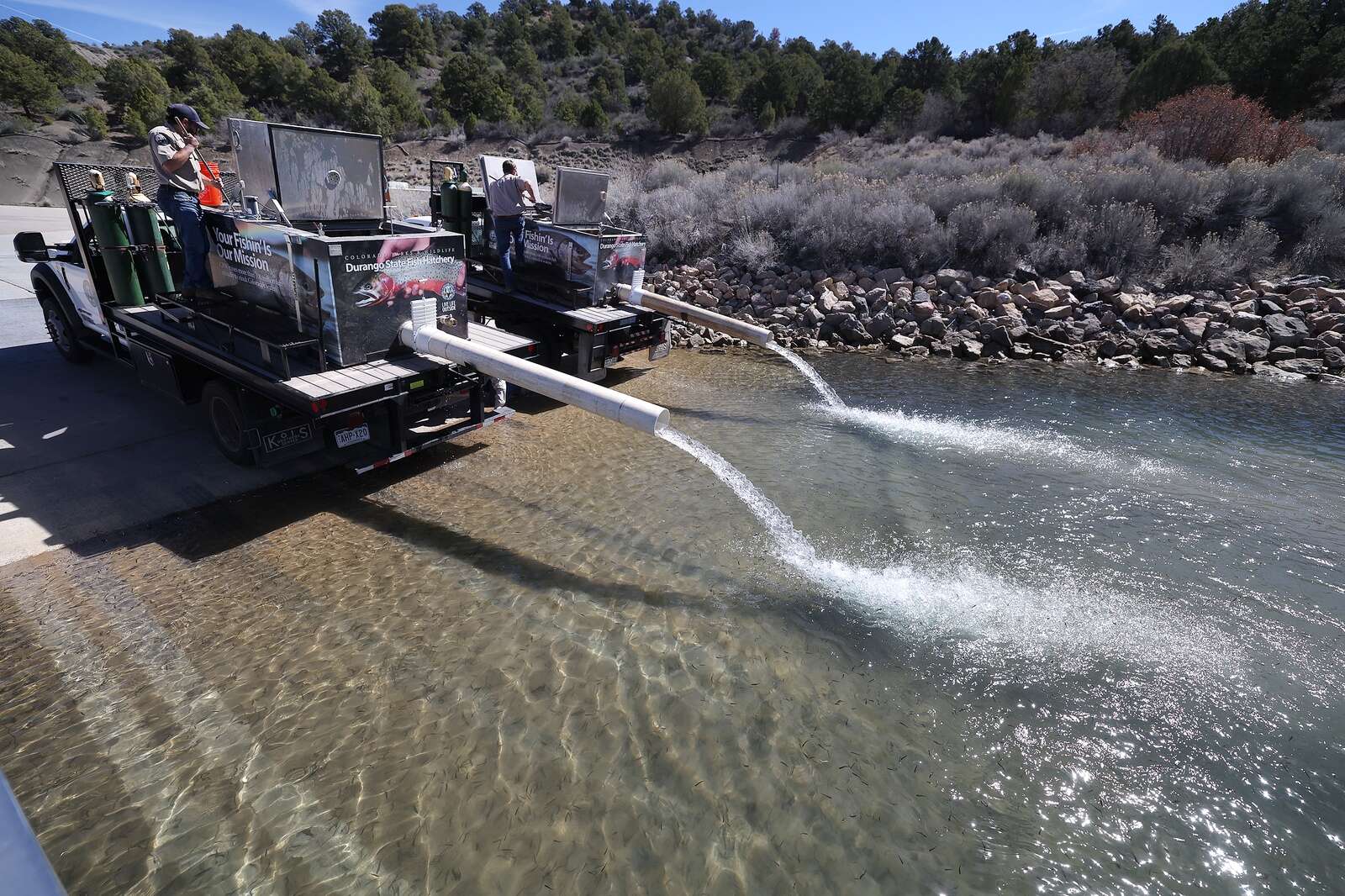
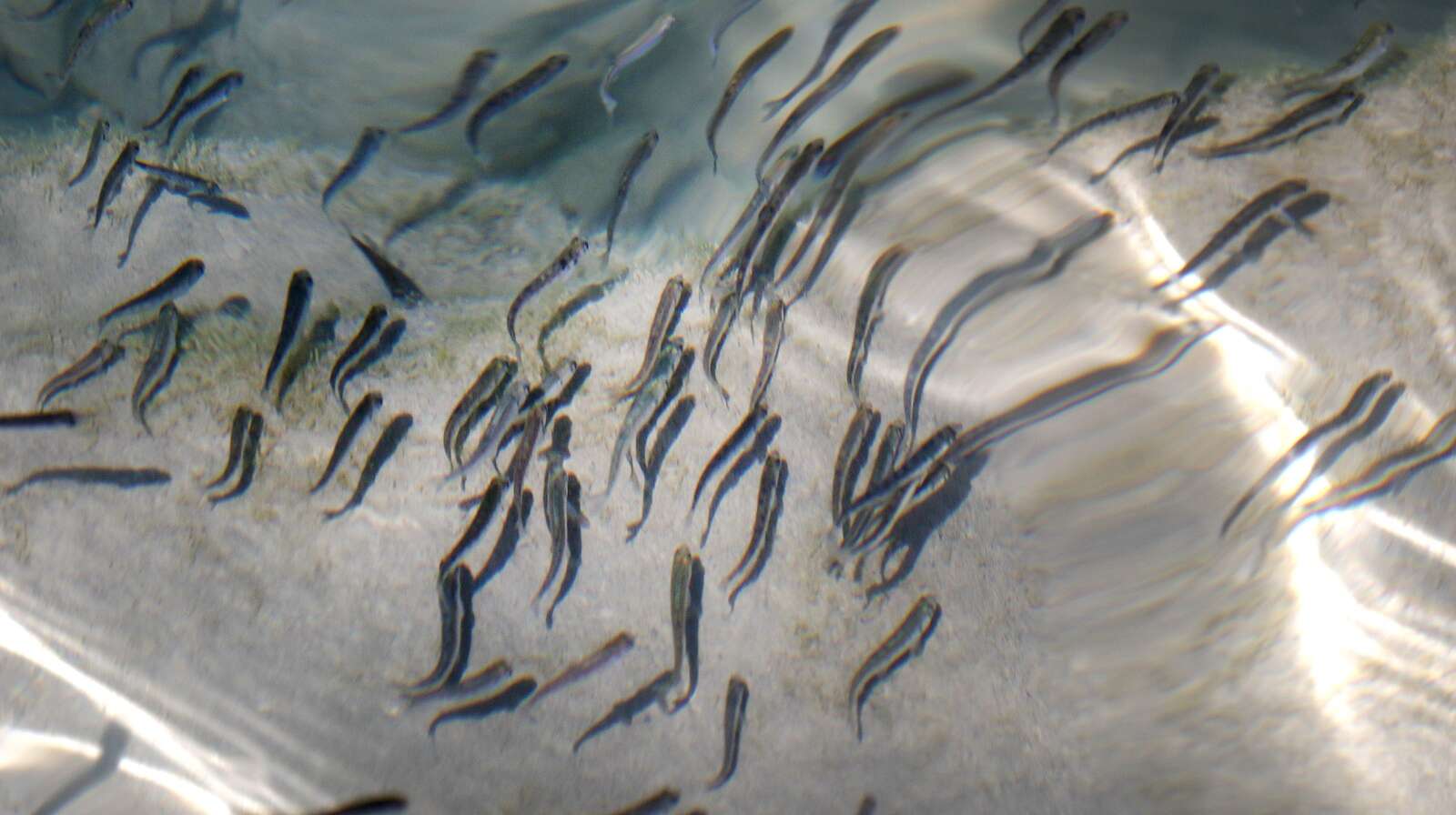
On March 25, Colorado Parks and Wildlife released 168,000 brown trout, about 1.9 inches long, into Nighthorse Lake. (Jerry McBride/Durango Herald)
Jackson said water temperatures could rise faster than normal, which, combined with low water flows, could stress fish, especially trout and redfin trout.
Lower water levels and higher temperatures associated with drought can reduce available habitat for brown trout and cause oxythermal squeezing, where the thermocline is compressed due to higher surface temperatures and lower oxygen levels, which can increase stress, predation, and competition for food.
“We don’t see this a lot at Nighthorse (lake), but it’s a concern at McPhee and Vallecito (reservoirs),” he said.
He said a voluntary Sunday noon-to-midnight fishing ban could be implemented earlier than usual this season to reduce stress on fish.
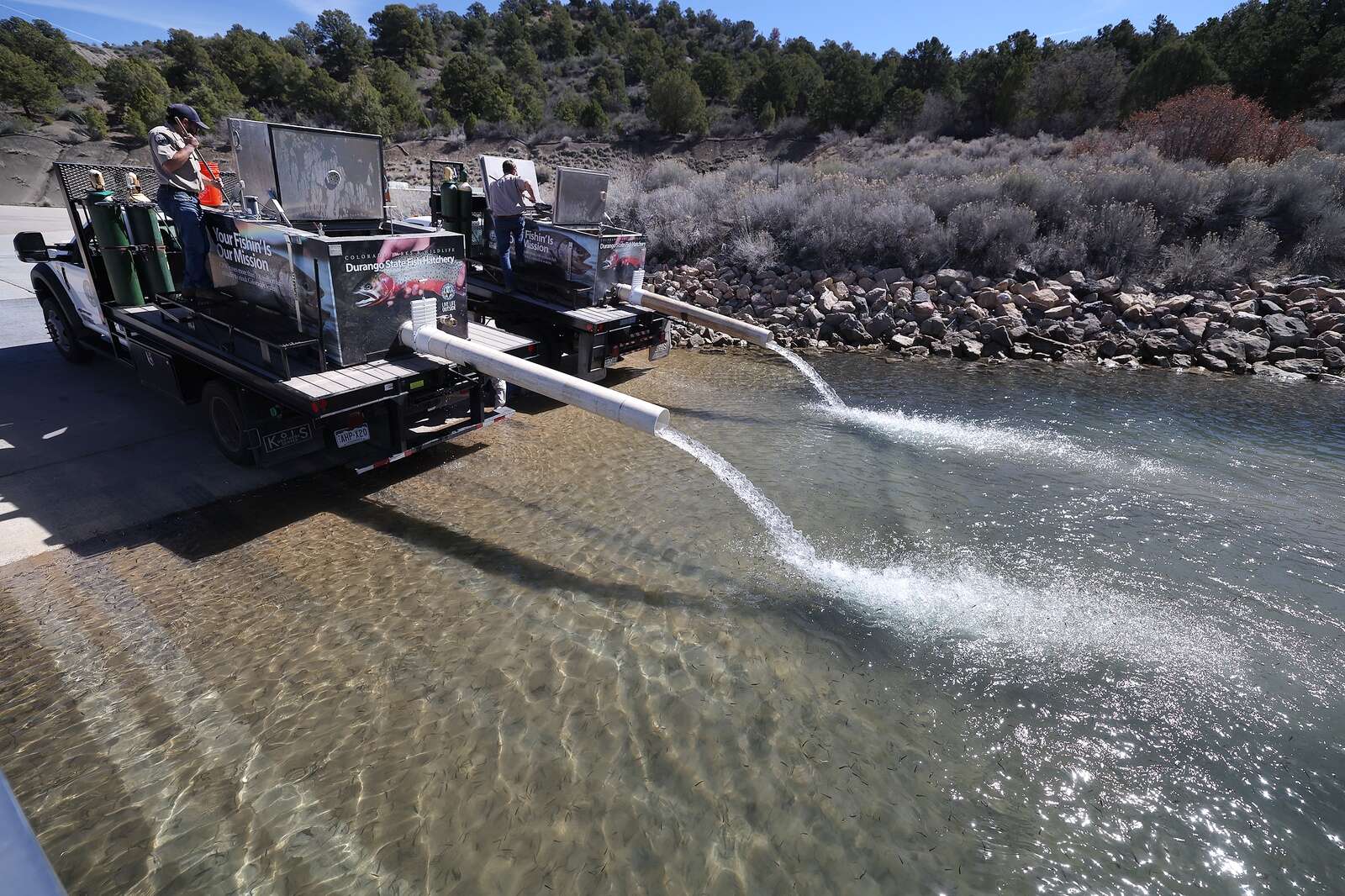
On March 25, Colorado Parks and Wildlife released 168,000 brown trout, about 1.9 inches long, into Nighthorse Lake. (Jerry McBride/Durango Herald)
Anglers this summer may choose to fish higher elevation streams and alpine lakes, which are often less affected by warm water conditions, or visit nearby reservoirs that have warm water and invasive species such as smallmouth bass, northern pike, largemouth bass and bluegill, he said.
wildfires and wildlife
Durango Fire Protection District Director Randy Black said in February that the upcoming wildfire season is expected to be particularly severe, and Grigg said it could impact local wildlife.
While wildfires can have beneficial effects, such as improving soil nutrients and increasing forage production after recovery, they can also have negative impacts on wildlife, he said.
Large wildfires can reduce forage and habitat, increase sediment runoff, cause landslides and mudslides, and create other hazards that stress wildlife and reduce their chances of survival, he said.
Looking to the future
Grigg said CPW is taking a “wait-and-see” approach regarding spring and summer precipitation. But there is hope that warm, dry winter weather could become the new normal.
“Based on what all the climate models are predicting and have been predicting for decades, we expect this to become a more normal pattern, but this is quite alarming on many levels,” he said.
Prolonged dry, warm winters can alter spring runoff, reservoir levels, and habitat quality.
Grigg said CPW will need to focus more on managing reduced habitat capacity and addressing human-animal and animal-animal conflicts.
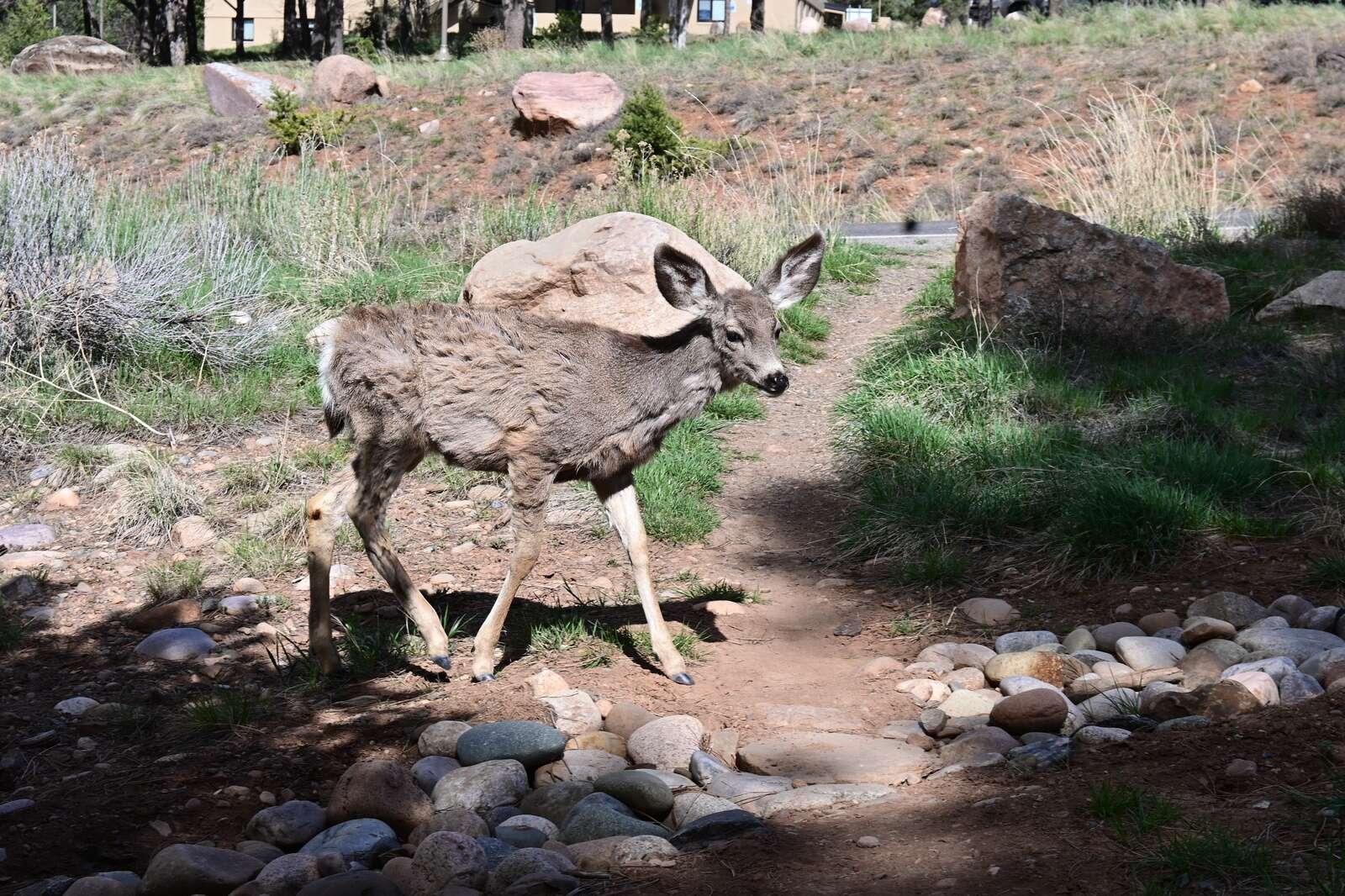
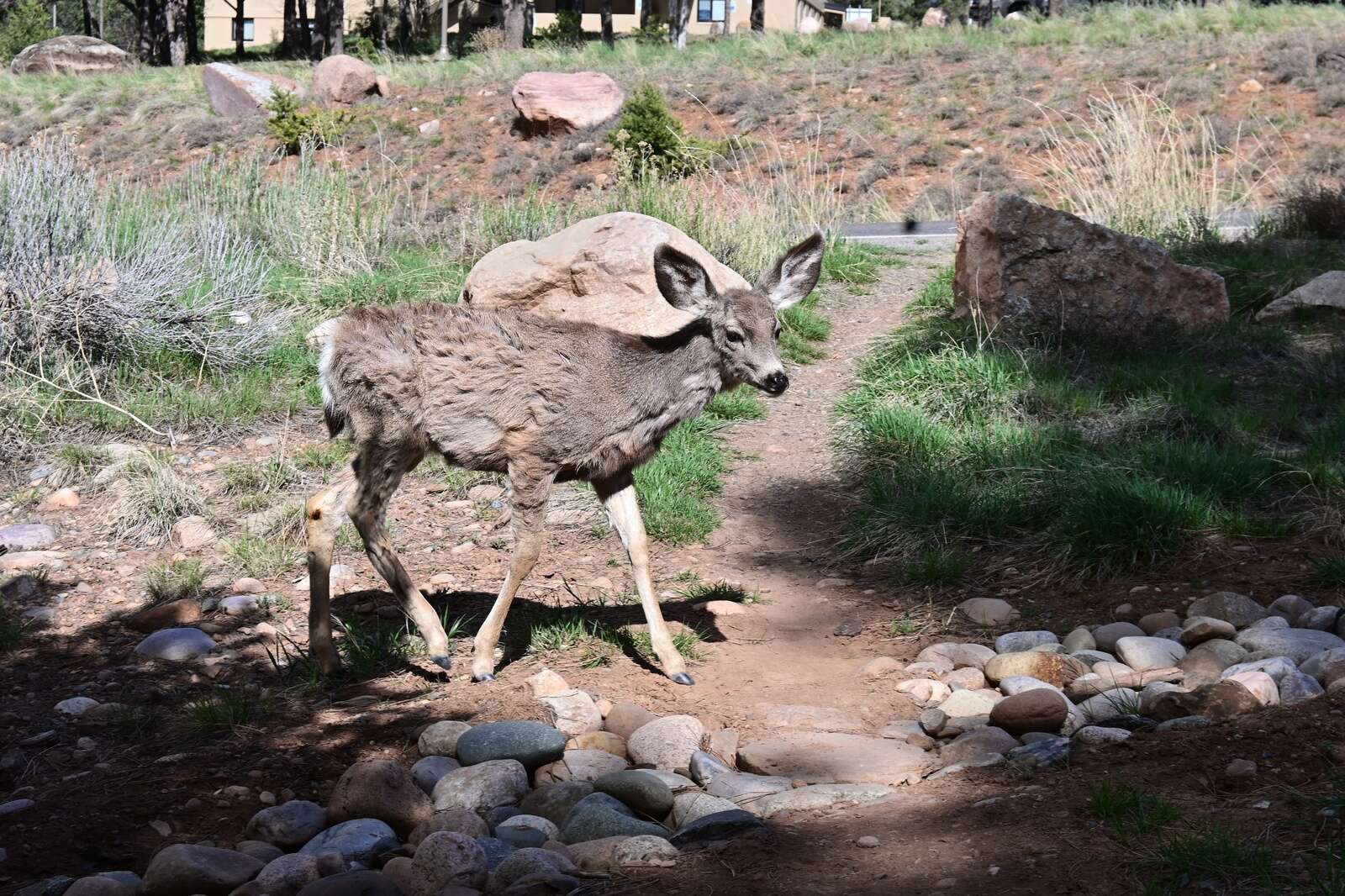
A deer passes in front of Animas High School on the campus of Fort Lewis College on March 27. (Elizabeth Pond/Durango Herald)
Grigg said it could take years to recover from a season like this, even if next winter is colder and wetter.
“What most people don’t fully understand is that these droughts have long-term effects on soil moisture and forage conditions (and) production that can extend into years to come,” he said. “This impacts the physical condition and overall health of the animals heading into next winter.”
epond@durangoherald.com
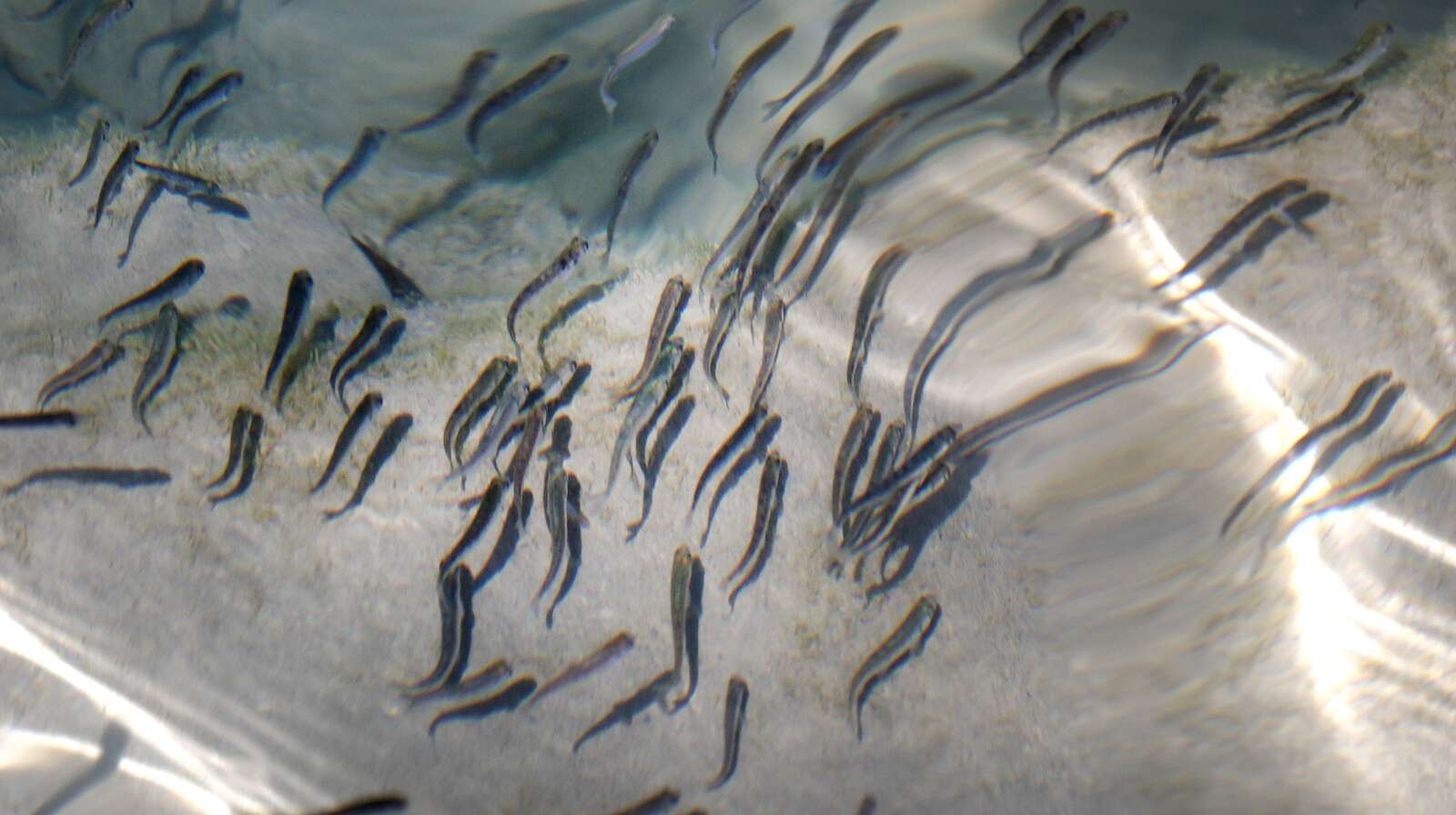
On March 25, Colorado Parks and Wildlife released 168,000 brown trout, about 1.9 inches long, into Nighthorse Lake. (Jerry McBride/Durango Herald)
#Warm #dry #winter #change #wildlife #patterns #southwest #Colorado