
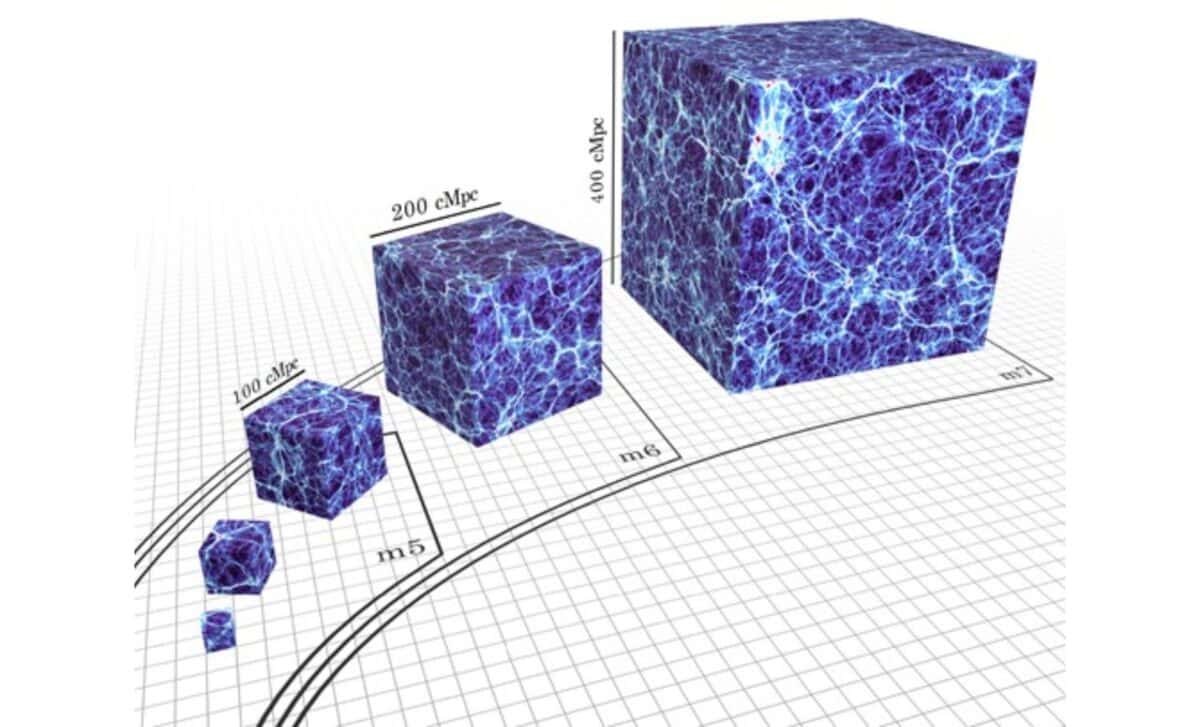
For decades, computer models of galaxy formation have relied on an important shortcut: preventing the simulated gas inside galaxies from cooling below ca. 10,000 degrees Fahrenheit, hotter than the surface of the sun. Modeling colder gases requires tracking much more complex physics and chemistry, so a workaround was needed. But cold gas is exactly where stars are born, and its absence has long been recognized as a limitation of even the most sophisticated models.
COLIBRE eliminates that compromise. The simulation, developed over nearly a decade by an international team spanning Europe, Australia and the United States, directly models the cold interstellar medium that can cool gas to 10 degrees Kelvin, close to absolute zero, and fuels star formation.
Cold gas and dust are finally here
COLIBRE’s main technological advance is the simultaneous processing of cold gas and small solid particles, dust particles, suspended within galaxies. these grain It plays a major role in galactic chemistry. They determine how galaxies appear to telescopes by providing a surface on which hydrogen molecules form, protecting the gas from ultraviolet radiation that prevents cooling, and absorbing starlight and re-radiating it in the infrared.
Previous large-scale simulations largely omitted this dust physics. According to the Royal Astronomical Society, COLIBRE tracks three different particle chemistries – graphite, forsterite and fayalite – in two size categories and simulates how they grow, shatter and break down over time. The model required a cohesion factor to compensate for the fact that the densest particle growth environment, the core of the molecular cloud, is still too small to be resolved even at the scale of COLIBRE.
The simulations are run on the COSMA8 supercomputer at Durham University’s Institute for Computational Cosmology. Maximum single run consumed 72 million CPU hours Approximately 136 billion particles were used 20x resolution It includes more elements than previous simulations like EAGLE, created by the same team a decade ago. “Much of the gas in real galaxies is cold and dusty, but most previous large-scale simulations have had to ignore this.Joop Schaye, project leader at Leiden University, said: “With COLIBRE, we have finally made these critical components a reality.”
Verification of the standard cosmological model
The scientific importance of COLIBRE goes beyond its technical novelty. When the James Webb Space Telescope began returning data about the early Universe, some of its discoveries, particularly the apparently abundant giant bright galaxies at high redshifts, were interpreted by some researchers as a potential challenge to the Universe. lambda cold dark matter model, the standard framework for modern cosmology.
COLIBRE results provide the answer. According to the published paper, the simulated galaxies reproduce observations from Webb and other instruments, with strong numerical agreement over five orders of magnitude for stellar masses. The research team found that once the physics of cold gas and dust are incorporated, the Standard Model remains consistent with what the telescope observes.
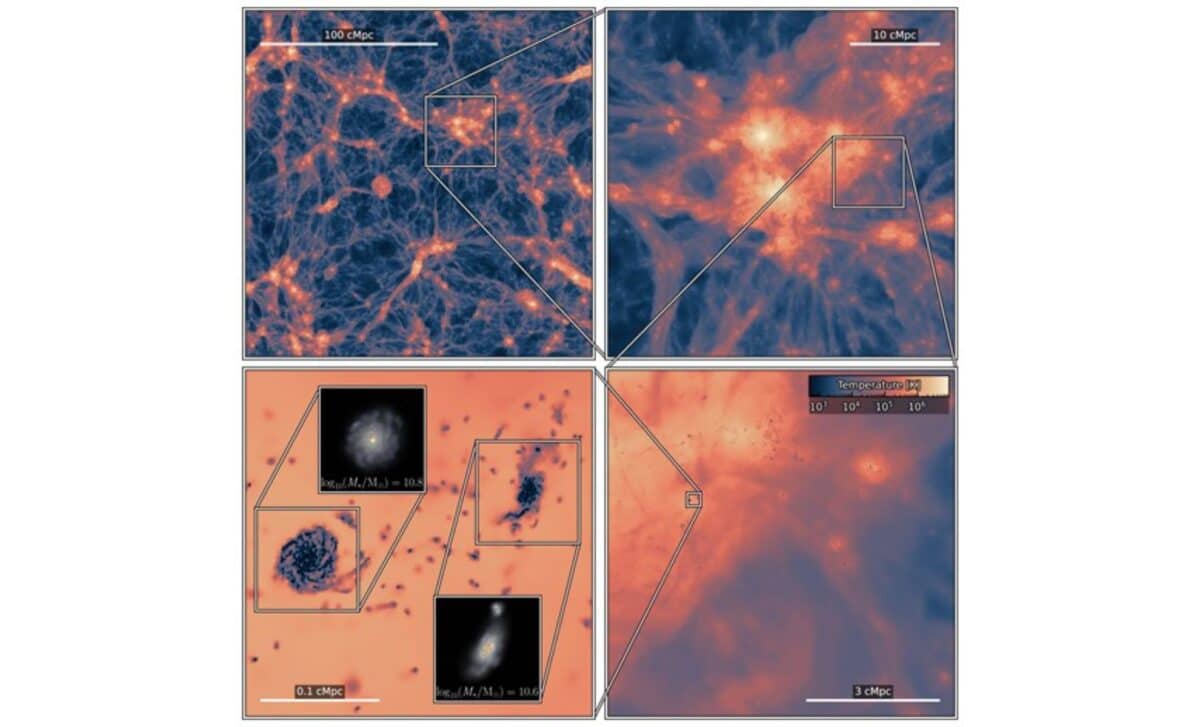
“Some of the early JWST results were thought to challenge standard cosmological models.” said Evgeny Chaikin of Leiden University, lead author of several related papers.COLIBRE shows that when key physical processes are more realistically represented, their models match what we see.”
Simulations are not without limitations. So-called “little red dots”, compact red objects observed in large numbers around Webb 600 million years Anything that did not exist after and immediately after the Big Bang will not emerge from COLIBRE’s predictions. The research team acknowledges that higher resolution and new physics will be needed to model these objects, which could represent seeds of early supermassive black holes.
Core team member Carlos Frenk from Durham University explained the broader results in terms of perceived impact on colleagues. He said he regularly presents simulated galaxy images side-by-side with real telescope data and asks observers to identify which is which, a test that the synthetic images regularly pass.
Most of the COLIBRE simulations were completed in 2025. The team also developed audio-video presentations of the data and interactive visualization tools, with the aim of making the results accessible beyond an expert audience. It is expected that analysis of the data already generated will continue for many years.
#COLIBRE #simulation #accurate #astronomers