
FEminist influencer Liz Plank begins her groundbreaking book For the Love of Men with the bold statement, “There is no greater threat to humanity than our current definition of masculinity.” She means that on several levels, from the most intimate level to the fact that male partners are the leading cause of death for pregnant women in the United States. Let’s take a macroscopic look at how “linking environmentally conscious behavior with the denial of femininity and masculinity” is literally destroying the earth. This Earth Day, it’s worth considering why this is so and what we can do about it.
It may not be news to most that men litter more, recycle less, and create larger carbon emissions than women, but something even more extreme than simple thoughtlessness is causing young people to modify the diesel engines of their pickup trucks to intentionally spew out grey-black exhaust fumes, forcing their Priuses and bicycles off the road in a form of anti-environmental protest known as “rolling calls.”
Similarly, the emotional satisfaction of “owning your freedom” and the tens of millions of dollars in campaign contributions that President Trump has received from the fossil fuel industry cannot fully explain the sheer malice of forcing a deficit-funded administration to keep a coal-fired power plant in Michigan open or canceling an offshore wind project in Connecticut that was already fully on track (80%). Not to mention starting another war over oil, Middle East cowboy style, without any strategic foresight.
What connects the dots here is something more liberal and complex: a hyper-aggressive, greasy version of toxic masculinity known as “petromasculinity.” And it is vitally important to understand why we, as a society, have not been able to come together around a common ecological vision.
“Petromasculinity,” a term coined by political scientist Carla Daggett in a 2018 paper, describes the toxic conflation between fossil fuel use, climate change denial, and defense of authoritarian white patriarchal masculinity. Noting that while fossil fuel extraction and consumption are coded as ‘masculine’, environmental protection and green technologies are coded as soft, weak, and ‘feminine’, it traces how anxious men increasingly lean towards petromasculine identities to assert traditional masculine authority in the face of climate change, threats to traditional extractive industries, and changing social norms.
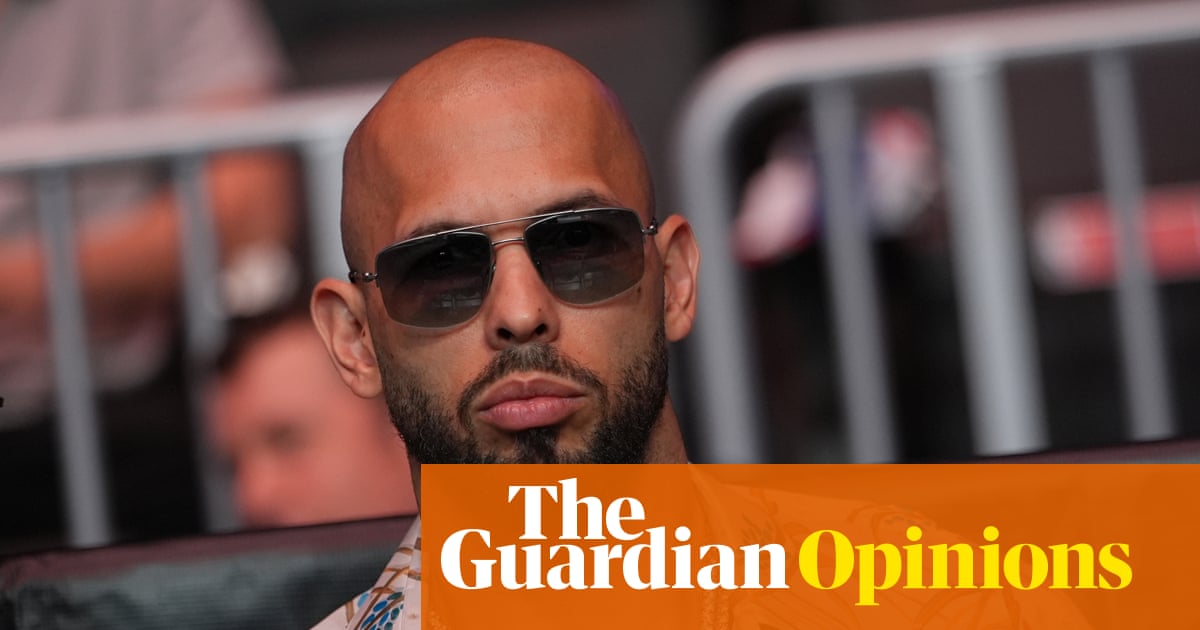
For most, petromasculinity was dramatically thrust into the public eye during the 2022 Twitter/X showdown between manosphere bullies Andrew Tate and Greta Thunberg.
“Give me your email address so I can send you a complete list of my car collection and their huge emissions,” Tate tweeted to Greta, along with a photo of him pumping gas into one of them.
Sensing the overtones of sexual bragging about these “huge emissions,” Greta smugly clapped back: “Yes, I’d love to know. Email me at smalldickenergy@getalife.com.”
With 3.3 million likes and more than 500,000 retweets, it became “the Tweet heard around the world,” driven, in the words of Rebecca Solnit, by “a version of masculinity characterized by selfishness and indifference, individualism taken to the extreme, and a version of masculinity in which caring and acting for the collective good is important.” their antithesis.”
As a long-time climate change activist, I have seen this gendered climate battle up close. Whether it was the Fox pundits spouting climate change denial without knowing the facts or the assholes who called you “shit” in the comments section for just caring about the planet, it was impossible not to notice a certain kind of man with a certain attitude. They’re usually white, male, angry, aggressive about the fossil fuel status quo, and offer a decidedly thug-like defense of the status quo. It usually involved a flaunting display of male privilege and privilege, including the privilege to destroy the Earth if they felt so inclined.
It’s no doubt gross and pathetic that Andrew Tate is trolling teenage girls with what amounts to pictures of his 27 sports car penises, but some of the aggressive defensiveness tangled up in petromasculinity is understandable.
Imagine that digging coal was something you and your ancestors did for generations, that it paid the rent and felt manly and heroic (despite the harm and danger). And then some environmentalist in a Prius comes along and says we shouldn’t do that anymore. But they don’t offer you a viable alternative livelihood. Of course, it’s not a livelihood with the mystical aura of dignity and “masculinity” that coal-miners have. Who doesn’t get defensive?
If logical acceptance of the reality of climate change leads to particular solutions that we perceive as threatening to our core identities and ways of life, then it makes sense that we would work hard at climate change denial. and flips the smug Prius driver into a bird with a “coal roll.”
So what should you do? First, as the Just Transition movement knows from the jump, we need to provide real-world economic alternatives. Liberal scolding mode doesn’t work here, and is in fact part of the larger problem of Democrats losing representation and elections (remember Marc Maron’s joke/insight that the left “got people irritated with fascism” in 2024). Instead, we need to offer real alternatives, like a Green New Deal, that will actually create “millions of good, good-paying jobs,” as Bernie, AOC, and the Sunrise movement (and to a lesser extent, Biden through his IRA) are trying to do.
As we desperately seek to build national consensus for the transition from fossil fuels to renewable energy, oil masculinity suggests that combating climate change is not only a technological, economic and political challenge, but also a cultural and spiritual struggle against an entrenched and highly gendered ‘oil culture’.
A call comes from inside the house. Patriarchy is deep-rooted. Overcoming it will require a multi-track, multi-generational effort. It involves both a realignment of power (with knock-on benefits for the planet, as case after report shows that greater gender equality in society leads to stronger climate policies). So, too, are men on deep inner healing journeys to undo harmful conditioning and find their way to a new kind of green masculinity.
“It’s not that men don’t care about the environment,” argues Liz Plank. “They’re just being taught to be more concerned about threats to their masculinity.” To help humans reverse the salience of these priorities, environmentalists have adopted three basic approaches: decoding, recoding, and encoding.
Through media literacy, social criticism, white-handed ideological warfare on the internet, and subtle cultural jamming and satire, climate change activists and others are working to decipher petromasculinity. They point out how absurd and “manufactured” self-defeating petroleum masculinity is for men, their communities, and the planet itself, and they hope that over time, this will help unravel the deep connections between fossil fuels and painful masculine identities. Thunberg’s takedown of Andrew Tate is one example. I believe this is a separate article.
The second approach is to recode the choice between fossil fuels and renewable energy, or, as Indigenous botanist Robin Wall Kimmerer likes to say, “reframe the story.” A good current example of such an approach is the “Energy from Heaven, Not Hell” initiative currently underway by the interfaith creative care network GreenFaith (with full disclosure and my support).
The initiative uses a variety of approaches, from Earth Day sermons to religious pamphlet-style cartoons, to suggest that “God has revealed where He wants us to get our energy from.” That is, not from the poisonous hellfire below, but from the sun and wind above. Once you’ve seen this fable, it’s hard to watch again. And if moral and cosmological alignment with God holds greater appeal than some perceived threats to masculinity from “feminine” renewable energy, some men may change.
Finally, by portraying green technology in a more traditionally masculine and “masculine” way, proponents seek to encode solutions to climate change. One example is the F-150 Lightning, an all-electric pickup truck that Ford plans to launch in 2023. Meanwhile, many renewable energy PR teams deploy scenes of men strapping on their tool belts and climbing 300-foot rungs to repair wind turbines, trying to convince manly men that they have a place in America’s brave green future.
The overall message here is that you can be a man without fossil fuels.
Look at me, I’m probably the least masculine person I know. It didn’t make me less of a man, thank you, it just made me less of a man. petro. I don’t have a car. Instead, I’m boosting my testosterone by riding my bike a little more aggressively through the streets of New York City. I don’t own a revving sports car, but going from 0 to 60 in 3.7 seconds in a friend’s boosted Tesla Model 3 (which I bought used before Elon turned fascist) was a gravity thrill ride I’d do any day of the week.
I may not upend a benign environment by “loading coal” in a luxury truck, but I did upend the world’s most powerful company by co-creating an ad called “Exxon Hates Your Children,” highlighting the tens of thousands of respiratory deaths caused by its core product, and broadcasting it from Exxon’s backyard in Irving, Texas. I’ve dedicated the last ten years of my life to moving civilization away from fossil fuels and toward cleaner, greener, and more peaceful energy sources, and I’ve never felt like it made me any less of a man. In fact, the opposite is true.
A good man should take responsibility and not avoid it. It is sad that so many people’s response to the ecological crisis we are in is to abdicate responsibility, become defensive, and act out. When trouble comes to town, good people should protect their homes and loved ones.
Now, like every Earth Day, it’s clear on this Earth Day that our only home is in deep trouble, whether it’s global warming, biodiversity loss, or environmental racism. So, men, on this Earth Day, free yourself from petro-masculinity and step into eco-masculinity. Let us mobilize our ingenuity, muster our courage, and let ourselves grieve if necessary, so that we can remember how much we cherish this beautiful and miraculous planet on which we all live together. And let’s stand up to protect it. After all, what is more “protector masculinity” than protecting the planet?
#Petromasculinity #destroying #planet #ecomasculinity #save #Andrew #Boyd